☕️ Morning Call en📞 Podcast maandag 14 september - Olie, rente en AI als thema's

Meer op onze website, waar we vandaag weer aan verschillende zaken aandacht besteden. Let op, dit bericht kan overlappen met een aantal berichten die wij ook op de website publiceren.
■ Europa gaat naar verwachting lager van start. De STOXX-futures staan ongeveer 0,35% lager en ook de bredere vroege signalen zijn negatief. Futures, rente, olie en technologie wijzen aan het begin van de dag op voorzichtigheid, al is dit nog geen volledige risk-offbeweging.
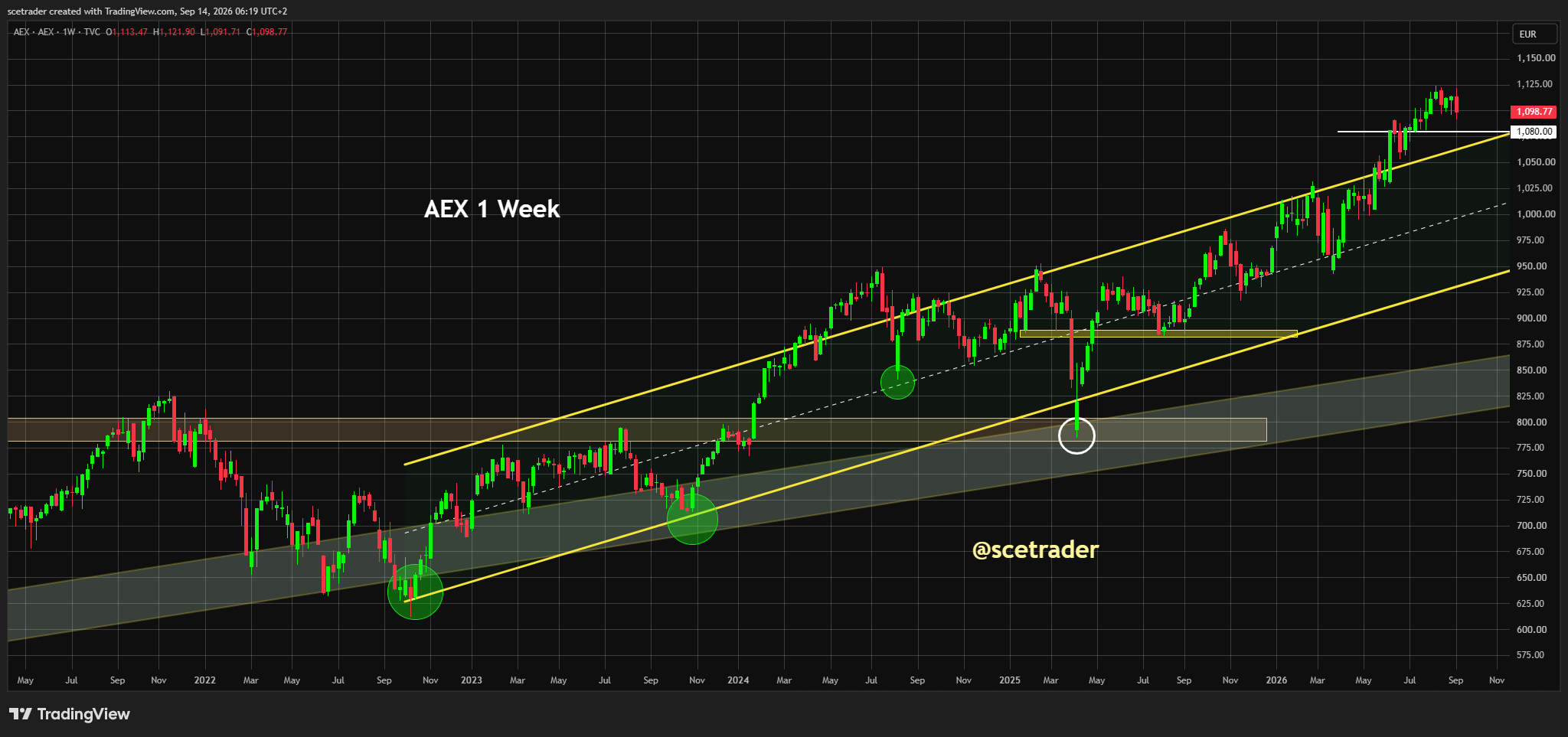
■ Voor de AEX is het beeld verdeeld. Shell krijgt steun van olie boven $107, terwijl ASML, ASM International en Besi juist druk krijgen vanuit Aziatische semiconductors, memory en zwakkere Amerikaanse Nasdaq-futures. De opening draait daardoor niet alleen om richting, maar vooral om rotatie: olie omhoog, chippers omlaag.
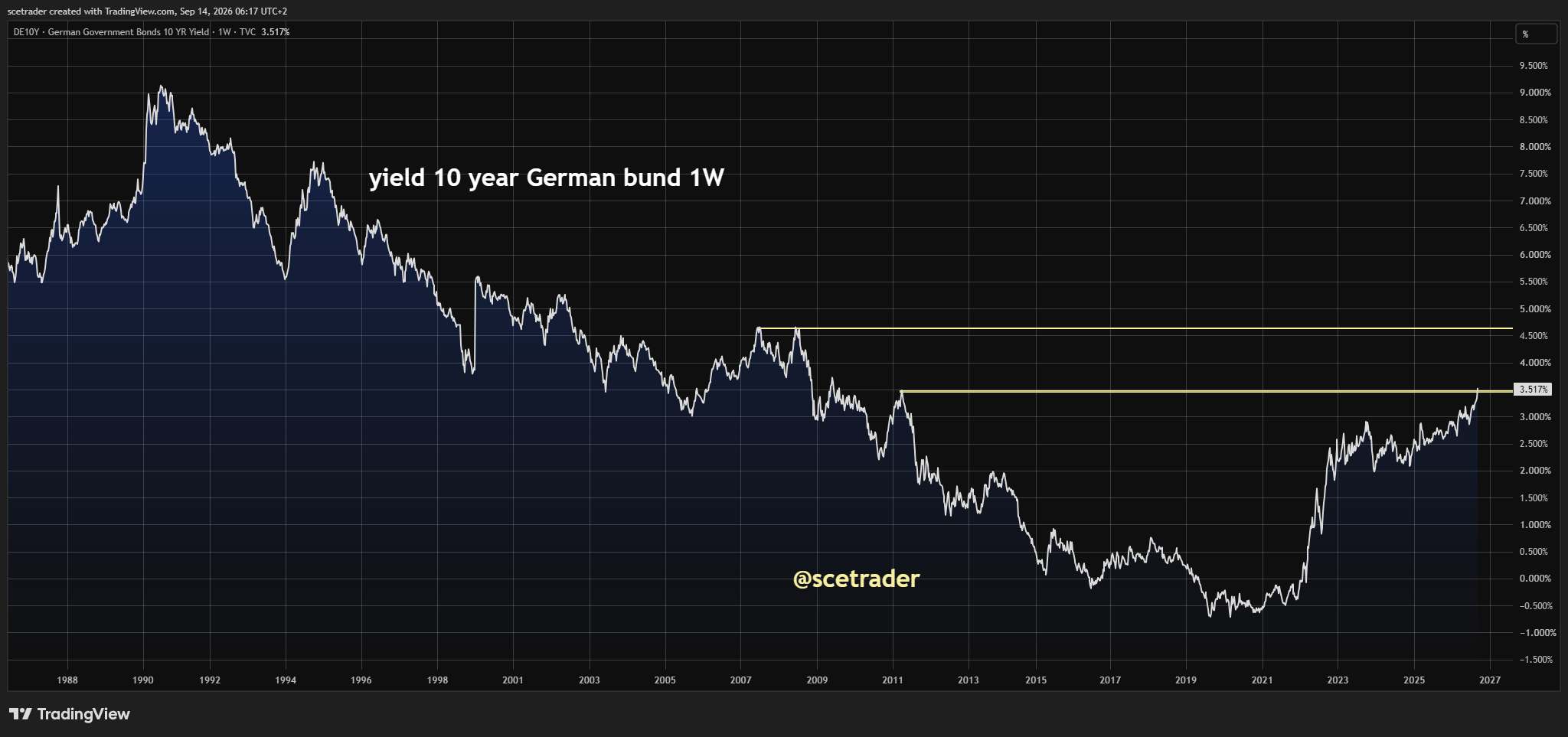
■ De rente moet vandaag als eerste hoofdindicator worden gevolgd. Het 10-jarige Amerikaanse papier staat rond 4,98% en komt daarmee dicht bij de belangrijke 5%-grens. De Duitse 10-jaarsrente staat rond 3,5%, de Japanse rente rond 2,98% en de Nederlandse rente rond 3,57%.
■ De markt zal vooral willen zien wat er rond die Amerikaanse 5%-grens gebeurt. Er zijn geluiden dat institutionele beleggers daar mogelijk weer obligaties gaan kopen, maar zeker is dat niet. Schiet de rente verder door, dan kan dat opnieuw druk zetten op technologie, vastgoed, bouw, hypotheken en groeiaandelen.
■ Belangrijk is ook dat de stijging van de lange rente niet alleen aan Trump kan worden toegeschreven. De basis is eerder gelegd, onder meer door de lange periode van extreem ruim beleid en forse overheidsstimulering rond covid. Pogingen om de lange rente structureel omlaag te krijgen, werken tot nu toe onvoldoende.
■ Markten kunnen hogere renteniveaus verwerken zolang de stijging geleidelijk blijft. De afgelopen jaren is vaker met een Amerikaanse 10-jaarsrente rond 5% gehandeld. Het verschil zit nu in de reactie: als de rente rustig blijft, kan de markt ermee leven; als de rente versnelt, wordt het opnieuw een waarderingsprobleem.
■ Voor Nederland kan een hogere kapitaalmarktrente ook doorwerken richting hypotheekmarkten. De rente ligt nog altijd veel lager dan in de jaren negentig, maar de marktstructuur is veranderd. Huishoudens en vastgoedmarkten zijn gewend geraakt aan lagere financieringskosten, waardoor verdere stijging gevoeliger kan worden.
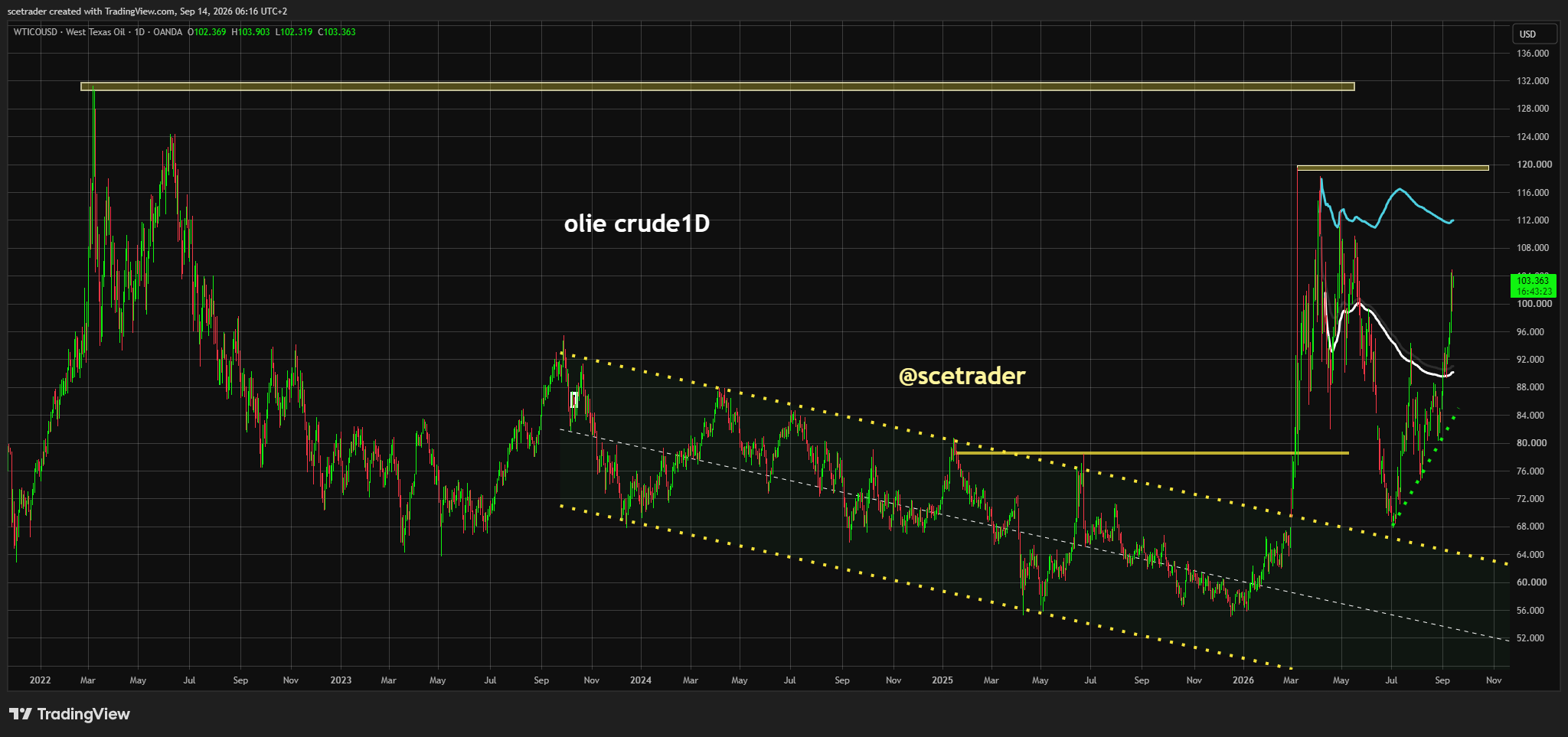
■ Olie blijft de tweede hoofdindicator. Light Sweet Crude speelt opnieuw met de $100-grens, waarbij het eerste contract rond $103 staat en het tweede contract rond $98,30 noteert. Brent staat rond $107,60 en stijgt ongeveer 3%, waardoor de daling van vrijdag opnieuw grotendeels wordt teruggedraaid.
■ Het probleem is niet één sterke oliedag, maar de vraag hoelang olie hoog blijft. Uiteindelijk kan demand destruction de vraag drukken en olie weer lager zetten, maar op korte termijn kan een langere periode van dure olie analisten dwingen winsttaxaties te verlagen en bedrijven ruimte geven om outlooks voorzichtiger te maken.
■ Dat laatste is belangrijk voor de aandelenmarkt. Hogere olie, duurdere logistiek en stijgende inputkosten kunnen door bedrijven worden gebruikt om tijdelijk druk van de ketel te halen in hun vooruitzichten. Dat hoeft de langetermijncyclus niet te breken, maar het kan op korte termijn wel een excuus worden voor lagere verwachtingen.
■ Het olierisico zit bovendien niet alleen in de prijs, maar ook in de routes. De Houthis hebben hun positie rond de Rode Zee versterkt, terwijl Saudi-Arabië, Hormuz en Bab el-Mandeb opnieuw centraal staan. Gesprekken over doorvaartroutes zijn afgebroken, waardoor transportzekerheid een groter marktitem wordt.
■ Als belangrijke routes lastiger worden, raakt dat niet alleen olie. Ook gewone scheepvaart en goederenstromen richting Europa kunnen duurder of onzekerder worden. Dat vergroot de druk op transport, industrie, bouw, chemie en consumenten, terwijl energiebedrijven juist steun krijgen van hogere olieprijzen.
■ AI vormt de derde grote onzekerheid. Anthropic-topman Dario Amodei en andere AI-figuren waarschuwen dat AI mogelijk te snel gaat en pleiten voor vertraging of strengere controle. Op een dag waarop markten al terughoudend zijn, kan dat verhaal gemakkelijk worden gebruikt als extra reden om winst te nemen in AI en technologie.
■ Tegelijk blijft een brede vertraging van AI moeilijk voorstelbaar. Bij eerdere grote innovaties, van auto tot internet, kwamen vergelijkbare waarschuwingen ook voorbij. Veiligheidsvragen zijn relevant, maar technologie laat zich zelden structureel stilzetten, zeker niet wanneer de internationale concurrentie versnelt.
■ Trump verzet zich tegen een brede AI-vertraging omdat China anders technologisch kan voorlopen. Daarmee ontstaat een strijd tussen AI-veiligheid, AI-groei en geopolitieke concurrentie. Voor de beurs raakt dit vooral aandelen waarin al veel toekomstige AI-groei is ingeprijsd.
■ De Kospi verdient een eigen plaats in het verhaal. De index verliest ongeveer 2,5% en is fors teruggevallen vanaf de toppen. De lange trend sinds 2025 blijft opwaarts, maar de korte trend is op dit moment onbeslist.
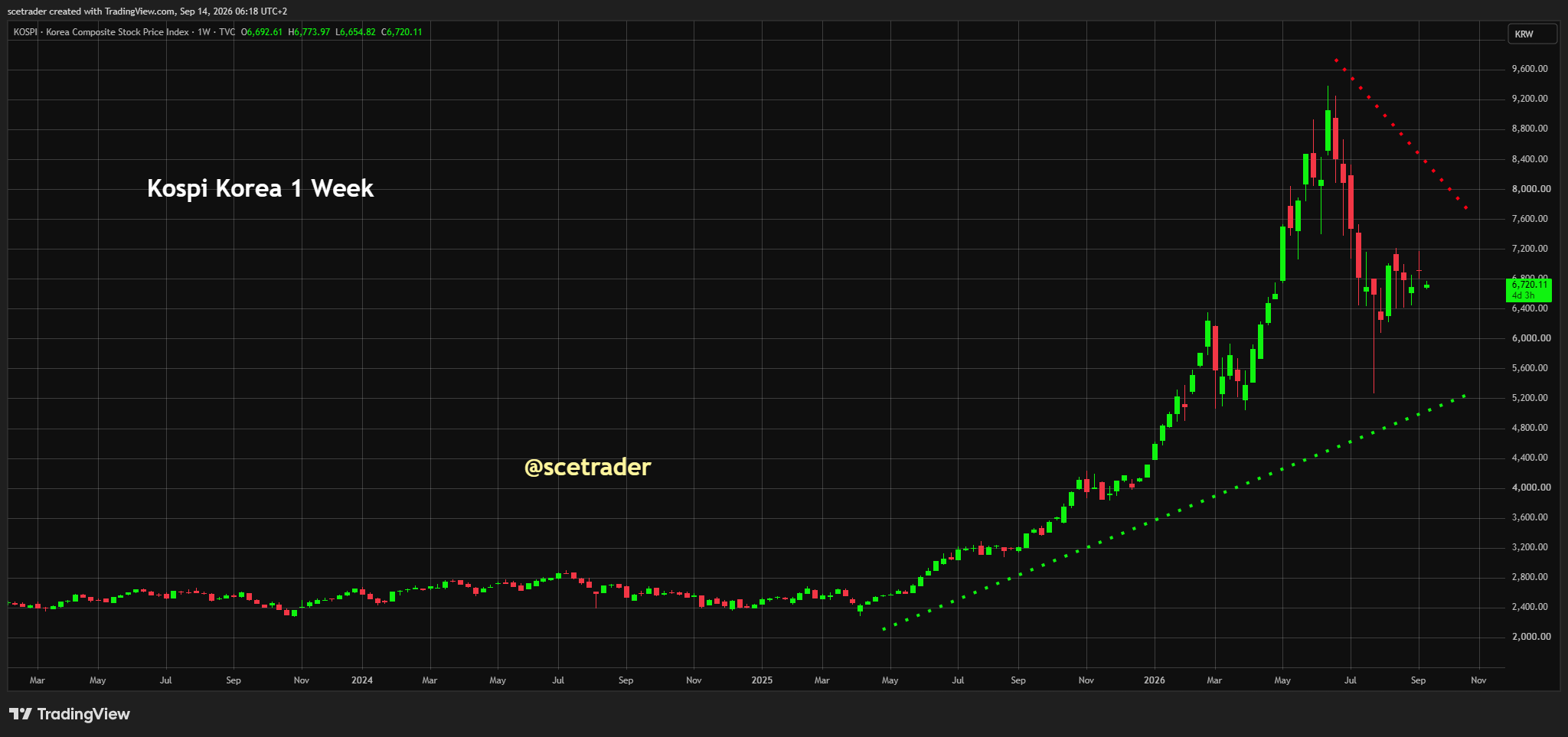
■ De druk in Korea komt vooral uit memory en chips. Chinese partijen claimen dat nieuwe AI-modellen met minder memory kunnen werken. Dat raakt direct aan de verwachtingen voor HBM, opslag en memorygroei per workload en kan op korte termijn druk zetten op memoryproducenten en bepaalde chipnamen.
■ De langetermijntrend voor memory, chips en toeleveranciers is daarmee niet verdwenen. AI blijft grote hoeveelheden datacentercapaciteit, chips, networking, opslag en infrastructuur vragen. Wel wordt duidelijker dat de sector niet eindeloos kan leunen op alleen meer hardware, meer memory en meer opslag.
■ Daardoor worden softwarelagen belangrijker. Als hardware te duur of te schaars wordt, verschuift de aandacht naar software die efficiënter omgaat met data, modellen en infrastructuur. Palantir is daarbij een naam om te volgen, omdat zo’n verschuiving juist kansen kan geven aan bedrijven die bovenop de infrastructuur waarde toevoegen.
■ De Amerikaanse futures staan duidelijk onder druk. De S&P 500 future verliest ongeveer 0,5%, terwijl de Nasdaq 100 future circa 1,3% lager staat. Dat bevestigt dat de zwakte vooral in technologie en AI zit, niet in alle aandelen tegelijk.
■ Tegelijk zit er al veel negatief nieuws in de futures. De markt noteert rond steunlijnen die moeten houden. Breekt die steun, dan kan een groter gat omlaag ontstaan en ligt daaronder pas een volgende sterke steunzone. Houdt de steun wel, dan blijft aan de bovenkant ruimte voor een herstel van ongeveer 1%.
■ Wall Street lag vrijdag nog redelijk goed, ondanks voorzichtigheid na de inflatiedata. Opvallend was vooral dat volatiliteit fors daalde. De VIX zakte ongeveer 11% naar 15,85 en de VVIX daalde ongeveer 11% naar 91,3.
■ Dat is geen panieksignaal. De VIX staat nog ruim onder 20 en dat betekent dat de optiemarkt nog geen brede stress prijst. Het blijft wel een momentopname: loopt de VIX later alsnog op, dan kan de markt daar opnieuw negatief op reageren.
■ Goud, zilver, valuta en crypto geven vooralsnog geen klassiek paniekbeeld. Zilver staat rond $64,50 met $70 als duidelijke weerstand, goud staat ongeveer 0,5% lager rond $4.328, EUR/USD noteert rond 1,1560, USD/JPY rond 154,1 en bitcoin blijft goed liggen rond $77.600, met $80.000 als belangrijke weerstand.
■ Het Amerikaanse plan om voor ongeveer $6 miljard aan langlopend papier terug te kopen was te klein om goud en zilver echt te laten uitbreken. Toch blijven edelmetalen relatief goed liggen, zeker omdat ze de laatste tijd vaak gevoelig waren voor hogere olie en oplopende rente.
■ Crypto-gerelateerde aandelen lagen vrijdag wat beter, maar bitcoin moet eerst door de weerstand rond $80.000 breken om het beeld sterker te maken. Zolang dat niet lukt, blijft crypto goed liggen, maar nog niet overtuigend uitbreken.
■ Euronext verdient vandaag apart aandacht. In de media wordt gesproken over een mogelijke “big bang deal” met Deutsche Börse. Als dat klopt, kan dat voor beide aandelen positief worden uitgelegd, maar dit moet eerst verder worden gecontroleerd.
■ Taiwan Semiconductor kwam opnieuw met opmerkingen rond Moore’s Law en CPO. Dat is vandaag niet het hoofdthema, maar het blijft belangrijk voor latere read-throughs naar chips, packaging, datacenters en toeleveranciers.
■ De Europese aandelenronde is duidelijk sectorgedreven. Chippers liggen lager, olieaandelen liggen hoger en software kan moeite hebben als de markt minder zin heeft in groei- en AI-risico. Daarmee wordt de dag waarschijnlijk minder bepaald door indexniveau en meer door onderlinge sectorverschillen.
■ Bouwbedrijven moeten worden gevolgd. Heijmans is daarbij een goed voorbeeld. Het aandeel heeft een sterke rit achter de rug vanaf veel lagere niveaus, maar hogere inputkosten, hogere rente en twijfel over marges kunnen dit soort namen gevoeliger maken voor een terugval.
■ Defensie kan steun krijgen door nieuwe spanningen rond Rusland, Oekraïne en Polen. Tegelijk blijft voorzichtigheid nodig, omdat defensieaandelen de laatste tijd ook moeite hadden. Positief nieuws hoeft daarom niet automatisch tot een sterke koersreactie te leiden.
■ Luxe-aandelen doen waarschijnlijk niet mee in een voorzichtiger markt. Bij meer onzekerheid houden consumenten en beleggers vaker de knip dicht. Ook lokale waarden lijken tijdelijk minder vraag te krijgen, wat past bij een markt die selectiever wordt.
■ SIPEF blijft een apart Belgisch thema. El Niño kan uiteindelijk steun geven aan palmolie en daarmee op termijn positief zijn voor SIPEF. Tegelijk blijft het aandeel marktgevoelig en moet het binnen het bredere risicoklimaat worden bekeken.
■ Het ochtendbeeld is daarmee negatiever dan vrijdag, maar niet paniekerig. Markten blijven taai en weerbaar, alleen zijn de tegenkrachten duidelijker: olie stijgt, rente nadert een breekpunt, AI krijgt een nieuw verkoopargument en Nasdaq-futures liggen zwakker dan de brede markt.
■ Desk-view: de bias voor Europa is lager, maar verdeeld. Energie is de belangrijkste steun, terwijl rente, olie, AI, semiconductors en Nasdaq-zwakte de risico’s vormen. De drie punten om nu te volgen zijn de Amerikaanse 10-jaarsrente rond 5%, de steunlijnen in Amerikaanse futures en Brent boven $107 richting $110.
English
■ Europe is expected to open lower. STOXX futures are down around 0.35% and the broader early signals are negative as well. Futures, rates, oil and technology all point to caution at the start of the day, although this is not yet a full risk-off move.
■ For the AEX, the picture is divided. Shell benefits from oil above $107, while ASML, ASM International and Besi face pressure from Asian semiconductors, memory and weaker U.S. Nasdaq futures. The open is therefore not only about direction, but mainly about rotation: oil higher, chipmakers lower.
■ Rates must be followed as the first key indicator today. The U.S. 10-year yield is around 4.98%, close to the important 5% level. The German 10-year yield is around 3.5%, Japan is around 2.98% and the Dutch yield is around 3.57%.
■ The market will mainly want to see what happens around that U.S. 5% level. There is talk that institutional investors may buy Treasuries there, but that is not certain. If yields push further higher, technology, real estate, construction, mortgages and growth stocks could come under renewed pressure.
■ It is also important that the rise in long-term yields cannot be attributed only to Trump. The basis was laid earlier, including through the long period of extremely loose policy and heavy government stimulus around covid. Attempts to push long-term yields structurally lower have so far not worked sufficiently.
■ Markets can absorb higher yield levels as long as the rise remains gradual. In recent years, markets have traded several times with the U.S. 10-year yield around 5%. The difference now is the reaction: if yields remain calm, markets can live with it; if yields accelerate, it becomes a valuation problem again.
■ For the Netherlands, higher long-term yields may also feed into mortgage markets. Rates are still much lower than in the 1990s, but the market structure has changed. Households and property markets have become used to lower financing costs, making further increases more sensitive.
■ Oil remains the second key indicator. Light Sweet Crude is again testing the $100 area, with the front contract around $103 and the second contract around $98.30. Brent is around $107.60 and up about 3%, reversing a large part of Friday’s decline.
■ The problem is not one strong day in oil, but the question of how long oil will remain high. Eventually, demand destruction can reduce demand and push oil lower again, but in the short term a longer period of expensive oil can force analysts to lower earnings estimates and companies to guide more cautiously.
■ That matters for equities. Higher oil, more expensive logistics and rising input costs may give companies room to take pressure off by lowering expectations. That does not have to break the longer-term cycle, but it can become a short-term excuse for lower estimates.
■ The oil risk is also not only in the price, but in the routes. The Houthis have strengthened their position around the Red Sea, while Saudi Arabia, Hormuz and Bab el-Mandeb are again central to the story. Talks about shipping routes have broken down, making transport security a larger market issue.
■ If key routes become more difficult, this affects more than oil. Ordinary shipping and goods flows into Europe can also become more expensive or uncertain. That increases pressure on transport, industrials, construction, chemicals and consumers, while energy companies receive support from higher oil prices.
■ AI is the third major uncertainty. Anthropic CEO Dario Amodei and other AI figures are warning that AI may be moving too fast and are calling for a slowdown or stricter controls. On a day when markets are already cautious, that story can easily be used as another reason to take profits in AI and technology.
■ At the same time, a broad slowdown in AI remains difficult to imagine. Similar warnings appeared during earlier major innovations, from cars to the internet. Safety questions are relevant, but technology is rarely stopped structurally, especially when international competition is accelerating.
■ Trump rejects a broad AI slowdown because China could otherwise move ahead technologically. That creates a conflict between AI safety, AI growth and geopolitical competition. For equities, this mainly affects stocks that already price in a lot of future AI growth.
■ The Kospi deserves its own place in the story. The index is down around 2.5% and has fallen sharply from the highs. The long-term trend since 2025 remains upward, but the short-term trend is currently undecided.
■ The pressure in Korea mainly comes from memory and chips. Chinese players claim that new AI models can work with less memory. That directly affects expectations for HBM, storage and memory growth per workload and can put short-term pressure on memory producers and certain chip names.
■ The long-term trend for memory, chips and suppliers has not disappeared. AI still requires large amounts of data-centre capacity, chips, networking, storage and infrastructure. What is becoming clearer is that the sector cannot rely endlessly only on more hardware, more memory and more storage.
■ Software layers therefore become more important. If hardware becomes too expensive or too scarce, attention shifts to software that uses data, models and infrastructure more efficiently. Palantir is one name to watch, because that kind of shift may support companies that add value on top of the infrastructure layer.
■ U.S. futures are clearly under pressure. The S&P 500 future is down around 0.5%, while the Nasdaq 100 future loses roughly 1.3%. That confirms that weakness is mainly concentrated in technology and AI, not in all stocks at once.
■ At the same time, a lot of negative news is already reflected in futures. The market is trading around support lines that need to hold. If support breaks, a larger downside gap can develop and the next strong support only comes lower. If support holds, there is still room for a recovery of around 1%.
■ Wall Street still held up reasonably well on Friday, despite caution after the inflation data. The most notable point was the sharp decline in volatility. The VIX fell about 11% to 15.85 and the VVIX dropped around 11% to 91.3.
■ That is not a panic signal. The VIX is still well below 20, meaning the options market is not pricing broad stress. It is only a snapshot, however: if the VIX rises again later, the market may react negatively again.
■ Gold, silver, FX and crypto do not yet show a classic panic picture. Silver is around $64.50 with $70 as clear resistance, gold is down about 0.5% around $4,328, EUR/USD is around 1.1560, USD/JPY around 154.1 and bitcoin is holding up around $77,600, with $80,000 as the key resistance.
■ The U.S. plan to buy back around $6 billion of long-dated paper was too small to make gold and silver really break out. Still, precious metals are holding up relatively well, especially because they have recently often been sensitive to higher oil and rising yields.
■ Crypto-related stocks traded somewhat better on Friday, but bitcoin first needs to break through resistance around $80,000 to strengthen the picture. Until that happens, crypto is holding up, but not yet breaking out convincingly.
■ Euronext deserves separate attention today. Media reports mention a possible “big bang deal” with Deutsche Börse. If that proves correct, it could be interpreted positively for both stocks, but it needs to be checked further first.
■ Taiwan Semiconductor again made comments around Moore’s Law and CPO. This is not the main theme today, but it remains important for later read-throughs into chips, packaging, data centres and suppliers.
■ The European stock round is clearly sector-driven. Chipmakers are lower, oil shares are higher and software may struggle if the market has less appetite for growth and AI risk. The day is therefore likely to be driven less by index level and more by sector differences.
■ Construction companies need to be watched. Heijmans is a good example. The stock has had a strong run from much lower levels, but higher input costs, higher rates and margin doubts can make these names more vulnerable to a pullback.
■ Defence may receive support from new tensions around Russia, Ukraine and Poland. Caution is still needed, because defence stocks have also struggled recently. Positive news therefore does not automatically need to trigger a strong share-price reaction.
■ Luxury shares are unlikely to participate in a more cautious market. When uncertainty rises, consumers and investors often keep their wallets closed. Local names also appear to be seeing less demand, which fits a more selective market.
■ SIPEF remains a separate Belgian theme. El Niño could ultimately support palm oil and therefore become positive for SIPEF over time. At the same time, the stock remains market-sensitive and should be viewed within the broader risk climate.
■ The morning picture is therefore more negative than Friday, but not panicky. Markets remain tough and resilient, but the headwinds are clearer: oil is rising, yields are near a breakpoint, AI has a new selling argument and Nasdaq futures are weaker than the broader market.
■ Desk view: the bias for Europe is lower, but divided. Energy is the main support, while rates, oil, AI, semiconductors and Nasdaq weakness are the risks. The three points to watch now are the U.S. 10-year yield around 5%, support lines in U.S. futures and Brent above $107 towards $110.
© 2026 SCEtrader.nl - Alle rechten voorbehouden
Disclaimer Aan de door ons opgestelde informatie kan op geen enkele wijze rechten worden ontleend. Alle door ons verstrekte informatie en analyses zijn geheel vrijblijvend. Alle consequenties van het op welke wijze dan ook toepassen van de informatie blijven volledig voor uw eigen rekening.
Wij aanvaarden geen aansprakelijkheid voor de mogelijke gevolgen of schade die zouden kunnen voortvloeien uit het gebruik van de door ons gepubliceerde informatie. U bent zelf eindverantwoordelijk voor de beslissingen die u neemt met betrekking tot uw beleggingen.

