Indices Europa na Wall Street: Alphabet kasstroom nieuwe lakmoesproef voor AI-handel
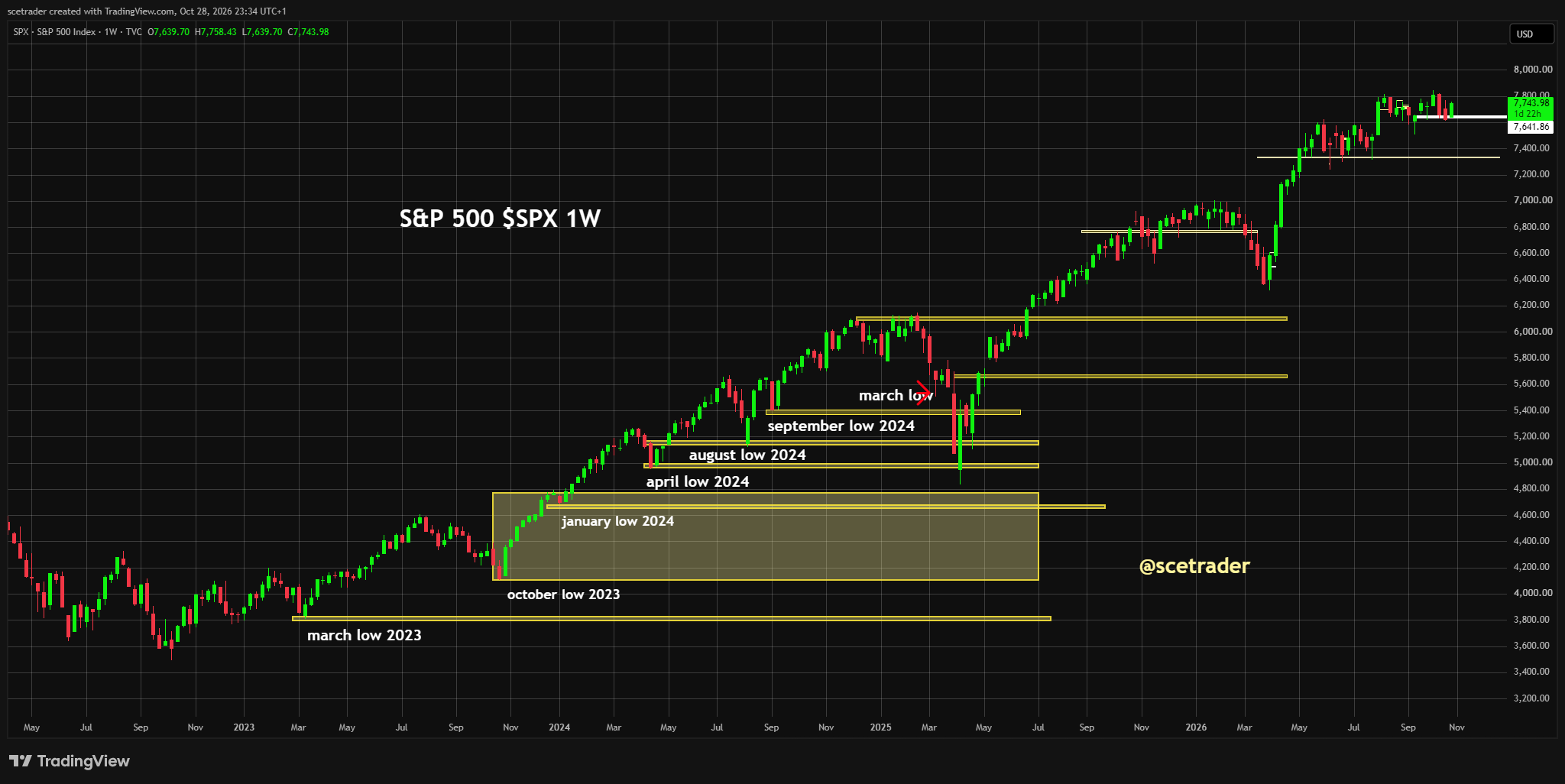
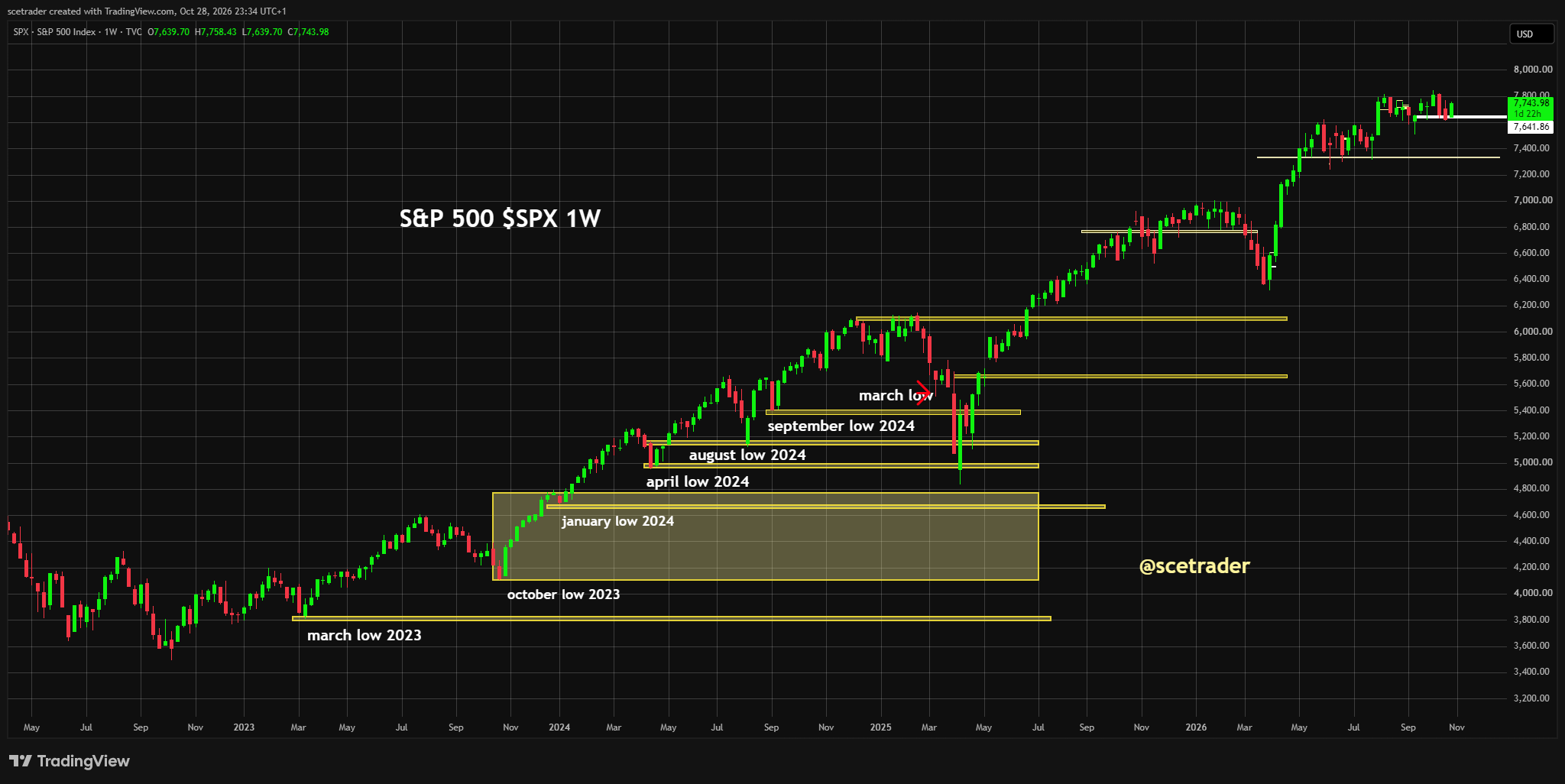
Wall Street sloot woensdag licht hoger. De S&P 500 won 0,28% tot 7.743,98, de Nasdaq 0,27% tot 26.549,85 en de Dow 0,19% tot 52.475,10. De Nasdaq 100 steeg 0,55% tot 29.813,16. Halfgeleiders bleven sterker dan de brede markt: de Philadelphia Semiconductor Index won ongeveer 1,8% en boekte daarmee de vierde opeenvolgende stijgingsdag.
De Federal Reserve hield de beleidsrente zoals verwacht op 3,75% tot 4,00%, maar de onderliggende boodschap was niet dovish. De Fed omschreef de economische groei als sterk, de binnenlandse bestedingen als veerkrachtig en de kapitaalinvesteringen als robuust, terwijl inflatie verhoogd blijft. Bovendien wilden twee van de tien stemmers de rente juist met 25 basispunten verhogen. De Amerikaanse tienjaarsrente liep daarna tot iets boven 5%.
Na de slotbel werd de technologiesessie veel selectiever. Microsoft bevestigde met een Azure-groei van 48% dat de enorme AI-investeringen daadwerkelijk in omzet worden omgezet. Alphabet liet met 103% groei bij Google Cloud eveneens uitzonderlijk sterke AI-vraag zien, maar de vrije kasstroom werd negatief doordat de investeringen sneller opliepen dan de operationele kasstroom.
Microsoft steeg daarop nabeurs, terwijl Alphabet meer dan 7% daalde. Voor Europa is de boodschap donderdag daarom niet simpelweg technologie hoger: de fysieke AI-keten blijft sterk, maar kapitaalintensiteit, vrije kasstroom en waardering bepalen steeds meer wie wordt beloond.
Sector richting Europa
■ Sector richting Europa: gemengd / selectief positief. De Amerikaanse indices sloten hoger en de fysieke AI-keten blijft sterk, maar de nabeursreactie bij grote technologiebedrijven en een Amerikaanse tienjaarsrente boven 5% beperken de ruimte voor een brede rally.
■ AI-infrastructuur: hoger. Nieuwe cijfers bevestigen uitzonderlijk sterke vraag naar rekenkracht, stroomvoorziening, koeling, verbindingen en netwerkcapaciteit.
■ HBM en geheugen: duidelijk hoger. De vraag naar AI-geheugen blijft zeer sterk, HBM4 schaalt verder op en een groot deel van toekomstige productiecapaciteit is al contractueel vastgelegd.
■ Halfgeleiders: hoger. De Amerikaanse chipsector steeg voor de vierde sessie op rij en krijgt fundamentele bevestiging uit geheugen, procescontrole en infrastructuur.
■ Halfgeleiderapparatuur en lithografie: hoger. Investeringen in leading-edge logic, HBM en complexere geheugenarchitecturen blijven de vraag naar geavanceerde productieapparatuur ondersteunen.
■ Advanced packaging en test: hoger. HBM, chiplets en steeds complexere integratie vergroten de behoefte aan bonding, inspectie, packaging en test.
■ Optische verbindingen: hoger. Photonics en high-speed interconnect worden steeds belangrijker naarmate grotere AI-clusters meer data tussen accelerators en servers moeten verplaatsen.
■ Netwerken en connectoren: hoger. De sterke orderinstroom bij Amerikaanse leveranciers bevestigt dat netwerkapparatuur, kabels en connectoren rechtstreeks profiteren van de AI-uitbouw.
■ Datacenters, stroom en koeling: duidelijk hoger. De vraag naar elektrische infrastructuur en koeling groeit zo snel dat fysieke beschikbaarheid steeds vaker de beperkende factor wordt.
■ Cloud: gemengd tot hoger. De omzetgroei is uitzonderlijk sterk, maar de markt kijkt veel scherper naar de hoeveelheid kapitaal die nodig is om die groei te realiseren.
■ Software en cybersecurity: lager tot gemengd. Zelfs sterke huidige groei biedt weinig bescherming wanneer de vooruitzichten niet voldoen aan de hoge waardering.
■ Media en internetplatforms: lager tot gemengd. AI stimuleert gebruik en nieuwe omzet, maar extreem hoge investeringen en druk op vrije kasstroom wegen zwaarder in de waardering.
■ Industrie, elektrificatie en automatisering: hoger. Datacenterbouw, netverzwaring en elektrificatie blijven orders en backlogs bij industriële leveranciers opstuwen.
■ Banken en financials: gemengd. De hoge lange rente helpt delen van de inkomstenkant, maar donderdag bepalen eigen cijfers en het ECB-besluit de Europese richting.
■ Energie en olie/gas: hoger. Olie liep woensdag weer op door nieuwe geopolitieke zorgen, terwijl donderdag meerdere grote Europese energiebedrijven cijfers publiceren.
■ Auto en toeleveranciers: gemengd. Hoge financieringskosten blijven een rem en nieuwe Europese resultaten moeten aantonen of de eindvraag stabiliseert.
■ Luchtvaart en defensie: gemengd tot hoger. Orderboeken blijven sterk, maar productie, leveringen en kasconversie blijven belangrijker dan alleen de omvang van de vraag.
■ Airlines en transport: lager tot gemengd. De nieuwe stijging van olie neemt een deel van de eerdere verlichting aan de brandstofkant weer weg.
■ Vastgoed: lager. Een Amerikaanse tienjaarsrente boven 5% en een nieuw ECB-rentebesluit vormen een ongunstige combinatie voor rentegevoelige waarderingen.
■ Consument en luxe: gemengd. Donderdag komen voldoende bedrijfsspecifieke cijfers om de sector los van de algemene indexrichting te laten bewegen.
■ Gezondheidszorg en farmacie: gemengd. De Amerikaanse sessie leverde weinig brede richting op, terwijl donderdag opnieuw een zware resultatendag volgt.
Waan van de dag
De belangrijkste ontwikkeling van woensdagavond is niet dat Microsoft sterke cijfers rapporteerde of dat Alphabet na zijn cijfers daalde. Het belangrijke punt is waarom de markt beide bedrijven zo verschillend behandelt.
Microsoft rapporteerde $92,3 miljard omzet, 19% meer dan een jaar eerder, en $45,9 miljard operationele winst. De aangepaste winst per aandeel kwam uit op $4,89. Azure groeide 48% naar $33,2 miljard en Microsoft Cloud met 30% naar $63,9 miljard. De commerciële resterende contractwaarde steeg 73% naar $677 miljard. Dat laat zien dat de miljardeninvesteringen in AI-capaciteit daadwerkelijk worden gevolgd door zeer snelle omzetgroei.
Daar staat een enorme investering tegenover. Microsoft gaf in het kwartaal $39,4 miljard cash uit aan property and equipment, bijna twee keer zoveel als een jaar eerder. Maar tegelijkertijd genereerde het bedrijf $58 miljard operationele kasstroom. Dat verschil is essentieel. Microsoft investeert zeer agressief, maar de bestaande activiteiten financieren een groot deel van die uitbreiding zelf.
Alphabet is ingewikkelder. De totale omzet steeg 25% tot $127,6 miljard en Google Cloud groeide maar liefst 103% tot $30,7 miljard. De operationele winst van Cloud kwam uit op $11,1 miljard, waarmee de Cloud-marge rond 36% lag. De vraag naar TPU-systemen en andere AI-infrastructuur blijft zeer sterk.
Toch investeerde Alphabet in hetzelfde kwartaal $51,4 miljard, tegenover $42,3 miljard operationele kasstroom. Daardoor kwam de vrije kasstroom uit op ongeveer $9,1 miljard negatief. Dat is voor het tweede kwartaal op rij onder nul. De vrije kasstroom over de laatste twaalf maanden is teruggelopen tot ongeveer $19,7 miljard.
Dat betekent niet dat Alphabet een liquiditeitsprobleem heeft. Met ongeveer $265 miljard aan cash en verhandelbare effecten tegenover circa $125 miljard langlopende schuld is de balans nog altijd zeer sterk. Het probleem voor de beurs is anders: hoeveel rendement levert elke extra dollar aan AI-investeringen uiteindelijk op en hoe snel komt die investering terug als vrije kasstroom?
Oracle vult precies het ontbrekende stuk van die discussie in. Tijdens de Investor Day zette het bedrijf een concreet financieel pad neer: minimaal $225 miljard omzet in FY2030, meer dan 35% gemiddelde jaarlijkse groei vanaf FY2026, een non-GAAP operationele marge boven 40% en een winst per aandeel boven $21. Belangrijker is dat Oracle in de tweede helft van FY2028 positieve vrije kasstroom verwacht en voor FY2029 meer dan $30 miljard vrije kasstroom voorziet.
Oracle wil bovendien de extra kapitaalmarktfinanciering voor de investeringscyclus tot FY2030 beperken tot $20 miljard, verdeeld over ongeveer $10 miljard aandelenkapitaal en $10 miljard bruto schuld. Dat bedrag komt boven op de eerder afgeronde aandelenuitgifte van $20 miljard. Vanaf FY2029 moet de groei volgens Oracle zelf gefinancierd worden.
Daarmee ontstaat voor de hele AI-handel een nieuw beoordelingskader. Vraag naar AI is niet het probleem. De vraag is extreem sterk. De markt begint alleen veel harder onderscheid te maken tussen bedrijven die AI-groei uit bestaande kasstromen kunnen financieren en bedrijven waarbij investeringen, schuld en toekomstige kasstroom steeds verder uit elkaar lopen.
AI
De fysieke AI-keten blijft fundamenteel zeer sterk. SK Hynix rapporteerde in het derde kwartaal 104,6 biljoen won omzet en 83,3 biljoen won operationele winst. De operationele marge bedroeg 80%. HBM4-productie wordt versneld opgeschaald en HBM4 moet vanaf het vierde kwartaal zowel in volume als omzet groter worden dan HBM3E.
Minstens zo belangrijk is de zichtbaarheid voor de komende jaren. SK Hynix heeft langlopende overeenkomsten met veertien grote klanten afgesloten en daarmee inmiddels meer dan 50% van de totale productiecapaciteit voor 2027 en 2028 gedekt. Dat vermindert het risico dat de enorme nieuwe geheugeninvesteringen snel in overcapaciteit omslaan.
Voor de Europese chipketen is dat gunstig. Meer HBM betekent niet alleen meer geheugenwafers, maar ook complexere productie, meer packaging, inspectie en bonding. De read-through richting ASML, ASM International en Besi blijft daardoor positief, al verschilt de directe blootstelling per processtap.
Ook buiten geheugen blijft de infrastructuurvraag extreem. Vertiv rapporteerde $4,31 miljard omzet, 61% meer dan een jaar eerder. Organische orders groeiden met meer dan 100% en de aangepaste operationele marge steeg naar 25,2%. Voor het vierde kwartaal ligt de verwachte organische omzetgroei rond 50% op het midden van de bandbreedte.
Amphenol rapporteerde ondertussen $10,2 miljard omzet, 65% meer dan een jaar geleden en 37% organisch. Orders liepen op tot $12,2 miljard, goed voor een book-to-bill van 1,19. De vrije kasstroom bedroeg $1,6 miljard. Dat is een duidelijke bevestiging dat niet alleen chips, maar ook verbindingen, kabels en fysieke netwerkcomponenten sterk profiteren.
De mogelijke overname van Lumentum door Marvell past in hetzelfde beeld. Bloomberg meldde woensdagavond dat Marvell in gevorderde gesprekken is om de producent van optische componenten over te nemen. Reuters bevestigde dat het Bloomberg-bericht bestaat, maar beide bedrijven hebben nog geen definitieve overeenkomst aangekondigd. De transactie kan dus nog veranderen of niet doorgaan.
De strategische logica is wel relevant. Naarmate AI-clusters groter worden, verschuift een deel van de bottleneck van alleen compute naar geheugen, optische verbindingen en netwerkarchitectuur. Photonics wordt daardoor steeds meer strategische infrastructuur in plaats van een aanvullende component.
Software
Software krijgt donderdag een veel zwakkere read-through dan de fysieke AI-keten. ServiceNow rapporteerde $3,99 miljard subscription revenue, 21% groei, terwijl cRPO met 20,5% toenam tot $13,65 miljard. De doelstelling voor AI annual contract value werd verhoogd.
Toch werd het aandeel na de cijfers hard afgestraft. De markt keek vooral naar de vooruitzichten en vond de volgende stap onvoldoende sterk voor de bestaande waardering. Dat is precies het huidige probleem voor hoogwaardige software: 20% groei kan fundamenteel zeer sterk zijn en op de beurs toch onvoldoende blijken.
Fortinet rapporteerde eveneens sterke actuele cijfers, met 20% omzetgroei, 37% groei bij productomzet en ongeveer $865 miljoen vrije kasstroom. Ook daar liet de koersreactie zien dat de markt veel scherper naar verwachtingen en waardering kijkt dan alleen naar het laatst gerapporteerde kwartaal.
Voor Europese software geldt donderdag daarom voorzichtigheid. De AI-vraag is aanwezig, maar waardering en de kwaliteit van toekomstige groei bepalen de richting.
Industrie en defensie
GE Vernova leverde een van de duidelijkste bevestigingen dat elektriciteitsinfrastructuur naast chips een tweede grote AI-investeringsgolf wordt. Orders stegen organisch 96% tot ongeveer $29 miljard. De backlog nam in één kwartaal met $20 miljard toe tot $197 miljard.
De omzet steeg 27% naar $12,6 miljard en de vrije kasstroom bedroeg $5,4 miljard. De jaarverwachting werd opnieuw verhoogd. GE Vernova verwacht nu $16 miljard tot $17 miljard vrije kasstroom in 2026.
Daarnaast neemt het bedrijf Trench Group voor $9 miljard over. Daarmee wordt de positie in hoogspanningsapparatuur verder uitgebreid. Voor Europese producenten van elektrische apparatuur, transmissietechnologie, transformatoren en datacenterstroom is de read-through sterk.
Ook defensie blijft structureel ondersteund door volle orderboeken en hogere overheidsbudgetten. Toch blijft uitvoering belangrijk: de markt is minder bereid vertragingen, oplopende kosten of zwakke kasconversie te negeren.
Financials
De Fed hield de rente op 3,75% tot 4,00%, maar de stemming binnen het FOMC was opvallend. Lisa Cook en Beth Hammack wilden de beleidsrente juist met 25 basispunten verhogen.
Dat is relevant omdat de Fed tegelijkertijd economische activiteit als sterk, binnenlandse bestedingen als veerkrachtig en kapitaalinvesteringen als robuust omschreef. De centrale bank ziet dus onvoldoende economische zwakte om de inflatiestrijd minder belangrijk te maken.
Voor banken is een hoge rente niet automatisch negatief. Netto rente-inkomsten kunnen ondersteund blijven, maar hoge financieringskosten verhogen de druk op zwakkere kredietnemers. Donderdag komt daar voor Europa het ECB-besluit bij.
ING, Société Générale, BBVA en Danske Bank publiceren bovendien resultaten. Netto rente-inkomsten, fees, voorzieningen, kosten en kapitaalratio's zullen daardoor meer richting geven dan de beperkte stijging van Wall Street.
Energie
Olie liep woensdag opnieuw op nadat de geopolitieke zorgen rond de aanvoer toenamen. WTI handelde weer boven $100 per vat en Brent rond het midden van de $110-zone.
Dat geeft Europese oliebedrijven opnieuw relatieve steun, maar werkt in de tegenovergestelde richting voor luchtvaart, logistiek, chemie en andere energie-intensieve sectoren.
Shell en TotalEnergies publiceren donderdag cijfers. De markt zal vooral letten op vrije kasstroom, aandeelhoudersuitkeringen en kapitaaldiscipline naast de gerealiseerde olie- en gasprijzen.
Luchtvaart
Airbus rapporteerde over de eerste negen maanden €50,6 miljard omzet, 7% meer dan een jaar eerder, en €4,5 miljard aangepaste EBIT, 8% hoger. De commerciële backlog bedroeg 9.310 vliegtuigen.
De vrije kasstroom vóór customer financing was over negen maanden nog €1,27 miljard negatief. Dat hangt mede samen met de sterke concentratie van leveringen in het vierde kwartaal en de bijbehorende voorraadopbouw.
Airbus handhaafde de jaarverwachting van ongeveer 870 commerciële leveringen, circa €7,5 miljard aangepaste EBIT en ongeveer €4,5 miljard vrije kasstroom vóór customer financing.
Voor de sector blijft de conclusie hetzelfde: de structurele vraag is niet het probleem. Productie, onderdelen, leveringen en de omzetting van het orderboek in cash zijn de beperkende factoren.
Rente
De Amerikaanse tienjaarsrente stond na de Fed rond 5,04%. Dat is een belangrijk niveau voor de aandelenmarkt.
Dat halfgeleiders en AI-infrastructuur ondanks een rente rond 5% sterk blijven, bevestigt de fundamentele kracht van die investeringscyclus. Voor bedrijven waarvan winst en vrije kasstroom veel verder in de toekomst liggen, werkt dezelfde rente echter als een duidelijke waarderingsrem.
Donderdag volgt om 13:30 uur Nederlandse tijd een uitzonderlijk zwaar Amerikaans macroblok. Dan verschijnen tegelijkertijd de eerste raming van het bbp over het derde kwartaal, de PCE-inflatie over september en de cijfers over persoonlijke inkomens en bestedingen.
Om 14:15 uur volgt het ECB-rentebesluit en om 14:45 uur begint de persconferentie.
Dat betekent dat donderdag eerst bedrijfscijfers de Europese opening bepalen, waarna vanaf 13:30 uur de rente opnieuw de dominante factor kan worden.
Europese winst cyclus
De Europese winstkalender is donderdag zeer zwaar.
Vóór en rond de opening komen onder meer Société Générale, ING, BBVA, Danske Bank, AB InBev, STMicroelectronics, Renault, Volkswagen, Adidas, Air Liquide, Schneider Electric, Shell en TotalEnergies met cijfers of trading updates. Samsung publiceert eerder in Azië de definitieve derdekwartaalcijfers.
Voor technologie is STMicroelectronics belangrijk na de sterke chip- en geheugensignalen uit Azië en de Verenigde Staten. Voor financials krijgen ING, BBVA en Société Générale veel gewicht. Volkswagen en Renault geven nieuwe informatie over de Europese automarkt. Shell en TotalEnergies bepalen de vroege energierichting.
Na Wall Street gaat de cijferstroom verder met onder meer Amazon en Intel. Amazon wordt na Microsoft en Alphabet de derde grote hyperscaler die binnen korte tijd laat zien hoe snel cloud- en AI-omzet groeien en hoeveel kapitaal daarvoor nodig blijft.
Desk-view
De uitgangspositie voor Europa is gemengd, maar binnen de markt zijn de verschillen duidelijk.
De sterkste fundamentele signalen blijven bij de fysieke AI-keten: HBM, halfgeleiderapparatuur, advanced packaging, optische verbindingen, netwerkcomponenten, stroomvoorziening, koeling en elektrische infrastructuur. Daar is de ordergroei tastbaar en zijn de backlogs groot.
Microsoft bevestigt dat enorme AI-investeringen door de markt worden geaccepteerd wanneer omzet en operationele kasstroom voldoende hard meegroeien. Alphabet laat zien waar de grens ligt: zelfs uitzonderlijke cloudgroei beschermt de koers niet wanneer de markt schrikt van de snelheid waarmee de vrije kasstroom wordt opgegeten.
Oracle maakt die discussie nog belangrijker door nu expliciet een tijdpad naar positieve vrije kasstroom en zelf gefinancierde groei af te geven. Financiering is daarmee geen randonderwerp meer binnen AI. Het wordt een centrale waarderingsvariabele.
De voorkeur ligt donderdag daarom bij de fysieke AI-infrastructuur en bedrijven waar sterke omzetgroei al zichtbaar samengaat met cashgeneratie. Bij software en internetplatforms moet veel scherper worden geselecteerd.
De brede beurs krijgt vanaf 13:30 uur bovendien een nieuwe test via Amerikaanse groei en inflatie, gevolgd door de ECB. Met de Amerikaanse tienjaarsrente rond 5% blijft de ruimte voor een algemene waarderingsstijging beperkt.
De AI-cyclus is niet gebroken. De markt is alleen kritischer geworden over wie de rekening betaalt en wanneer die investering geld begint op te leveren.
English version
AI infrastructure remains strong, but Alphabet makes cash flow the new litmus test for the AI trade
© 2026 SCEtrader.nl - All rights reserved.
Wall Street closed modestly higher on Wednesday. The S&P 500 gained 0.28% to 7,743.98, the Nasdaq rose 0.27% to 26,549.85 and the Dow added 0.19% to 52,475.10. The Nasdaq 100 advanced 0.55% to 29,813.16. Semiconductors continued to outperform the broader market, with the Philadelphia Semiconductor Index gaining roughly 1.8% for a fourth consecutive advance.
The Federal Reserve kept its policy rate unchanged at 3.75% to 4.00%, as expected, but the underlying message was not dovish. The Fed described economic activity as expanding at a strong pace, domestic spending as resilient and capital investment as robust, while inflation remains elevated. Two of the ten voting members actually preferred a 25-basis-point rate increase. The US 10-year yield subsequently moved slightly above 5%.
After the closing bell, the technology picture became much more selective. Microsoft confirmed with 48% Azure growth that massive AI investment is translating into revenue. Alphabet also showed extraordinary AI demand, with Google Cloud growing 103%, but free cash flow turned negative because investment rose faster than operating cash generation. Microsoft moved higher after hours while Alphabet fell more than 7%. For Europe, Thursday's message is therefore not simply technology higher: the physical AI chain remains strong, but capital intensity, free cash flow and valuation increasingly determine who gets rewarded.
Sector direction for Europe
■ Sector direction for Europe: mixed / selectively positive. US indices closed higher and the physical AI chain remains strong, but after-hours moves in major technology stocks and a US 10-year yield above 5% limit the scope for a broad rally.
■ AI infrastructure: higher. Fresh results confirm exceptionally strong demand for compute, power, cooling, connectivity and network capacity.
■ HBM and memory: clearly higher. Demand for AI memory remains extremely strong, HBM4 is scaling and a large portion of future production capacity is already covered by contracts.
■ Semiconductors: higher. US chips advanced for a fourth consecutive session and are receiving fundamental confirmation from memory, process control and infrastructure.
■ Semiconductor equipment and lithography: higher. Leading-edge logic, HBM and more complex memory architectures continue to support demand for advanced manufacturing equipment.
■ Advanced packaging and test: higher. HBM, chiplets and increasingly complex integration raise demand for bonding, inspection, packaging and testing.
■ Optical connectivity: higher. Photonics and high-speed interconnect are becoming increasingly important as larger AI clusters move more data between accelerators and servers.
■ Networks and connectors: higher. Strong order growth at US suppliers confirms that network equipment, cabling and connectors are directly benefiting from the AI buildout.
■ Data centres, power and cooling: clearly higher. Demand for electrical infrastructure and cooling is growing so rapidly that physical availability increasingly acts as a constraint.
■ Cloud: mixed to higher. Revenue growth is exceptional, but investors are focusing much more closely on how much capital is required to produce it.
■ Software and cybersecurity: lower to mixed. Even strong current growth offers limited protection when forward expectations fail to justify elevated valuations.
■ Media and internet platforms: lower to mixed. AI is driving usage and new revenue, but huge investment requirements and pressure on free cash flow increasingly weigh on valuation.
■ Industrials, electrification and automation: higher. Data-centre construction, grid expansion and electrification continue to lift orders and backlogs.
■ Banks and financials: mixed. Higher long yields support parts of the revenue mix, but European direction on Thursday will be driven by company results and the ECB.
■ Energy and oil/gas: higher. Oil moved higher again on Wednesday amid renewed geopolitical supply concerns, while several major European energy companies report on Thursday.
■ Autos and suppliers: mixed. High financing costs remain a constraint and fresh European results must show whether end demand is stabilising.
■ Aerospace and defence: mixed to higher. Order books remain strong, but production, deliveries and cash conversion matter more than demand alone.
■ Airlines and transport: lower to mixed. Renewed oil strength removes part of the fuel-cost relief seen earlier in the week.
■ Real estate: lower. A US 10-year yield above 5% combined with another ECB rate decision creates an unfavourable environment for rate-sensitive valuations.
■ Consumer and luxury: mixed. Thursday brings enough company-specific results for the sector to decouple from the broad index direction.
■ Health care and pharmaceuticals: mixed. The US session provided little broad direction and another heavy earnings day follows on Thursday.
Theme of the day
The most important development on Wednesday evening is not simply that Microsoft reported strong results or that Alphabet fell after earnings. It is why the market is treating the two companies so differently.
Microsoft reported $92.3 billion of revenue, up 19% year over year, and $45.9 billion of operating income. Adjusted EPS reached $4.89. Azure grew 48% to $33.2 billion and Microsoft Cloud expanded 30% to $63.9 billion. Commercial remaining performance obligation increased 73% to $677 billion. The figures show that billions of dollars of AI infrastructure investment are being followed by exceptionally strong revenue growth.
The investment burden is still enormous. Microsoft spent $39.4 billion in cash on property and equipment during the quarter, almost twice the prior-year amount. At the same time, however, it generated $58 billion of operating cash flow. That distinction is critical. Microsoft is investing very aggressively, but its existing businesses finance a substantial part of the expansion internally.
Alphabet presents a more complicated picture. Total revenue rose 25% to $127.6 billion and Google Cloud grew an extraordinary 103% to $30.7 billion. Cloud operating income reached $11.1 billion, implying an operating margin of roughly 36%. Demand for TPU systems and other AI infrastructure remains extremely strong.
Yet Alphabet invested $51.4 billion during the same quarter against $42.3 billion of operating cash flow. Free cash flow therefore came in at approximately negative $9.1 billion. This was the second consecutive quarter below zero, while trailing twelve-month free cash flow has fallen to roughly $19.7 billion.
This does not mean Alphabet has a liquidity problem. With about $265 billion of cash and marketable securities against roughly $125 billion of long-term debt, its balance sheet remains extremely strong. The equity-market question is different: what return will every additional dollar of AI investment ultimately produce and how quickly will that investment return as free cash flow?
Oracle fills in the missing part of that debate. At its Investor Day, the company laid out a concrete financial path: at least $225 billion of FY2030 revenue, more than 35% annual growth from FY2026, a non-GAAP operating margin above 40% and EPS above $21. More importantly, Oracle expects to become free-cash-flow positive during the second half of FY2028 and generate more than $30 billion of free cash flow in FY2029.
Oracle also intends to limit additional capital-market funding for the investment cycle through FY2030 to $20 billion, split between approximately $10 billion of equity and $10 billion of gross debt. That comes on top of the previously completed $20 billion equity raise. Beginning in FY2029, Oracle expects growth to become self-funded.
A new framework is therefore emerging across the AI trade. Demand is not the problem. Demand is exceptionally strong. Markets are simply becoming much more discriminating between companies that can finance AI growth from existing cash generation and those where investment, debt and future cash flow are moving further apart.
AI
The physical AI chain remains fundamentally very strong. SK Hynix reported third-quarter revenue of KRW 104.6 trillion and operating profit of KRW 83.3 trillion. Operating margin reached 80%. HBM4 production is being accelerated and HBM4 is expected to exceed HBM3E in both shipments and revenue from the fourth quarter.
Equally important is visibility into future years. SK Hynix has signed long-term agreements with fourteen major customers and has already covered more than 50% of total production capacity for 2027 and 2028. That reduces the risk that massive new memory investment quickly turns into oversupply.
For the European semiconductor chain, that is supportive. More HBM requires not only more memory wafers but also more complex manufacturing, packaging, inspection and bonding. The read-through for ASML, ASM International and Besi therefore remains constructive, although direct exposure differs by process step.
Infrastructure demand outside memory is also exceptional. Vertiv reported $4.31 billion of sales, up 61% year over year. Organic orders grew by more than 100% and adjusted operating margin expanded to 25.2%. Fourth-quarter organic revenue growth is expected to be around 50% at the midpoint.
Amphenol reported $10.2 billion of revenue, up 65% year over year and 37% organically. Orders reached $12.2 billion, producing a book-to-bill ratio of 1.19. Free cash flow was $1.6 billion. This clearly confirms that chips are not the only beneficiaries: connectivity, cabling and physical network components are also participating directly.
Marvell's possible acquisition of Lumentum fits the same picture. Bloomberg reported on Wednesday evening that Marvell is in advanced discussions to acquire the optical-component supplier. Reuters confirmed the Bloomberg report, but the companies have not announced a definitive agreement. Terms can still change and the transaction may not occur.
The strategic rationale is nonetheless relevant. As AI clusters scale, part of the bottleneck shifts from compute alone toward memory, optical connectivity and network architecture. Photonics is increasingly becoming strategic infrastructure rather than an ancillary component.
Software
Software receives a much weaker read-through for Thursday than the physical AI chain. ServiceNow reported $3.99 billion of subscription revenue, up 21%, while cRPO increased 20.5% to $13.65 billion. Its AI annual contract value target was also raised.
Yet the shares were hit hard after the results. Markets focused primarily on the forward outlook and judged the next step insufficiently strong for the existing valuation. That captures the current problem for high-quality software: 20% growth can be fundamentally excellent and still fail to satisfy the equity market.
Fortinet also reported strong current results, including 20% revenue growth, 37% product revenue growth and roughly $865 million of free cash flow. Its share-price reaction again showed that expectations and valuation now matter at least as much as the most recently reported quarter.
European software therefore warrants caution on Thursday. AI demand is real, but valuation and the quality of future growth will determine direction.
Industrials and defence
GE Vernova provided one of the clearest confirmations that electricity infrastructure is becoming a second major AI investment wave alongside semiconductors. Orders increased 96% organically to roughly $29 billion. Backlog expanded by $20 billion in a single quarter to $197 billion.
Revenue increased 27% to $12.6 billion and free cash flow reached $5.4 billion. Full-year guidance was raised again, with 2026 free cash flow now expected at $16 billion to $17 billion.
The company is also acquiring Trench Group for $9 billion, further expanding its position in high-voltage grid equipment. For European suppliers of electrical equipment, transmission technology, transformers and data-centre power, the read-through is strong.
Defence remains structurally supported by large order books and increased government spending. Execution still matters, however, as markets have become less willing to overlook delays, higher costs or weak cash conversion.
Financials
The Fed kept its policy rate at 3.75% to 4.00%, but the vote was notable. Lisa Cook and Beth Hammack preferred a 25-basis-point increase.
That matters because the Fed simultaneously described economic activity as strong, domestic spending as resilient and capital investment as robust. Policymakers therefore see insufficient economic weakness to make inflation less important.
High rates are not automatically negative for banks. Net interest income can remain supported, but elevated funding costs increase pressure on weaker borrowers. Thursday adds an ECB decision directly into that equation for Europe.
ING, Société Générale, BBVA and Danske Bank also report results. Net interest income, fees, provisions, costs and capital ratios should therefore matter far more than Wednesday's modest Wall Street gains.
Energy
Oil moved higher again on Wednesday as geopolitical concerns around supply intensified. WTI returned above $100 a barrel while Brent traded around the mid-$110 area.
That restores relative support for European oil producers while working in the opposite direction for airlines, logistics, chemicals and other energy-intensive sectors.
Shell and TotalEnergies report on Thursday. Free cash flow, shareholder distributions and capital discipline will be at least as important as realised oil and gas prices.
Aviation
Airbus reported nine-month revenue of €50.6 billion, up 7% year over year, and adjusted EBIT of €4.5 billion, up 8%. The commercial aircraft backlog stood at 9,310 units.
Free cash flow before customer financing remained negative at €1.27 billion over the first nine months. This partly reflects a delivery profile heavily weighted toward the fourth quarter and the related inventory build.
Airbus maintained its full-year outlook for around 870 commercial deliveries, approximately €7.5 billion of adjusted EBIT and roughly €4.5 billion of free cash flow before customer financing.
The sector conclusion remains unchanged: structural demand is not the problem. Production, components, deliveries and the conversion of backlog into cash remain the limiting factors.
Rates
The US 10-year yield was around 5.04% after the Fed. That is an important level for equities.
The fact that semiconductors and AI infrastructure remain strong despite a yield near 5% confirms the fundamental strength of the investment cycle. For companies whose earnings and free cash flow lie much further into the future, however, the same yield acts as a clear valuation constraint.
Thursday brings an unusually heavy US macro block at 13:30 CET. The advance estimate of third-quarter GDP, September PCE inflation and personal income and spending are all due at the same time.
The ECB decision follows at 14:15 CET and the press conference begins at 14:45 CET.
That means corporate earnings should dominate the European open, before interest rates regain control of the market from 13:30 CET onward.
European earnings cycle
Europe faces an exceptionally heavy earnings calendar on Thursday.
Before and around the open, Société Générale, ING, BBVA, Danske Bank, AB InBev, STMicroelectronics, Renault, Volkswagen, Adidas, Air Liquide, Schneider Electric, Shell and TotalEnergies are among the companies reporting results or trading updates. Samsung publishes final third-quarter numbers earlier in Asia.
STMicroelectronics matters for European technology after the strong semiconductor and memory signals from Asia and the US. ING, BBVA and Société Générale will shape the banking read-through. Volkswagen and Renault provide a new test of European auto demand. Shell and TotalEnergies set the early direction for energy.
After Wall Street closes, the earnings cycle continues with Amazon and Intel among the major reports. After Microsoft and Alphabet, Amazon becomes the third large hyperscaler in a very short period to show how quickly cloud and AI revenue are growing and how much capital remains necessary.
Desk view
Europe enters Thursday with a mixed overall setup, but the differences within the market are increasingly clear.
The strongest fundamental signals remain inside the physical AI chain: HBM, semiconductor equipment, advanced packaging, optical connectivity, network components, power, cooling and electrical infrastructure. Order growth is tangible and backlogs are large.
Microsoft confirms that enormous AI investments remain acceptable when revenue and operating cash flow rise fast enough alongside them. Alphabet shows where the boundary sits: even exceptional cloud growth cannot protect the share price when investors become concerned about the speed at which free cash flow is being consumed.
Oracle makes that debate even more important by explicitly providing a timeline toward positive free cash flow and self-funded growth. Financing is no longer a side issue in AI. It is becoming a central valuation variable.
The preference for Thursday therefore remains the physical AI infrastructure chain and companies where strong revenue growth is already accompanied by cash generation. Software and internet platforms require much sharper selection.
The broader market then faces another test from US growth and inflation data at 13:30 CET, followed by the ECB. With the US 10-year yield around 5%, the scope for broad multiple expansion remains limited.
The AI cycle is not broken. Markets have simply become much more demanding about who pays for it and when those investments begin to generate cash.
Disclaimer Aan de door ons opgestelde informatie kan op geen enkele wijze rechten worden ontleend. Alle door ons verstrekte informatie en analyses zijn geheel vrijblijvend. Alle consequenties van het op welke wijze dan ook toepassen van de informatie blijven volledig voor uw eigen rekening.
Wij aanvaarden geen aansprakelijkheid voor de mogelijke gevolgen of schade die zouden kunnen voortvloeien uit het gebruik van de door ons gepubliceerde informatie. U bent zelf eindverantwoordelijk voor de beslissingen die u neemt met betrekking tot uw beleggingen.


