🎨 Marktoverzicht: Warsh -ADYEN - ACKB - RECT - SKHY - ADSK - WKL en meer
Wil je alle artikelen kunnen lezen en elke podcast beluisteren? Neem dan een abonnement en krijg toegang tot alle artikelen en de database met duizenden berichten.
■ Marktbeeld: Europese futures wijzen op een opening van gemiddeld circa 0,3% hoger. Ze zijn iets van de toppen teruggekomen, maar het beeld blijft verdeeld tot iets beter. Europa oogt de laatste tijd opvallend taai en weerbaar en lijkt onderliggend verder te willen stijgen. Tegelijk worden we uiteindelijk toch weer aan het handje van de Amerikanen meegenomen. Wall Street ging gisteren hoger, maar vooral selectief: technologie deed het werk, terwijl veel andere sectoren achterbleven. NVIDIA won uiteindelijk circa 8,8%, Salesforce ongeveer 22,5% en verschillende software- en cybersecuritynamen schoten omhoog. Positief dus, maar opnieuw geen brede juichbeurs. Dat Amsterdam of andere Europese markten een paar dagen wat stilstaan vinden wij op zichzelf geen probleem zolang de onderliggende trend intact blijft.
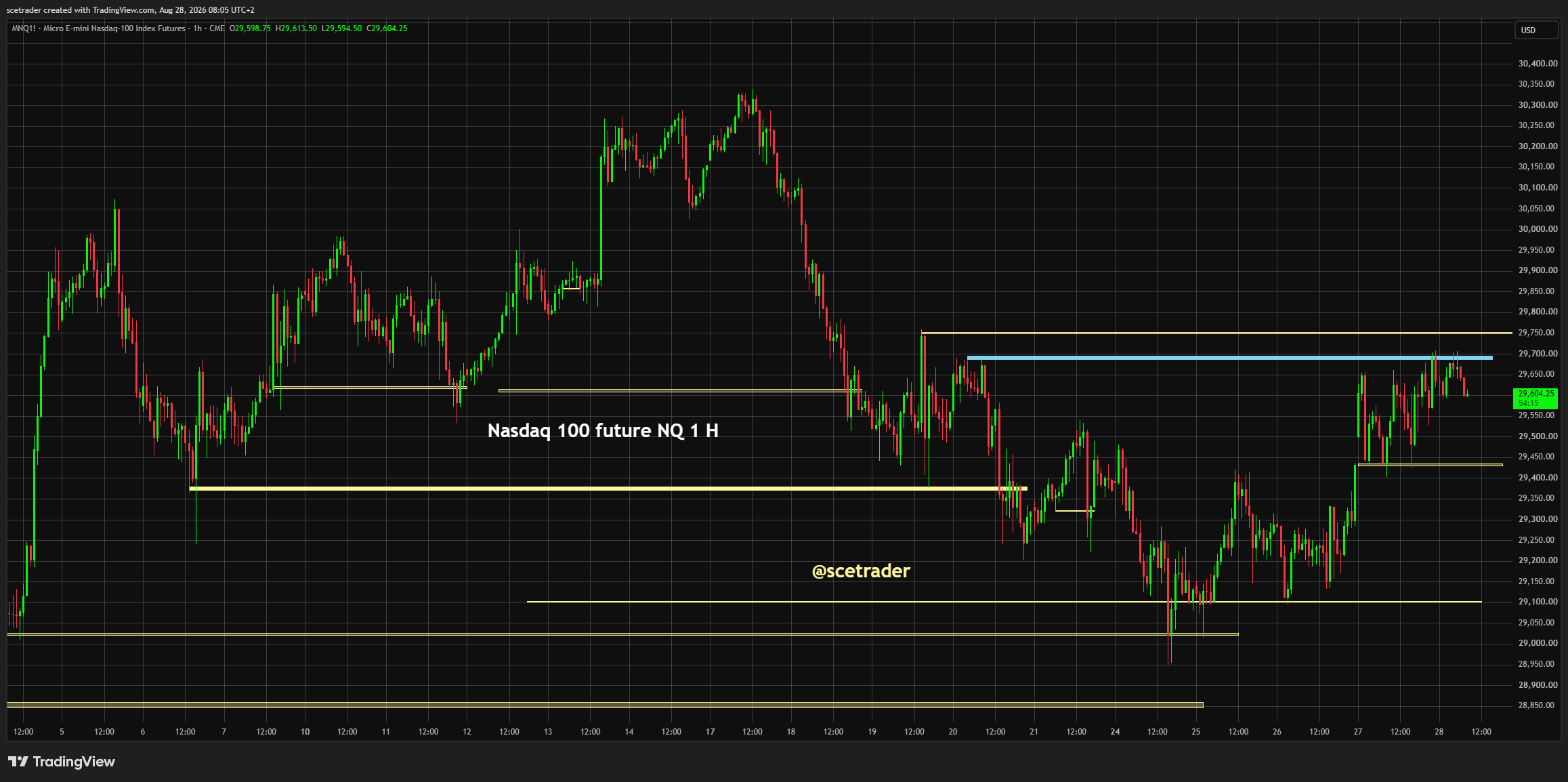
■ Nasdaq 100 / blauwe balk: de Nasdaq 100-future loopt opnieuw tegen de blauwe balk rond 26.690 aan. Je kunt dat niveau iets hoger of lager leggen, maar daar komt de markt tot nu toe niet overtuigend doorheen. Er is echt een impuls nodig om die weerstand te breken. De signalen wijzen op buy-on-dips, terwijl optiegegevens tegelijkertijd aangeven dat in de VS zowel dalingen als stijgingen worden afgeremd. Dat past voorlopig beter bij een plakkerige trading range dan bij een grote trenddag. Het kan dus best zijn dat een vroege stijging later op de dag weer wordt afgeremd en pas daarna blijkt of er voldoende kracht is voor een echte uitbraak. Komt de Nasdaq wel door die blauwe balk, dan kan er eerst nog een schijnbeweging komen voordat de markt verder probeert uit te breken.
■ Vrijdagstatistiek: over de afgelopen drie maanden was vrijdag in de Verenigde Staten vaker een stijgende dan een dalende beursdag. Tegelijk vonden juist op vrijdagen ook enkele grotere dalingen plaats. Dat maakt vandaag niet automatisch bullish. Als we moesten gokken, ligt consolidatie binnen een trading range voorlopig meer voor de hand dan een grote beweging in één richting.
■ Jackson Hole / Kevin Warsh: de markt maakt veel van deze toespraak en het wordt op de financiële zenders behoorlijk opgefokt. Dat hoort er natuurlijk ook bij, de reclame-inkomsten moeten doorgaan. Wij verwachten wel dat Warsh een aantal belangrijke zaken zal zeggen, maar waarschijnlijk ook probeert de markten niet onnodig te verstoren. Mogelijk maakt hij duidelijk dat de kapitaalmarktrente uiteindelijk wat terug moet, terwijl hij tegelijkertijd aangeeft dat een verdere renteverhoging mogelijk blijft als dat nodig is. Het hoeft dus helemaal niet zo zwart-wit hawkish of dovish te worden als de markt soms doet voorkomen.
■ Azië: het beeld is gemengd en er zit geen duidelijke lijn in. Daarmee geeft Azië vandaag weinig extra steun aan Europa. Na de sterke Amerikaanse technologierally blijft de reactie opnieuw vrij matig. Voor Europa is Azië daarmee eerder neutraal dan echt ondersteunend.
■ Tokyo CPI: de inflatie in Tokio kwam exact volgens verwachting binnen. Headline CPI bedroeg 1,9% jaar-op-jaar, exclusief vers voedsel 1,8% en exclusief vers voedsel en energie 2,0%. Geen inflatieschok dus. Daarmee krijgt de Bank of Japan uit deze cijfers geen nieuwe reden om plotseling veel hawkish-er te worden, maar verdwenen is de inflatie natuurlijk ook niet.
■ Rente: de Amerikaanse 10-jaarsrente staat rond 4,69% en de Japanse rente rond 2,93%. Voor Duitsland houden we circa 3,25% aan; het nieuw uitgeschreven niveau van 2,25% wijkt sterk af van de eerdere data en lijkt een transcriptfout. De kern verandert niet: rentes liggen wat hoger, maar nog steeds binnen de range van de afgelopen dagen. Dat hoeft voor aandelen op zichzelf helemaal geen probleem te zijn. In het verleden stonden rentes veel hoger. Het wordt pas vervelend als er een echte versnellende stijging ontstaat.
■ Treasury-buybacks / midterms: er wordt opnieuw gespeculeerd over buybacks van langlopend Amerikaans staatspapier. Dat kan in eerste instantie de lange rente drukken en zelfs een short squeeze in aandelen veroorzaken. Tegelijk past dit in onze bredere gedachte dat Trump richting de midterms waarschijnlijk alles zal proberen om de beurskoersen zo sterk mogelijk te houden. Maar zo’n onnatuurlijk ondersteunde beweging kan daarna ook weer gedeeltelijk worden teruggegeven. Dus eerst mogelijk huppakee omhoog en vervolgens opnieuw kijken hoeveel van die stijging werkelijk blijft staan.
■ Iran / Straat van Hormuz: de berichtgeving blijft behoorlijk tegenstrijdig. Amerikaanse financiële zenders en persbureaus melden dat er nauwelijks olie door de Straat van Hormuz gaat, terwijl Goldman Sachs juist stelt dat de doorvaart alweer op ongeveer twee derde van het normale niveau ligt. Als Goldman gelijk heeft, dan heeft Trump mogelijk ook gelijk dat de olieflow weer op gang komt en heeft de dalende olieprijs dus eveneens gelijk. Tegelijk zegt de Iraanse veiligheidschef Rezaei dat schepen via een aangewezen centraal kanaal kunnen varen als de VS aan Iraanse voorwaarden voldoet. Bemiddelaars zouden Iran om die voorwaarden hebben gevraagd en Teheran stelt nu een lijst op, waaronder een einde aan de oorlog in de regio. Iran zegt daarnaast met Oman al een corridor te hebben afgesproken, deels in Omaanse en deels in Iraanse wateren. Er wordt dus duidelijk onderhandeld over doorgang. Dat is minder zwart-wit dan “Hormuz dicht”, maar er is nog geen witte rook. De Iraniërs blijven treiteren en vooral richting en na de midterms moet rekening worden gehouden met de mogelijkheid dat de spanningen opnieuw oplopen.
■ Olie: staat ruim een half procent lager. Als de doorvaart inderdaad alweer op ongeveer twee derde van normaal ligt, hoeft olie ook helemaal niet omhoog. De markt lijkt voorlopig vertrouwen te hebben dat er geen acute grote verstoring komt. Tegelijk blijft de hele berichtgeving zo tegenstrijdig dat er best een stuk manipulatie in kan zitten. Voorlopig geeft de olieprijs in ieder geval het signaal dat de daadwerkelijke flow zwaarder weegt dan de dreigende headlines.
■ Rusland / NAVO: naast Iran blijven ook berichten rond Rusland en een mogelijke nep- of schijnaanval richting een NAVO-land rondzingen. Wat daar wel en niet van waar is weten we niet en daar gaan we niet over speculeren. Het relevante punt voor de markt is dat geopolitiek op de voorgrond blijft terwijl beleggers technisch al tegen weerstand aanlopen.
■ Goud en zilver: goud en zilver liggen wat verdeeld, maar de onderliggende toon blijft goed. Goud heeft volgens Bloomberg zijn beste maand sinds 1999 achter de rug. Dat is nogal wat. Wij hebben zelf call spreads op een goud-ETF liggen en hebben bij goud nog steeds het gevoel dat deze adempauze zomaar kan eindigen in een nieuwe sprint omhoog vandaag of morgen. Zilver staat rond $68,80 en blijft technisch hangen tegen de eerder genoemde weerstand rond $68-$70. Daar moet het eerst overtuigend doorheen.
■ Valuta: EUR/USD staat rond 1,1650 en dollar/yen rond 159,5. Voorlopig geen bewegingen die het bredere marktbeeld domineren.
■ Europa / wall of worries: Europa blijft opvallend weerbaar. Dat past bij het klassieke “climbing the wall of worries”: iedere dag zijn er genoeg redenen om bang te zijn, maar koersen blijven toch overeind of lopen zelfs verder op. Wij kunnen het natuurlijk hartstikke mis hebben, niemand kan voorspellen, maar op dit moment denken wij nog steeds dat de markt eerst verder omhoog gaat voordat beleggers zich echt druk gaan maken over de enorme schulden of bijvoorbeeld de spookschulden binnen AI. Dat risico bestaat, maar volgens ons speelt het nu nog niet.
■ Bedrijfsresultaten / fundamentele onderlaag: wat steeds opnieuw opvalt is dat bedrijven gewoon voldoende goede cijfers blijven afleveren. Ackermans & van Haaren en Recticel zitten in totaal verschillende sectoren, maar beide komen met sterke updates. Er wordt cash gegenereerd en dat geld wordt opnieuw ingezet. Zolang die operationele onderlaag intact blijft, is het moeilijk om structureel bearish te worden.
■ Ackermans & van Haaren: de eerste jaarhelft is gewoon sterk. De nettowinst steeg 24% naar €339,6 miljoen en de groep verhoogt de outlook naar meer dan 10% winstgroei voor heel 2026. De kernsegmenten draaien goed, Growth Capital verbetert en de nettokaspositie bedraagt €524,4 miljoen. Daarnaast investeert AvH circa €93 miljoen in Grieg Aqua en zet daarmee een nieuwe stap in aquacultuur en zalmkweek. Er valt eigenlijk weinig op de cijfers aan te merken. Wij zijn bullish. Als wij het aandeel zouden hebben, zouden wij het vasthouden. Voor een nieuwe instap blijft de waardering wel belangrijk.
■ Recticel: de cijfers zijn verrassend sterk. Vooral het tweede kwartaal laat duidelijke operationele versnelling zien, met groei in zowel Insulation Boards als Insulated Panels. De Amerikaanse uitbreiding verloopt volgens plan en de nieuwe recyclagefabriek in België is gestart. De outlook voor 2026 is stevig en ondersteunt het idee dat het betere winsttempo kan doorlopen. Operationeel zijn wij bullish. Technisch nadert het aandeel wel weerstand. Als wij het zouden hebben, vasthouden. Nu niet bijkopen; eerst zien of die weerstand daadwerkelijk wordt gebroken of wachten op een betere terugval.
■ EssilorLuxottica: koopt 5 miljoen eigen aandelen in. Op dagbasis zien we daar voorlopig niet echt een bijzonder koerseffect van en dat hoeft ook niet. Veel belangrijker is de langere termijn. EssilorLuxottica is door zijn schaal, merken, distributie en positie in slimme brillen wat ons betreft één van de best gepositioneerde Europese aandelen voor de opkomst van smart glasses en uiteindelijk AI-brillen. De aandeleninkoop helpt natuurlijk, maar de echte investment case zit in het idee dat brillen uiteindelijk een nieuw hardwareplatform kunnen worden. Voor de langere termijn blijven wij hier bullish.
■ Duitse chemie: voor het eerst in vier jaar is het oordeel over de actuele omstandigheden in de Duitse chemiesector weer positief. De Ifo-business climate index sprong in augustus naar -2,4 van -26,3 en de beoordeling van de huidige situatie naar +11,6 van -14,6. Dat kan op korte termijn best een lift geven aan BASF, Evonik, Brenntag, Lanxess en Wacker Chemie. Wel niet te vroeg juichen: de productie ligt nog circa 20% onder 2021 en de capaciteitsbenutting van 73,2% blijft ver onder het langjarige gemiddelde van ongeveer 80,4%. Een deel van de verbetering komt bovendien doordat verstoringen bij Aziatische en Midden-Oosterse leveranciers tijdelijk extra vraag richting Duitsland sturen. Voor de korte termijn dus bullish voor het sentiment rond deze aandelen, maar nog geen bewijs van een structureel herstel van de Duitse chemie.
■ Wolters Kluwer: vandaag vooral interessant als test van het fallen-angel-verhaal. Wij willen zien of dips opnieuw worden gekocht. Na de eerdere forse correctie hoeft er nu geen nieuw groot fundamenteel verhaal te worden verzonnen; juist het koersgedrag op zwakke momenten laat zien of beleggers weer bereid zijn stukken op te pakken.
■ RELX: hetzelfde geldt voor RELX. Ook hier kijken we of beleggers op dips opnieuw instappen. Als dat gebeurt, bevestigt dat dat de markt de eerdere angst rond software en AI steeds meer achter zich laat.
■ Adyen: juist het PayPal-verhaal brengt ons opnieuw bij Adyen. Adyen heeft een grote oorlogskas, waarbij we het natuurlijk niet hebben over klantengeld, en blijft één van de beste payment processors ter wereld met zeer grote klanten. Het aandeel blijft moeilijk en beweeglijk, maar onze langere-termijnvisie is duidelijk positief. Je koopt wat, legt het weg en over een paar jaar kan Adyen volgens ons zomaar weer on top of the bill staan. De eerdere angst dat Adyen onder Trump politiek buitenspel zou worden gezet bij Amerikaanse klanten lijkt bovendien overschat. Eli Lilly gebruikt Adyen inmiddels voor bepaalde betalingsprocessen. Dat laat zien dat grote Amerikaanse klanten gewoon zaken blijven doen met het Nederlandse bedrijf.
■ SK Hynix / memory: de CEO van SK Hynix verwacht dat het wereldwijde tekort aan geheugenchips tot eind 2030 kan aanhouden en ziet weinig risico op overaanbod. Zijn belangrijkste punt is dat memory in het AI-tijdperk niet langer gewoon een commodity is. Dat is voor ons duidelijk bullish. De opmerkingen kwamen bij de eerste steenlegging van een nieuwe geavanceerde chipverpakkingsfabriek van circa $4 miljard in Indiana, die vanaf 2029 volgende generatie HBM in volume moet produceren. Als één van de grootste memoryspelers tegelijk waarschuwt voor jarenlange schaarste én miljarden investeert in nieuwe HBM-capaciteit, ondersteunt dat precies onze positieve langetermijnvisie op memory.
■ OpenAI / Astra: er zijn berichten over een volgende grote stap van OpenAI met Astra, waarbij AI veel langer zelfstandig zou kunnen werken, software kan bedienen en in feite dagen achtereen taken voor een gebruiker kan uitvoeren. Als dat echt werkt zoals beschreven, is dat een grote doorbraak. Dan verandert opnieuw de rol van software en gaat de vraag naar AI-compute juist nog veel verder omhoog. Uiteindelijk kom je dan weer terug bij memory, chipbedrijven, datacenters en stroom. Zelfs als de markt tussentijds corrigeert, blijft voor ons juist in die individuele infrastructuurnamen de langere trend omhoog.
■ NVIDIA: won gisteren uiteindelijk circa 8,8% en ook de volumes waren goed. Dat is belangrijk, want het was geen dunne opleving. Of het aandeel meteen uitbreekt en weer vol naar boven gaat, moet nog blijken. Wij blijven er wel bij dat NVIDIA steeds meer een aandeel is dat trapsgewijs verder stijgt. Geen rechte lijn, maar hogere niveaus worden steeds weer opgezocht.
■ Marvell Technology: staat lager na de cijfers, maar die cijfers vinden wij gewoon goed. Voor ons is er een groot verschil tussen een aandeel dat na cijfers daalt omdat er structureel iets mis is en een aandeel dat daalt terwijl het bedrijf juist on top of de technologische evolutie zit. Marvell hoort duidelijk bij die tweede groep en is bovendien een chipbedrijf dat technologisch steeds iedereen een stapje voor probeert te zijn. Dat kan uiteindelijk een hele grote winst in het aandeel opleveren. Op dagbasis kan het natuurlijk alle kanten op flipperen, maar structureel zit Marvell precies waar je wilt zitten: AI, chips, datacenters en connectivity. Voor ons is dit niet een aandeel waarvan je na zo’n daling denkt dat het verhaal klaar is. Integendeel, dips kunnen juist opnieuw kansen bieden.
■ IREN: het voormalige Iris Energy bouwt en beheert geavanceerde datacenters en is steeds meer veranderd in een AI-facilitator. De cijfers zijn gemengd. Structureel zit het bedrijf wel in het goede thema, maar wij twijfelen of de koers na deze update meteen verder omhoog moet. Interessant verhaal, maar geen vanzelfsprekende directe koop.
■ Salesforce / Marc Benioff: Salesforce won gisteren circa 22,5%. Belangrijker vinden wij de opmerking van topman Benioff dat de markt moet stoppen met die onzin dat SaaS en software door AI simpelweg verdwijnen. Daar heeft hij voor een belangrijk deel gelijk in. Software blijft juist een belangrijke laag binnen AI. AI verandert software, maar maakt software niet ineens overbodig. Dat kan veel breder doorwerken dan alleen bij Salesforce.
■ ServiceNow: won circa 10%. Mooi om te zien, want dit is één van de fallen angels waar we het eerder over hebben gehad. Wij hebben al eerder gezegd dat het aandeel weer flink kon herstellen en dat is inmiddels ook gebeurd. Nu wordt vooral interessant of dips opnieuw worden gekocht.
■ Zscaler: won eveneens ongeveer 10%. Ook hier zie je hetzelfde patroon: een fallen angel die opnieuw wordt opgepakt zodra beleggers minder zwart-wit naar software en AI kijken.
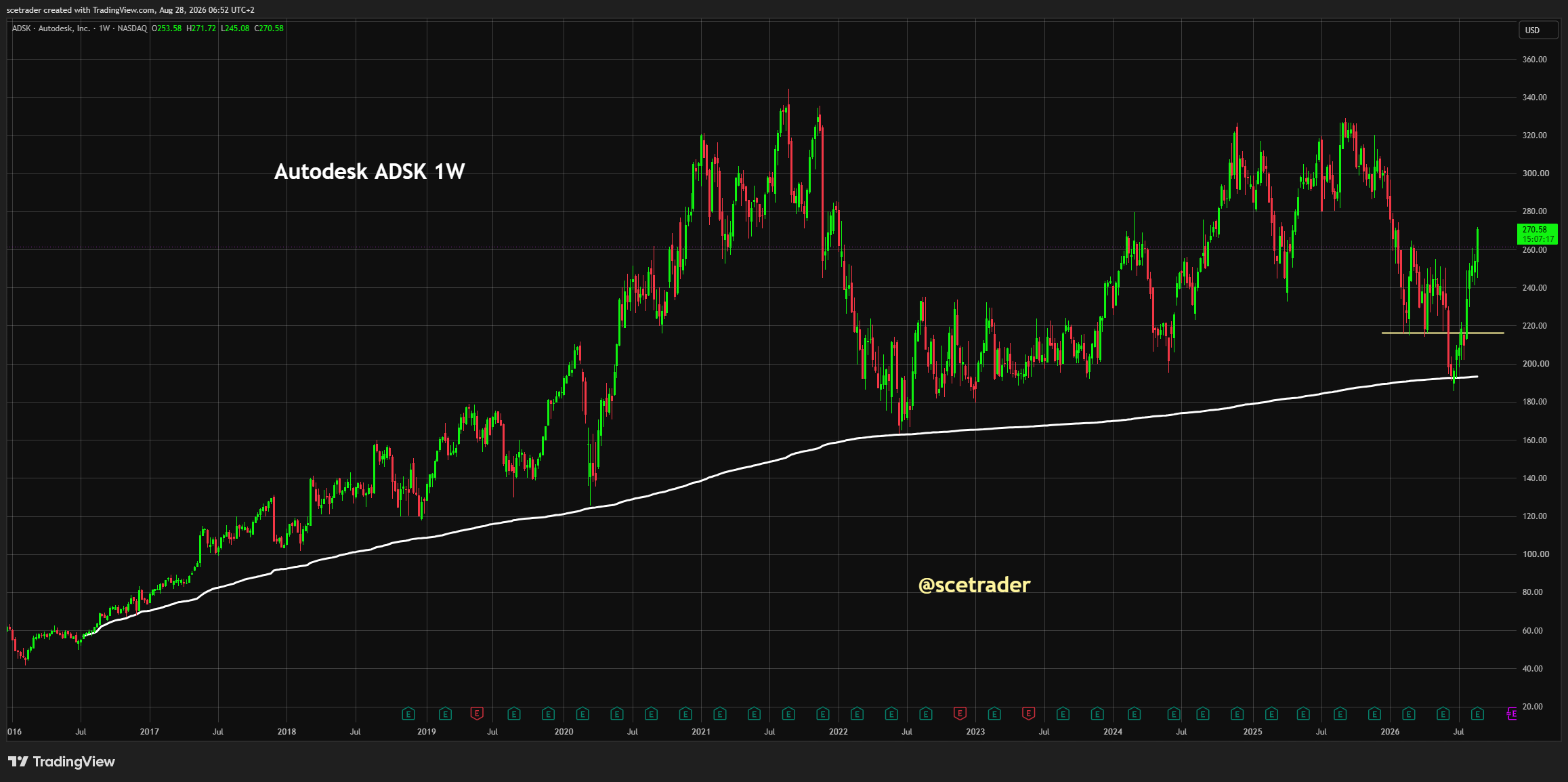
■ Autodesk: kwam met goede cijfers. De Q2-omzet bedroeg $2,05 miljard tegenover $2,01 miljard verwacht, adjusted EPS $3,30 tegenover $2,62 een jaar geleden, de adjusted operating margin 41,0% tegenover 39,3% verwacht en billings $1,85 miljard tegenover $1,81 miljard. Voor Q3 rekent Autodesk op $2,13-$2,14 miljard omzet tegenover circa $2,08 miljard verwacht en adjusted EPS van $3,04-$3,09. Het aandeel reageerde nabeurs positief. Autodesk blijft voor ons een fallen angel die al behoorlijk is hersteld. Wij zouden het nu niet meteen achterna kopen, maar op dips blijft het interessant. Technisch is opnieuw opvallend dat het aandeel precies rond de VWAP-lijn draaide. Die VWAP-lijnen blijven voor ons één van de beste technische hulpmiddelen die er zijn.
■ PayPal: de mogelijke overname door Advent en Stripe gaat niet door. Wij vinden dat heel slecht nieuws voor PayPal. Natuurlijk kan een deal om allerlei redenen afketsen, maar de kernvraag blijft: wat is dan precies de toegevoegde waarde van PayPal voor een partij als Stripe? Als die er zelfs tegen de huidige waardering niet voldoende wordt gezien om door te zetten, zet dat vraagtekens bij het hele overnameverhaal. Daarmee verdwijnt bovendien een stuk speculatieve premie uit het aandeel.
■ Crypto-aandelen: waren opnieuw hoger, maar wij beginnen ons wel af te vragen of er niet eerst nog een dip komt voordat de volgende echte stijgingsfase begint. De beweging blijft sterk, maar na de recente rally hoeft niet alles in één rechte lijn door.
■ Bitcoin: staat rond $79.850 en circa een half procent lager. Gisteren racete Bitcoin eerst naar boven, maar liep uiteindelijk tegen weerstand. Dat maakt het heel goed mogelijk dat er eerst nog een dipper komt voordat de volgende beweging omhoog begint. Voorlopig dus niet automatisch achter de rally aan.
■ Amerikaanse schuld: overal blijven verhalen verschijnen over de enorme Amerikaanse schuld en het einde van de financiële wereld. Wij blijven erbij dat die automatische conclusie pure onzin is. De schuld is absoluut een serieus probleem, maar “grote schuld dus financiële crisis” is veel te gemakkelijk. Wij denken dat markten eerst nog verder omhoog kunnen voordat beleggers zich echt zorgen gaan maken over schulden en de mogelijke spookschulden binnen AI.
■ September: augustus loopt af en we gaan richting september, historisch vaak één van de moeilijkste maanden voor financiële markten. Dat betekent dus ook dat we niet te vroeg moeten juichen. De signalen wijzen op buy-on-dips, maar dat betekent niet dat iedere dag omhoog moet of dat er geen scherpe tussentijdse dalingen kunnen komen.
■ Trading / opties: ik doe de laatste tijd weinig met opties en heb daardoor ook een paar dingen gemist. Dat hoort eenmaal bij het spel. Ik heb call spreads op een goud-ETF en ook call spreads in Marvell. Op deze dip in Marvell sluit ik zelfs niet uit dat ik nog een setje erbij leg. Short gaan blijft lastig omdat er ieder moment iets uit het Witte Huis kan komen waardoor de markt plotseling omhoogschiet. In deze flip-flop-markt zit je met opties heel snel aan de verkeerde kant van het hek.
■ Langere termijn: fallen angels, memory en chippers blijven voor mij interessant op dips. SK Hynix versterkt de memory-case alleen maar verder en Astra wijst opnieuw richting meer compute en meer infrastructuur. Tegelijk houd ik nog steeds cash en wacht ik op een duidelijker beeld om breder in te stappen. Dat kan eerder, maar het kan ook best pas na de midterms zijn.
■ Investment view: de signalen blijven onderliggend buy-on-dips, maar zonder reden om nu al te juichen. Europa is taai, bedrijfsresultaten zijn goed genoeg en technologie blijft de motor. Tegelijk ligt de Nasdaq 100 opnieuw tegen de blauwe balk rond 26.690, worden in de VS stijgingen én dalingen afgeremd en komt september dichterbij. De Duitse chemie kan op korte termijn wat extra steun krijgen, terwijl EssilorLuxottica voor ons juist een structurele smart-glassescase blijft. Eerst zien of de weerstand breekt. Zolang dat niet gebeurt, blijft een trading range het meest logische basisscenario.
English
■ Market view: European futures point to an opening around 0.3% higher on average. They have pulled back somewhat from the highs, but the picture remains mixed to slightly better. Europe has looked remarkably resilient lately and still appears to want to move higher underneath. At the same time, we are ultimately still being taken by the hand by the Americans. Wall Street moved higher yesterday, but mainly selectively: technology did the work while many other sectors lagged. NVIDIA ultimately gained around 8.8%, Salesforce roughly 22.5% and several software and cybersecurity names also surged. Positive, yes, but once again not a broad celebration. We do not see Amsterdam or other European markets pausing for a few days as a problem as long as the underlying trend remains intact.
■ Nasdaq 100 / blue bar: the Nasdaq 100 future is once again running into the blue bar around 26,690. You can place that level slightly higher or lower, but so far the market has not managed to break through convincingly. A real impulse is needed to clear that resistance. The signals point toward buy-on-dips, while options data simultaneously suggest that in the US both declines and rallies are being capped. For now, that fits a sticky trading range better than a major trend day. An early rally could therefore still be slowed later in the session, after which we will only know whether there is enough strength for a genuine breakout. If the Nasdaq does break through that blue bar, there could still be a false move first before the market attempts a further breakout.
■ Friday statistics: over the past three months, Friday has more often been an up day than a down day in the United States. At the same time, some of the larger declines also occurred on Fridays. So today is not automatically bullish. If we had to guess, consolidation inside a trading range still looks more likely than a large one-way move.
■ Jackson Hole / Kevin Warsh: the market is making a great deal out of this speech and the financial channels are certainly hyping it up. That is part of the game as well; advertising revenues have to keep flowing. We do expect Warsh to say some important things, but he will probably also try not to unnecessarily disturb markets. He may make clear that capital-market rates ultimately need to come down, while at the same time indicating that another rate hike remains possible if needed. So it may be far less black and white hawkish or dovish than the market sometimes makes it sound.
■ Asia: the picture is mixed and there is no clear line. Asia therefore provides little additional support for Europe today. After the strong US technology rally, the response remains fairly subdued. For Europe, Asia is therefore more neutral than genuinely supportive.
■ Tokyo CPI: inflation in Tokyo came in exactly as expected. Headline CPI was 1.9% year-on-year, CPI excluding fresh food 1.8% and CPI excluding fresh food and energy 2.0%. So there was no inflation shock. These figures give the Bank of Japan no fresh reason to suddenly become much more hawkish, although inflation has obviously not disappeared either.
■ Rates: the US 10-year yield is around 4.69% and Japan around 2.93%. For Germany we keep roughly 3.25%; the newly transcribed 2.25% differs sharply from the earlier data and appears to be a transcript error. The core point does not change: yields are somewhat higher but remain within the range of recent days. That does not have to be a problem for equities in itself. Rates have been much higher in the past. It only becomes uncomfortable when there is a genuinely accelerating move higher.
■ Treasury buybacks / midterms: there is again speculation about buybacks of long-dated US government bonds. That could initially push long-term yields lower and even trigger an equity short squeeze. At the same time, this fits our broader view that Trump will probably try everything he can to keep equity markets as strong as possible heading into the midterms. But a move supported unnaturally in that way could later give back part of those gains. So first perhaps huppakee higher, then we again have to see how much of that move actually holds.
■ Iran / Strait of Hormuz: reporting remains highly contradictory. US financial channels and news agencies say barely any oil is moving through the Strait of Hormuz, while Goldman Sachs says traffic has already recovered to around two-thirds of normal levels. If Goldman is right, then Trump may also be right that oil flows are returning and the falling oil price may therefore also be right. At the same time, Iranian security chief Rezaei says vessels may use a designated central channel if the US meets Iran’s conditions. Mediators reportedly asked Iran for those conditions and Tehran is preparing a list, including an end to the war in the region. Iran also says it has agreed a corridor with Oman, partly in Omani and partly in Iranian waters. Transit is therefore clearly being negotiated. That is less black and white than “Hormuz closed”, but there is still no white smoke. The Iranians continue to provoke and especially around and after the midterms the possibility of renewed escalation should remain on the radar.
■ Oil: is more than half a percent lower. If traffic has indeed recovered to roughly two-thirds of normal, oil does not need to rise at all. The market currently appears to have confidence that there will be no acute major disruption. At the same time, the reporting is contradictory enough that there may well be an element of manipulation involved. For now, the oil price is signalling that actual flows matter more than threatening headlines.
■ Russia / NATO: alongside Iran, stories continue to circulate about Russia and a possible fake or staged attack toward a NATO country. We do not know what is and is not true and we are not going to speculate. The relevant market point is simply that geopolitics remains in the foreground while investors are technically already running into resistance.
■ Gold and silver: gold and silver are somewhat mixed, but the underlying tone remains good. According to Bloomberg, gold has just had its best month since 1999. That is quite something. We personally hold call spreads on a gold ETF and still have the feeling that this pause in gold could quite easily end in another sprint higher today or tomorrow. Silver trades around $68.80 and remains technically stuck around the previously identified resistance zone near $68-$70. It needs to break convincingly through that area first.
■ Currencies: EUR/USD trades around 1.1650 and dollar/yen around 159.5. For now, there are no moves large enough to dominate the broader market picture.
■ Europe / wall of worries: Europe remains remarkably resilient. That fits the classic “climbing the wall of worries”: every day there are enough reasons to be afraid, but prices remain firm or continue rising. We can of course be completely wrong, nobody can predict markets, but at the moment we still think the market moves higher first before investors genuinely start worrying about enormous debt burdens or, for example, the shadow debts within AI. That risk exists, but in our view it is not yet driving the market.
■ Corporate earnings / fundamental backdrop: what continues to stand out is that companies keep delivering numbers that are simply good enough. Ackermans & van Haaren and Recticel operate in completely different sectors, yet both report strong updates. Cash is being generated and that capital is being reinvested. As long as that operational foundation remains intact, it is difficult to become structurally bearish.
■ Ackermans & van Haaren: the first half was simply strong. Net profit rose 24% to €339.6 million and the group raised its outlook to more than 10% profit growth for full-year 2026. Core segments performed well, Growth Capital improved and net cash stands at €524.4 million. AvH is also investing around €93 million in Grieg Aqua, adding a new position in aquaculture and salmon farming. There is actually very little to criticise in these numbers. We are bullish. If we owned the shares, we would hold them. For a new position, valuation remains important.
■ Recticel: the numbers are surprisingly strong. The second quarter in particular showed clear operational acceleration, with growth in both Insulation Boards and Insulated Panels. The US expansion is progressing according to plan and the new recycling plant in Belgium has started operations. The 2026 outlook is firm and supports the idea that the better profit momentum can continue. Operationally, we are bullish. Technically, however, the stock is approaching resistance. If we owned it, we would hold. We would not add here; first we want to see whether that resistance is actually broken or wait for a better pullback.
■ EssilorLuxottica: is buying back 5 million of its own shares. So far, we are not seeing a particularly meaningful day-to-day share-price effect, and that does not really matter. Much more important is the longer term. Through its scale, brands, distribution and positioning in smart glasses, EssilorLuxottica is in our view one of the best-positioned European stocks for the rise of smart glasses and eventually AI glasses. The buyback obviously helps, but the real investment case is the possibility that glasses become a new hardware platform. We remain bullish for the longer term.
■ German chemicals: for the first time in four years, German chemical companies have turned positive on current business conditions. The Ifo business-climate index jumped to -2.4 in August from -26.3, while the current-conditions gauge rose to +11.6 from -14.6. That could quite easily provide a short-term lift to BASF, Evonik, Brenntag, Lanxess and Wacker Chemie. We would not celebrate too early, however: production remains around 20% below 2021 levels and capacity utilisation of 73.2% remains well below the long-term average of roughly 80.4%. Part of the improvement also comes from disruptions at Asian and Middle Eastern suppliers temporarily redirecting demand toward Germany. So this is bullish for short-term sentiment in these stocks, but not yet proof of a structural revival of the German chemical industry.
■ Wolters Kluwer: today is mainly interesting as a test of the fallen-angel thesis. We want to see whether dips are bought again. After the earlier sharp correction, there is no need to invent a major new fundamental story; price behaviour on weakness is exactly what will show whether investors are willing to pick up shares again.
■ RELX: the same applies to RELX. We are watching to see whether investors buy dips again. If they do, that would confirm that the market is increasingly moving past its earlier fears around software and AI.
■ Adyen: the PayPal story brings us straight back to Adyen. Adyen has a large war chest, and we are obviously not talking about client money, and remains one of the best payment processors in the world with very large customers. The stock remains difficult and volatile, but our longer-term view is clearly positive. You buy some, put it away and in a few years Adyen could easily be back on top of the bill. Earlier fears that Adyen might be politically sidelined in the US under Trump also appear to have been exaggerated. Eli Lilly is now using Adyen for certain payment processes. That shows that major US customers continue to do business with the Dutch company.
■ SK Hynix / memory: SK Hynix’s CEO expects the global memory-chip shortage to last until the end of 2030 and sees little risk of oversupply. His key point is that memory is no longer simply a commodity in the AI era. We see that as clearly bullish. The comments came at the groundbreaking of a new roughly $4 billion advanced chip-packaging plant in Indiana, which aims to begin volume production of next-generation HBM in 2029. When one of the world’s largest memory players simultaneously warns of years of scarcity and invests billions in new HBM capacity, that fits precisely with our positive long-term view on memory.
■ OpenAI / Astra: there are reports of a next major step from OpenAI with Astra, where AI could work autonomously for much longer periods, operate software and effectively perform tasks for a user for days at a time. If it genuinely works as described, that would be a major breakthrough. It would again change the role of software and push demand for AI compute much higher. Ultimately that takes you back to memory, chip companies, data centres and power. Even if the market corrects in between, we still see the longer-term trend in those individual infrastructure names as upward.
■ NVIDIA: gained around 8.8% yesterday and volumes were also strong. That matters because this was not a thin bounce. Whether the stock immediately breaks out and charges higher again still has to be seen. We do remain of the view that NVIDIA is increasingly becoming a stock that rises in steps. Not a straight line, but higher levels continue to be revisited.
■ Marvell Technology: trades lower after earnings, but we think the numbers are simply good. For us there is a major difference between a stock falling after earnings because something is structurally wrong and a stock falling while the company remains on top of the technological evolution. Marvell clearly belongs in the second group and is also a chip company that constantly tries to stay one step ahead technologically. That could ultimately produce very large gains in the stock. On a day-to-day basis it can of course flip around in every direction, but structurally Marvell sits exactly where you want to be: AI, chips, data centres and connectivity. For us, this is not a stock where a post-earnings decline means the story is over. Quite the opposite, dips can create fresh opportunities.
■ IREN: the former Iris Energy builds and operates advanced data centres and has increasingly transformed into an AI facilitator. The results are mixed. Structurally it sits in the right theme, but we doubt whether the shares immediately need to continue higher after this update. Interesting story, but not an automatic buy.
■ Salesforce / Marc Benioff: Salesforce gained around 22.5% yesterday. More important in our view was CEO Benioff’s comment that the market should stop with the nonsense that SaaS and software simply disappear because of AI. He is right about a significant part of that. Software remains an important layer within AI. AI changes software, but does not suddenly make software irrelevant. That can have implications far beyond Salesforce.
■ ServiceNow: gained around 10%. Good to see, because this is one of the fallen angels we have discussed before. We previously said the stock could recover sharply and that has now happened. The next interesting question is whether dips are bought again.
■ Zscaler: also gained around 10%. Again, the same pattern: a fallen angel being picked up again as investors become less black and white about software and AI.
■ Autodesk: reported good numbers. Q2 revenue was $2.05 billion versus $2.01 billion expected, adjusted EPS $3.30 versus $2.62 a year ago, adjusted operating margin 41.0% versus 39.3% expected and billings $1.85 billion versus $1.81 billion. For Q3 Autodesk sees revenue of $2.13-$2.14 billion versus roughly $2.08 billion expected and adjusted EPS of $3.04-$3.09. The shares reacted positively after hours. Autodesk remains one of those fallen angels that has already recovered substantially. We would not chase it here, but on dips it remains interesting. Technically, it is again striking that the stock turned almost exactly around its VWAP line. Those VWAP lines remain one of the best technical tools available in our view.
■ PayPal: the potential takeover by Advent and Stripe is not happening. We see that as very bad news for PayPal. Of course a deal can fail for many reasons, but the key question remains: what exactly is PayPal’s added value to a party such as Stripe? If that value is not sufficient even at the current valuation to push a deal through, that raises questions about the entire takeover story. It also removes part of the speculative premium from the stock.
■ Crypto-related stocks: were higher again, but we are beginning to wonder whether there might first be another dip before the next genuine leg higher begins. The move remains strong, but after the recent rally not everything has to continue in a straight line.
■ Bitcoin: trades around $79,850 and is down roughly half a percent. Yesterday Bitcoin initially raced higher but eventually ran into resistance. That makes it quite possible that there is first another dip before the next move higher begins. So for now, no reason to automatically chase the rally.
■ US debt: stories continue to appear about the enormous US debt and the end of the financial world. We remain of the view that this automatic conclusion is nonsense. The debt is absolutely a serious problem, but “large debt therefore financial crisis” is far too simplistic. We think markets can still move higher first before investors genuinely start worrying about debt and the possible shadow debts within AI.
■ September: August is ending and September is approaching, historically often one of the most difficult months for financial markets. That also means we should not celebrate too early. The signals point toward buy-on-dips, but that does not mean every day has to be higher or that sharp interim declines cannot occur.
■ Trading / options: I have been doing very little with options lately and have therefore also missed a few moves. That is simply part of the game. I hold call spreads on a gold ETF and also call spreads in Marvell. On this dip in Marvell, I would not rule out adding another set. Going short remains difficult because something can come out of the White House at any moment and suddenly push the market higher. In this flip-flop market, options can put you on the wrong side of the fence very quickly.
■ Longer term: fallen angels, memory and chip stocks remain interesting to me on dips. SK Hynix only strengthens the memory case further and Astra again points toward more compute and more infrastructure. At the same time, I am still holding cash and waiting for a clearer picture before stepping in more broadly. That could happen sooner, but it could also take until after the midterms.
■ Investment view: the underlying signals still point toward buy-on-dips, but there is no reason to celebrate yet. Europe is resilient, corporate earnings are good enough and technology remains the engine. At the same time, the Nasdaq 100 is again running into the blue bar around 26,690, both rallies and declines are being capped in the US and September is approaching. German chemicals may receive some short-term support, while EssilorLuxottica remains a structural smart-glasses case for us. First we want to see whether resistance breaks. Until then, a trading range remains the most logical base case.
Disclaimer Aan de door ons opgestelde informatie kan op geen enkele wijze rechten worden ontleend. Alle door ons verstrekte informatie en analyses zijn geheel vrijblijvend. Alle consequenties van het op welke wijze dan ook toepassen van de informatie blijven volledig voor uw eigen rekening.
Wij aanvaarden geen aansprakelijkheid voor de mogelijke gevolgen of schade die zouden kunnen voortvloeien uit het gebruik van de door ons gepubliceerde informatie. U bent zelf eindverantwoordelijk voor de beslissingen die u neemt met betrekking tot uw beleggingen.


