🎨 Marktoverzicht: AEX - SPX - Goud - Bitcoin - FAST - ASMI - TSLA en meer
Wil je alle artikelen kunnen lezen en elke podcast beluisteren? Neem dan een abonnement en krijg toegang tot alle artikelen en de database met duizenden berichten.
■ Europa / marktbeeld: Europa blijft opvallend weerbaar. De AEX staat ongeveer 0,4% hoger, de DAX beweegt nauwelijks, Parijs blijft vrijwel zijwaarts en de BEL20 verliest circa 0,3%. Dat is belangrijker dan de kleine procentuele bewegingen zelf. Olie en kapitaalmarktrentes zijn de afgelopen dagen behoorlijk opgelopen zonder dat Europa werkelijk ontspoorde. Wall Street oogt ondertussen meer als een bokkensprongen- of flipperkastbeurs: hard omhoog, plotseling weer terug en daarna opnieuw herstellen. Als de Amerikaanse payrolls vanmiddag geen grote verstoring veroorzaken, sluiten wij niet uit dat Wall Street nog een positieve dag aan de rally probeert vast te plakken.
■ AEX / 1.100: de AEX noteert opnieuw rond de psychologisch belangrijke 1.100-zone, die de afgelopen dagen verschillende keren werd getest en redelijk standhield. Dat maakt dit niveau steeds relevanter als technische referentie. De index wordt bovendien stevig gedragen door de chippers. Zolang Wall Street de gisteren heroverde niveaus vasthoudt, blijft het scenario open dat de AEX verder probeert te consolideren boven deze zone.
■ AEX-optie-algoritme: het optie-algoritme dat wij vanochtend rond 07:52 hebben gepubliceerd staat nog steeds op een stijging. Opvallend is dat het model die opwaartse bias al langere tijd door verschillende marktomstandigheden heen heeft vastgehouden. Dat kan uiteraard draaien, maar op dit moment geeft het model nog altijd geen shortsignaal. Zie bericht.
■ SPX / Wall Street: de S&P 500 brak gisteren eindelijk door de weerstand waar de index meerdere dagen tegenaan liep en tetterde daarna verder omhoog. Dat vervolg na de uitbraak was voor ons belangrijker dan de break zelf. De grote vraag voor vanmiddag is of de SPX die gewonnen niveaus na de payrolls vasthoudt. Lukt dat, dan kan de index binnen de bestaande trading range opnieuw richting de bovenkant bewegen. We spreken nadrukkelijk nog niet over een nieuwe structurele breakout. De sessie van gisteren was breed sterk: S&P 500 +1,06%, Dow +1,18% en Nasdaq 100 +1,16%. Ook fundamenteel blijft de ondergrond sterk, met bijna 32% verwachte Q2-winstgroei tegenover ongeveer 23% waarop vooraf werd gerekend, terwijl 86% van de rapporterende bedrijven de verwachtingen heeft verslagen. AI-infrastructuur levert daarbij een zeer groot deel van de winstgroei.
■ Vrijdag-effect / Amerikaanse handel: statistisch zijn vrijdagen de afgelopen maanden in de VS relatief vaak positief geweest. Daar staat tegenover dat juist op de vrijdagen waarop het fout ging ook enkele van de stevigste dalingen zaten. Het is dus geen signaal waarop we blind kunnen varen, maar het past wel bij ons beeld voor vandaag: als de payrolls geen verstoring veroorzaken, kan de markt nog een dag hoger proberen; valt de reactie tegen, dan kan het in deze flipperkastmarkt ook snel de andere kant op gaan.
■ Payrolls / Waller / inflatie: vanmiddag krijgen we de Amerikaanse werkgelegenheidscijfers en daar kan vanzelfsprekend flinke korte-termijnvolatiliteit op komen. Toch denken wij dat deze payrolls uiteindelijk minder belangrijk kunnen blijken dan de markt nu misschien denkt. Fed-gouverneur Christopher Waller heeft het debat nadrukkelijk richting inflatie verschoven. Als de inflatie niet opnieuw te hard oploopt en vanzelf verder richting 2% beweegt, hoeft de Fed mogelijk helemaal niet opnieuw te verhogen. Daarmee kunnen CPI, PPI en andere inflatiemaatstaven na de eerste payrollreactie snel weer belangrijker worden.
■ Amerikaanse macro / rente: de Amerikaanse economie oogt nog altijd behoorlijk sterk. De ISM Services-index steeg naar 55,4, het hoogste niveau in zes maanden, terwijl initial claims rond 206.000 lagen. Tegelijk liep de prices-paid-component op naar 72,6, het hoogste niveau in vier jaar. Dat blijft de spagaat: economische kracht ondersteunt de winsten, maar te sterke prijsdruk kan de lange rente weer omhoog duwen. De Amerikaanse 10-jaarsrente ligt rond 4,76%, weer onder 4,8%. Niet spectaculair, maar iedere rentedaling voelt in deze markt als een strohalm. De Duitse 10-jaarsrente ligt rond 3,35% en ook de Japanse lange rente is enkele basispunten teruggekomen.
■ Chinese banken / Treasuries: Chinese commerciële banken kopen volgens berichten opnieuw Amerikaanse Treasuries nadat zij de rente op dollardeposito’s verhoogden. Dat lijkt vooral commerciële vraag en geen draai in het officiële Chinese reservebeleid. Chinese Treasury-holdings daalden nog van $695,3 miljard in januari naar $633,4 miljard in juni. Extra bankvraag kan Treasuries ondersteunen en de lange rente wat afremmen.
■ VIX / VVIX: zowel de VIX als de VVIX liep gisteren terug. Dat vinden wij opvallend omdat olie en rente nog steeds duidelijke risicofactoren zijn. Het betekent niet dat alle problemen weg zijn, maar de optiemarkt laat vooralsnog geen duidelijke nieuwe stressgolf zien. De onderliggende boodschap is eerder afwachten dan paniek.
■ Bessent / obligaties: Scott Bessent blijft voor ons een joker in de achterzak. Ons scenario is dat de Amerikaanse overheid richting de midterms zou kunnen proberen de lange rente omlaag te krijgen door op grote schaal langlopende staatsleningen terug te kopen. In de meest uitgesproken variant praten we zelfs over een programma van rond $1 biljoen. Dat is nadrukkelijk geen aangekondigd beleid, maar als zoiets daadwerkelijk wordt ingezet, kan het een forse squeeze in obligaties veroorzaken en mogelijk ook goud, zilver en risicovolle assets een extra zet geven.
■ Olie / Hormuz: olie staat ongeveer 0,5% lager en loopt dus weer wat terug. Onze langere gedachte blijft dat extreem hoge olieprijzen uiteindelijk hun eigen vijand worden: demand destruction remt de economie en uiteindelijk ook de vraag naar olie. Het echte risico blijft die ene geopolitieke headline die niemand kan voorspellen, bijvoorbeeld een zwaar incident met een tanker in de Straat van Hormuz waardoor de vaarroute wordt geraakt. Dat kan het complete marktbeeld in één klap veranderen.
■ Valuta: EUR/USD staat rond 1,1620. Rond de yen blijft daarnaast het risico bestaan op verbale of daadwerkelijke interventie. Daarmee blijft USD/JPY een markt waarin plotselinge scherpe bewegingen mogelijk zijn.
■ Goud / zilver: goud en zilver bewegen verdeeld. Onze langere gedachte verandert weinig: als de lange rente verder afkoelt, blijft er richting het einde van het jaar ruimte voor hogere edelmetaalprijzen. Daarnaast geldt dat een eventueel groot Amerikaans bond-buybackprogramma volgens ons een forse squeeze in goud en zilver kan veroorzaken. Wie daar heel speculatief op wil inspelen kan naar een verre out-of-the-money call of callspread op een zilver-ETF kijken, maar dat blijft puur speculatief.
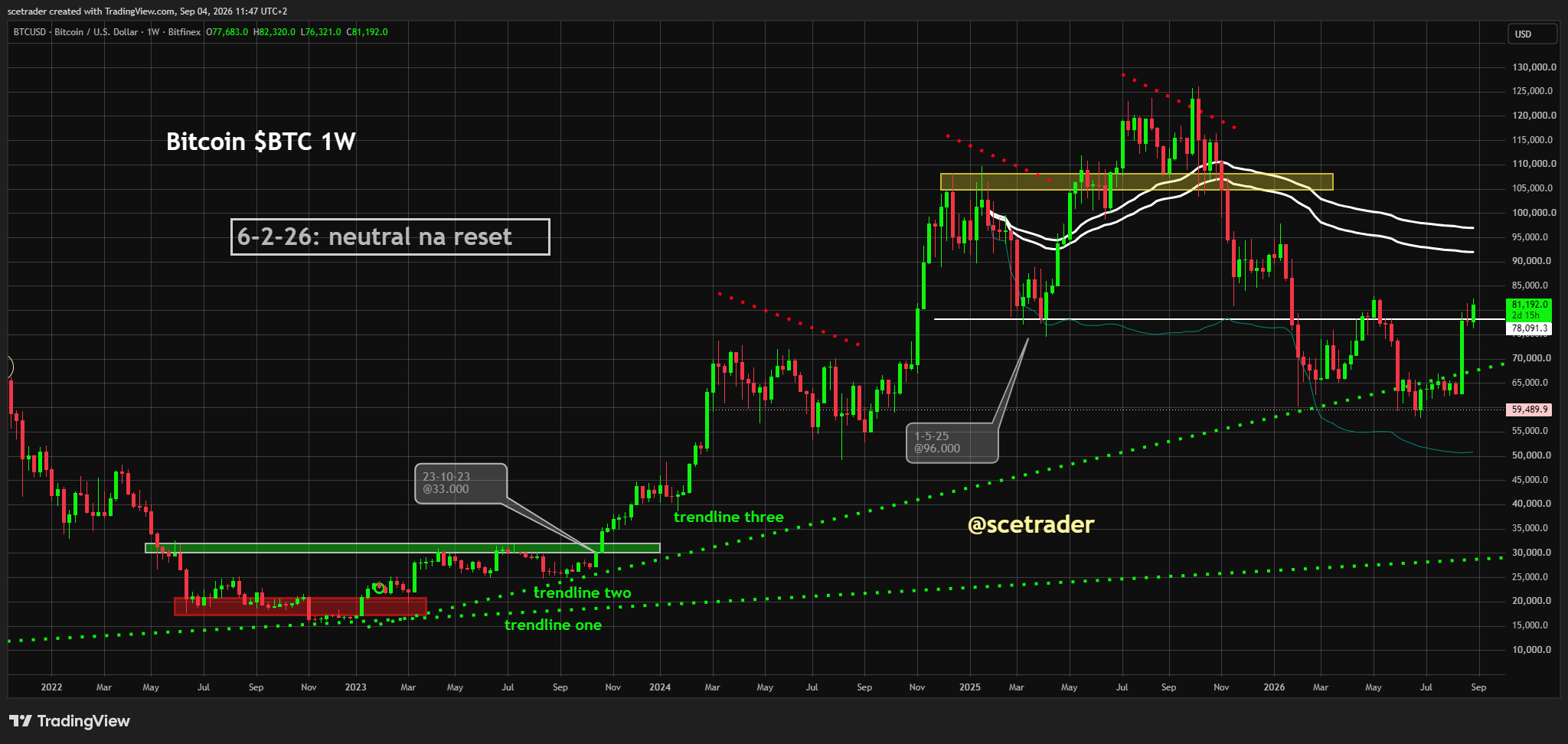
■ Bitcoin: Bitcoin staat rond $81.200. Vorige week had de munt duidelijk moeite met de zone rond $80.000. Juist daarom wordt het interessant als Bitcoin daar overtuigend boven weet te blijven en verder uitbreekt. In dat scenario liggen volgens onze technische lezing hogere VWAP-zones open en zou uiteindelijk zelfs een beweging richting bijna $100.000 denkbaar worden. Dat is geen voorspelling, maar wel het technische scenario als de oude weerstand daadwerkelijk in steun verandert.
■ Physical AI: wij blijven denken dat we pas aan het begin staan van een veel grotere ontwikkeling waarin AI niet alleen over datacenters en software gaat, maar steeds meer over robots, autonome systemen en physical AI. Wat vandaag nog sciencefiction klinkt, kan over vijf of tien jaar volkomen normaal zijn. Mensen waren ooit ook bang voor locomotieven omdat ze te hard gingen; uiteindelijk verdween paard en wagen gewoon uit het straatbeeld. Natuurlijk zal de AI-hype ooit tegen een muur lopen en weten we niet wie uiteindelijk de winnaars zijn, maar de investeringsgolf zelf is voorlopig nog in volle gang.
■ Chips / ASMI / Besi / ASML: chips behoren opnieuw tot de sterkste hoeken van Amsterdam. ASMI wint ongeveer 3,5%, Besi circa 3% en ASML ongeveer 2%. Wij blijven het idee houden dat de markt op lange termijn nog altijd onderschat hoe groot de chipindustrie kan worden. Dat betekent nadrukkelijk niet dat chipkoersen alleen maar in een rechte lijn omhoog gaan. Correcties horen erbij. Maar de structurele vraag vanuit AI, datacenters, automotive, industrial en steeds meer andere toepassingen blijft volgens ons uitzonderlijk sterk.
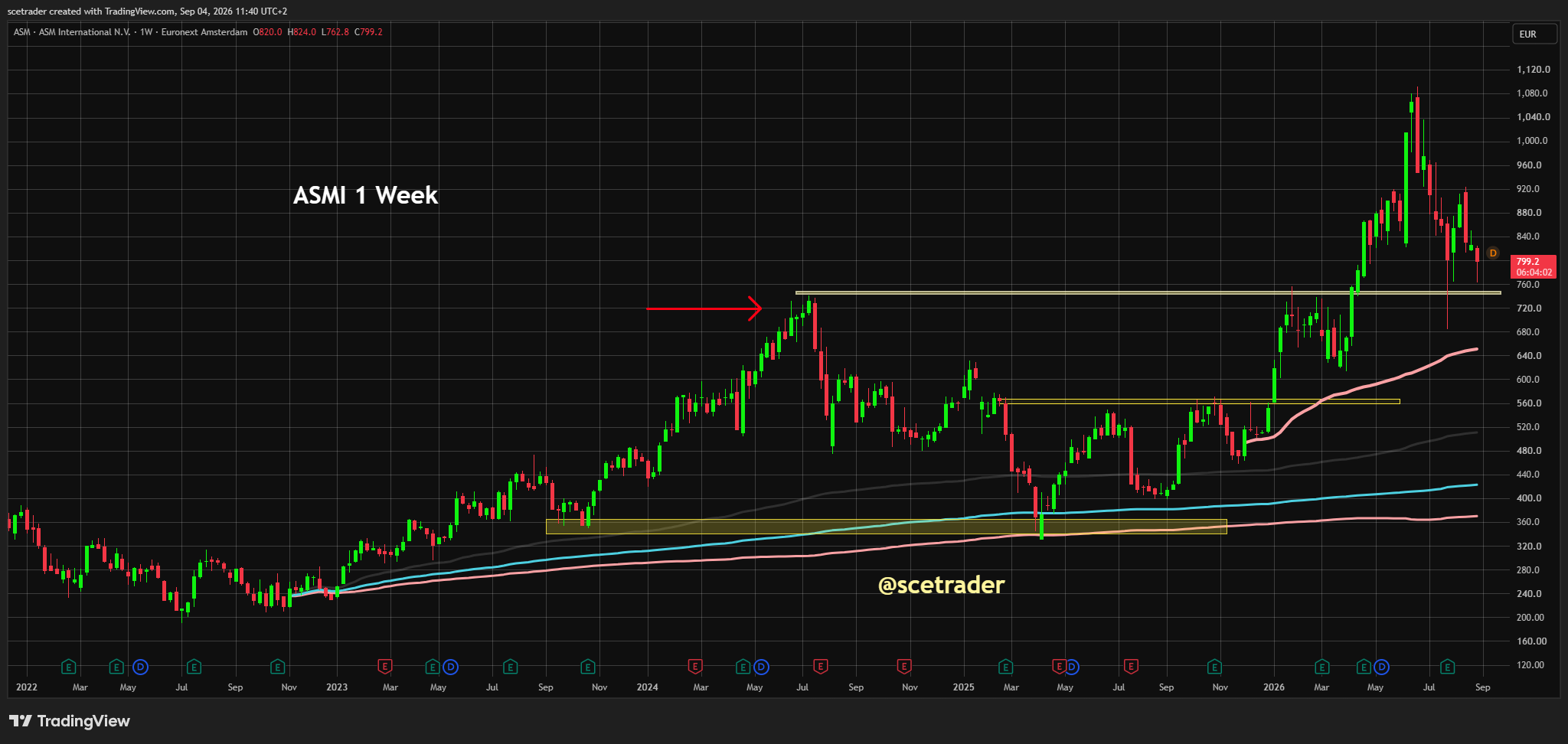
■ ASMI technisch: de ASMI-chart oogt wat rommelig, maar de onderliggende trend lezen wij nog steeds als opwaarts. De eerste steun zien wij grofweg rond €750, waarna een belangrijkere VWAP-zone rond ongeveer €655 ligt. Zolang die bredere VWAP-structuur overeind blijft, blijft het technische beeld constructief. Onder die sterkere steun zou het beeld wel duidelijk verslechteren.
■ HTSI / FormFactor / Technoprobe: de enorme belangstelling voor HTSI blijft interessant omdat een zeer hoge waardering bij één gespecialiseerde speler andere bedrijven in dezelfde niche relatief goedkoop kan laten ogen. Daarom kijken we ook naar FormFactor in de VS en Technoprobe in Italië. Het gaat voor ons dus niet alleen om HTSI, maar om een mogelijke herwaardering van de hele niche rond chiptesting en interfaces.
■ Legacy chips / Infineon / Texas Instruments: het chipverhaal verbreedt zich ondertussen naar minder geavanceerde chips. Bedrijven die een paar jaar geleden nauwelijks interessant waren omdat capaciteit ruim was en marges onder druk stonden, komen opnieuw in beeld. Infineon en Texas Instruments zijn voorbeelden. AI trekt uiteindelijk niet alleen aan de meest geavanceerde accelerators, maar aan een veel grotere keten van power management, automotive en andere chips. Dat kan juist die zogenoemde oude chiphoek opnieuw interessanter maken.
■ Broadcom / AI versus oude economie: de negatieve koersreactie bij Broadcom zien wij niet als bewijs dat de AI-case stukloopt. De zwakkere onderdelen zaten juist meer buiten het puurste AI-verhaal. Dat is interessant omdat tegelijkertijd sommige traditionele chipsegmenten beginnen te herstellen. Broadcom blijft voor ons daarom een kwalitatieve AI-naam ondanks de koersreactie. NVIDIA blijft daarnaast één van de kernnamen binnen de AI-investeringscyclus.
■ Europese software / uitgevers: RELX en Wolters Kluwer staan ongeveer 2% lager. Het patroon is bijna schoolboekachtig: chips omhoog, software en uitgevers omlaag. Wij blijven beide namen zien als fallen angels waarbij wij liever in kleine plukjes naar dips kijken dan na een sterke dag achter de koers aan te rennen. Wel moeten we bij alle software- en databedrijven steeds scherper volgen of AI hun verdienmodel sterker maakt of juist uitholt.
■ Nemetschek: Goldman Sachs verhoogt het koersdoel van €90 naar €100. Dat sluit aan bij onze eerdere visie dat er in Nemetschek mogelijk een kans ontstaat. Zie ook dit bericht.
■ SAP: SAP staat ongeveer 1% hoger en is voor ons een goed voorbeeld van een aandeel waarbij we misschien te voorzichtig zijn geweest. Wij hebben zelf eerder voor ServiceNow gekozen. Maar als wij SAP al in portefeuille zouden hebben, zouden we het aandeel op dit moment eerder aanhouden en op aantrekkelijke dips bijkopen dan verkopen.
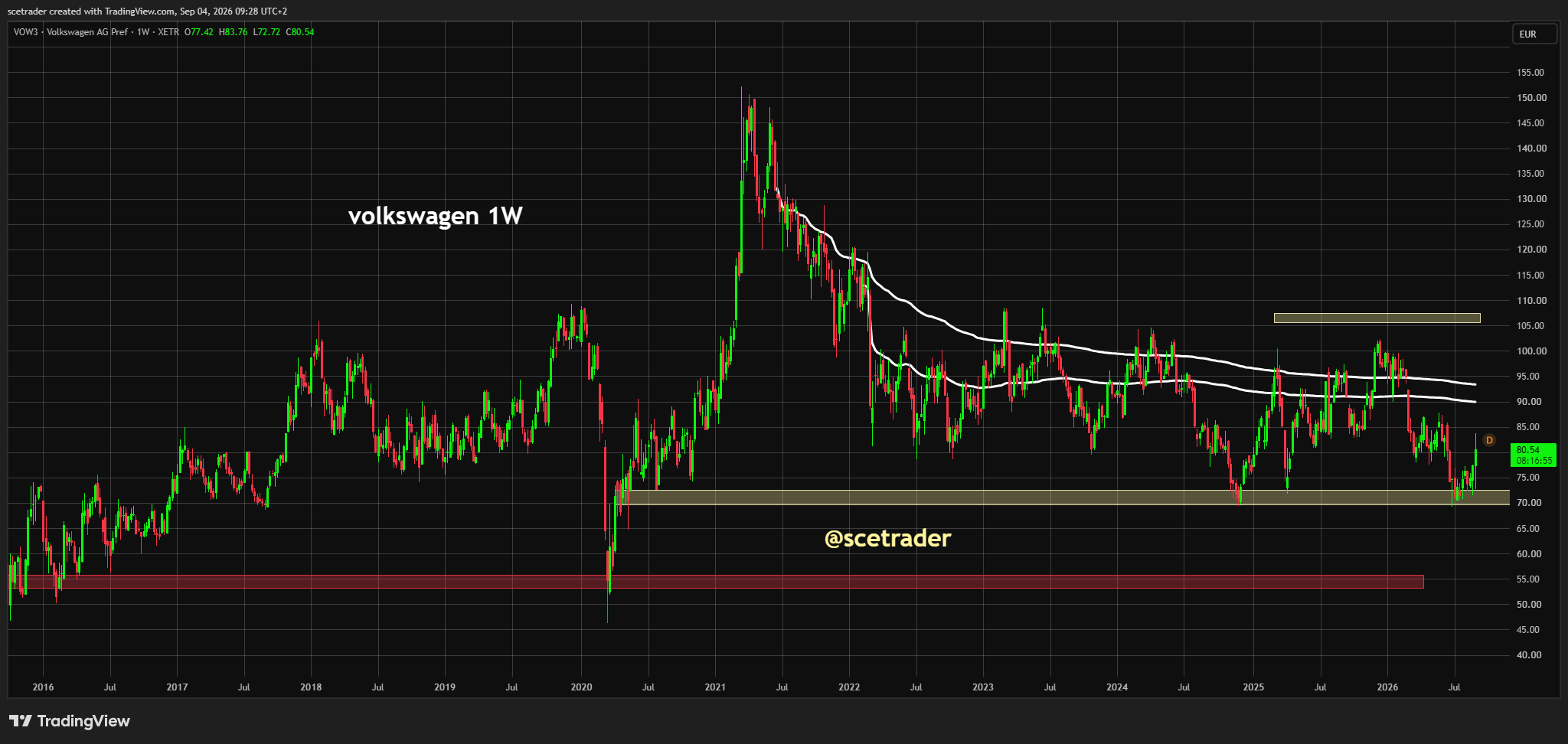
■ Volkswagen: Volkswagen wint ongeveer 6% na het grote reorganisatieplan. Voor ons is die stijging nog steeds geen reden om meteen in te stappen. De reorganisatie komt vooral uit noodzaak: het bedrijf zit klem, heeft moeite met de Chinese concurrentie en moet de kostenstructuur ingrijpend aanpassen. Daar komt het idee bij dat delen van fabrieken mogelijk voor defensiegerelateerde productie kunnen worden gebruikt. Ook daar zetten wij een vraagteken bij, want het is nog maar de vraag hoe snel alle aangekondigde Duitse defensie-uitgaven werkelijk worden uitgevoerd nu begrotingen en kapitaalmarktrentes zwaarder beginnen te drukken. Technisch blijft Volkswagen lastig. Een verdere tradingrally richting ongeveer €90 en mogelijk €93 blijft denkbaar als de VWAP-structuur verbetert, maar dat is nog iets heel anders dan een fundamentele turnaround.
■ Bayer: blijft voor ons één van de interessantere Duitse herstelcases. De recente analistenmeeting heeft het fundamentele verhaal opnieuw wat leven gegeven. Mooie prognoses zijn niet genoeg; uiteindelijk moet de uitvoering het bevestigen. Maar Bayer past wel in het bredere beeld dat bepaalde Duitse achterblijvers weer voorzichtig wakker worden.
■ Deutsche Telekom: blijft op de radar nadat Elliott een belang heeft genomen. Alleen al de komst van een activist kan de discussie over strategie, structuur, kapitaalallocatie en aandeelhouderswaarde opnieuw aanjagen. Dat kan voldoende zijn om beleggers opnieuw naar de waardering te laten kijken.
■ HUGO BOSS / Ströer: HUGO BOSS verhuist per 21 september van de MDAX naar de SDAX, terwijl Ströer juist promoveert naar de MDAX. Bij HUGO BOSS zijn er overnamespeculaties, maar dat is voor ons geen reden om het aandeel te kopen. De indexdegradatie kan bovendien technische verkoopdruk veroorzaken. Ströer kan juist wat extra vraag krijgen doordat MDAX-trackers het aandeel moeten opnemen.
■ Prosus / Alibaba: Prosus profiteert van de betere stemming in Hongkong. De directe read-through loopt via Tencent en niet via Alibaba. Alibaba blijft een afzonderlijke China-techcase. Zolang Hongkong goed blijft liggen en de Amerikaanse data geen grote verstoring veroorzaken, kunnen beide namen profiteren van een verbeterend sentiment rond Chinese technologie.
■ Luxe / virtuele wereld: luxe wil nog steeds niet echt. Wij loeren op de sector, maar de koersen geven nog geen overtuigende bevestiging. Tegelijk speelt er volgens ons een interessante langere vraag: wat gebeurt er met luxe als een steeds groter deel van ons leven virtueel wordt? Misschien ontstaat uiteindelijk zelfs een markt voor digitale kledingkasten en virtuele statusproducten. Daarnaast maken veel merken de klassieke fout dat ze steeds verder naar beneden in prijs gaan om omzet te scoren en daarmee hun eigen exclusiviteit aantasten. Nike en Adidas zijn daar andere voorbeelden van dan echte luxehuizen als LVMH en Kering. Voorlopig kijken we de sector nog steeds aan, ook als dat betekent dat we eerst een rally missen.
■ Frankrijk / Legrand / software: Parijs blijft grotendeels zijwaarts. Legrand behoort tot de betere namen, maar software ligt juist zwakker. Dassault Systèmes verliest ongeveer 4% en Capgemini circa 2%. Dat onderstreept opnieuw hoe selectief de markt binnen technologie wordt.
■ Zalando / Heidelberg Materials: Zalando wint ongeveer 3%, maar daar doen wij niets mee. Het blijft voor ons een lage-margebusiness waar marktdominantie alleen niet genoeg is. Heidelberg Materials wint ongeveer 2% en is interessanter, maar daar vragen wij ons juist af of het nog net te vroeg is om in te stappen. Dat aandeel blijft op de radar.
■ Europese defensie / CSG / Theon: defensie beweegt verdeeld. Theon International blijft voor ons een heel andere categorie dan bijvoorbeeld Rheinmetall of CSG. Rond €32 vinden wij de risk-reward nog niet aantrekkelijk genoeg. Rond €26 en mogelijk zelfs €24 willen we opnieuw kijken hoe de stemming en de technische structuur erbij liggen. Daarmee accepteren we bewust dat we eventueel eerst een rally missen.
■ Aperam: Aperam wint ongeveer 2,5%. De beweging past bij de hernieuwde belangstelling voor cyclische en midcyclische aandelen, maar wij blijven het zelf een lastig aandeel vinden. Voor ons is het daarom op dit moment vooral een sectorindicatie en geen duidelijke nieuwe positie.
■ Fastned: Fastned wint ongeveer 4% en staat rond €38,90. Daarmee komt de €40 nu echt in beeld. Wij hadden eerder aangegeven dat na de doorbraak door de VWAP-lijnen een beweging richting €40 mogelijk was en die finish komt nu dichtbij. Juist daarom wordt interessant wat er op €40 gebeurt: een overtuigende doorbraak zou het technische verhaal opnieuw kunnen verlengen, terwijl afwijzing daar logisch zou zijn na deze rally.
■ Alfen: Alfen staat ongeveer 2% hoger. Rond grofweg €10 tot €12 krijgen wij het idee dat retailbeleggers opnieuw belangstelling tonen. Dat maakt het gebied interessanter, maar het is voor ons nog geen overtuigende nieuwe koopcase. Eerst zien of de steun ook werkelijk standhoudt.
■ TomTom: TomTom beweegt stevig hoger, maar daar doen wij nog altijd niets mee. Een sterke dag verandert voor ons de bredere investment case niet.
■ België / Ackermans & van Haaren / CMB.TECH: Ackermans & van Haaren wint ongeveer 2,6% en blijft voor ons simpelweg een sterk bedrijf. CMB.TECH wint circa 1,6% en blijft eveneens stevig liggen. Daarmee zien we ook binnen België duidelijke pockets van kracht ondanks de zwakkere BEL20.
■ Sofina / SIPEF: Sofina blijft rond €250 interessant na de cijfers. Daar zaten sterke elementen in, maar ook duidelijke weak spots, waardoor het geen simpele rechtlijnige bullish case is. SIPEF blijft eveneens sterk. Barclays heeft eerder gewezen op het scenario dat El Niño hogere palmolieprijzen kan ondersteunen en vanuit dat scenario ruimte richting circa €120 gezien. Dat blijft een scenario en geen zekerheid.
■ Benelux-verzekeraars: Barclays verhoogt de koersdoelen voor Ageas, ASR, NN en Aegon, maar blijft neutraal over de Europese verzekeringssector als geheel. De meeste verzekeraars versloegen in de eerste jaarhelft de winstverwachtingen, maar volgens Barclays viel de kwaliteit daarvan tegen doordat gunstige financiële markten en meevallende natuurrampen zwakkere onderliggende prijs- en margetrends bij schadeverzekeringen compenseerden. Positief is de hogere solvabiliteit, waardoor meer ruimte ontstaat voor overnames of extra aandeelhoudersbeloningen. Ageas, ASR en NN blijven op Overwogen, met koersdoelen van respectievelijk €77,50, €78,50 en €80,50. Voor Aegon gaat het koersdoel naar €7,30 bij een Gelijkgewogen advies.
■ Amerikaanse megacaps: de rally van gisteren was breed. Meta en Microsoft wonnen meer dan 2%, terwijl Alphabet, Apple en Amazon meer dan 1% hoger sloten. Dat is belangrijk omdat de beweging niet alleen door één of twee marktleiders werd gedragen. Brede deelname van de megacaps geeft de rally meer gewicht.
■ Tesla: Tesla blijft een slingeraandeel, maar de fundamentele robotaxi-case krijgt wel een concretere vorm. In Austin zijn de eerste publieke Cybercab-ritten gestart en Tesla heeft 45 Cybercabs in Texas geregistreerd. Daarmee schuift het verhaal een stap op van testen richting daadwerkelijke publieke inzet. De Cybercab heeft geen stuur, pedalen of spiegels en gebruikt camera’s en neurale netwerken. Commerciële verkoop is nog niet toegestaan. Technisch blijven de VWAP-lijnen bepalend: breekt Tesla daar overtuigend doorheen, dan kan het Cybercab-nieuws extra momentum geven.
■ Amerikaanse software: software was gisteren zeer sterk. Palantir won meer dan 7%, ServiceNow meer dan 6%, Thomson Reuters meer dan 5%, Atlassian meer dan 4% en ook Workday, Adobe, Datadog en Salesforce lagen goed. De AI-trade verbreedt daarmee van chips en infrastructuur naar software en toepassingen. Tegelijk is juist hier selectie cruciaal: AI kan het ene softwarebedrijf veel waardevoller maken en het andere juist makkelijker vervangbaar.
■ Snowflake: Snowflake sprong ongeveer 16% omhoog en kreeg eindelijk de beloning waar wij al langer op wachtten. Fundamenteel was daar ook aanleiding voor: Q2-omzet kwam uit op ongeveer $1,55 miljard tegenover circa $1,49 miljard verwacht, terwijl de omzetverwachting voor Q3 op ongeveer $1,588 tot $1,593 miljard lag tegenover circa $1,510 miljard consensus. Daarmee krijgt de AI- en datacase ook concrete fundamentele steun. Snowflake werkt bovendien samen met NVIDIA en blijft voor ons één van de duidelijkere softwarebegunstigden van de AI-investeringsgolf.
■ Zscaler: Zscaler kwam met sterke onderliggende cijfers, maar de koersreactie was grillig: eerst omhoog en daarna weer terug. Dat hoeft ons niet te verbazen omdat het aandeel voorafgaand aan de cijfers al flink was opgelopen en technisch tegen weerstand aanloopt. Goede fundamentals betekenen niet automatisch dat een aandeel na cijfers meteen verder moet stijgen.
■ Oracle: Oracle blijft voor ons een aparte softwarecase. Ons idee is dat Larry Ellison het businessmodel zo heeft ingericht dat andere partijen een deel van het enorme financiële risico rond AI-investeringen dragen. Oracle zelf heeft veel schuld en volgens onze input zit die schuld ongeveer één notch boven junk. Zolang de technische steunlijnen houden en het sentiment goed blijft, zien wij nog steeds ruimte richting ongeveer $190.
■ Lululemon: de cijfers vonden wij niet goed genoeg. Dit blijft een hypegevoelig aandeel dat hard omhoog kan en daarna net zo hard weer terug. Wij doen er niets mee. Juist daarom is de tegenstelling met kwalitatieve namen als Broadcom interessant: liever een onderneming waarvan het fundamentele verhaal helder blijft dan achter iedere hype aanrennen.
■ Circle: Circle blijft voor ons een afzonderlijke structurele stablecoincase. De volatiliteit kan extreem zijn; het aandeel kan bij wijze van spreken 80% dalen zonder dat daarmee automatisch de langetermijnthese verdwijnt. Wij denken dat stablecoins uiteindelijk een veel grotere rol in het financiële systeem kunnen krijgen. Dat maakt Circle interessant, maar vanzelfsprekend ook zeer risicovol.
■ Robinhood: Robinhood vinden wij duur, maar iedere dip lijkt opnieuw kopers te trekken. Tegelijk beweegt het bedrijf steeds verder van alleen crypto richting een breder financieel platform, inclusief prediction markets. Daardoor wordt het steeds moeilijker Robinhood nog als puur crypto-aandeel te zien. De waardering blijft fors, maar de markt blijft zwakte vooralsnog kopen.
■ Coinbase: Coinbase schuift met perpetual futures op aandelen verder richting een bredere broker- en handelsplatformstrategie. Tegelijk probeert het bedrijf institutioneler te worden en minder afhankelijk te zijn van puur crypto-retail. Dat kan interessant worden, maar de concurrentie neemt ook snel toe, onder meer rond prediction markets en nieuwe handelsproducten. Voorlopig blijven dips in Coinbase opvallend vaak kopers aantrekken.
■ Investment view: het belangrijkste signaal is niet dat Europa hard stijgt, maar dat het ondanks olie, hoge rente en alle onzekerheid opvallend weerbaar blijft. De AEX houdt de 1.100-zone vast en chips trekken opnieuw de kar. Wall Street heeft gisteren eindelijk weerstand gebroken en als de payrolls vandaag geen grote verstoring veroorzaken, kan de SPX binnen de bestaande trading range nog een dag richting de bovenkant proberen. Tegelijk blijft het een flipperkastmarkt en kan één slechte macro- of geopolitieke headline het beeld snel draaien. Aan de rentekant ontstaan bovendien verschillende mogelijke steunpilaren voor Treasuries, van Chinese commerciële banken tot het veel speculatievere Bessent-scenario. Wij blijven daarom selectief: chips en bepaalde softwarecases bieden structureel kansen, terwijl we bij auto's, luxe en delen van defensie liever wachten op betere risk-reward. Geen reden om overal achteraan te rennen; liever kwaliteit op dips en per aandeel scherp blijven kijken of het fundamentele verhaal werkelijk sterker wordt.
English
■ Europe / market picture: Europe continues to show remarkable resilience. The AEX is up around 0.4%, the DAX is barely moving, Paris remains largely sideways and the BEL20 is down roughly 0.3%. That matters more than the small percentage moves themselves. Oil prices and bond yields have risen materially in recent days without Europe really breaking down. Wall Street, meanwhile, increasingly looks like a bucking-bronco or pinball market: sharply higher, suddenly lower and then recovering again. If US payrolls do not create a major disruption this afternoon, we would not rule out Wall Street trying to add another positive day to the rally.
■ AEX / 1,100: the AEX is again trading around the psychologically important 1,100 area, which has been tested several times in recent days and has held reasonably well. That makes the level increasingly relevant as a technical reference. Semiconductors are also providing meaningful support. As long as Wall Street holds yesterday's reclaimed levels, the scenario remains open for the AEX to consolidate further above this zone.
■ AEX options algorithm: the options algorithm we published at around 07:52 this morning is still pointing higher. What stands out is that the model has maintained that upward bias through different market conditions for quite some time. It can obviously change, but at the moment it is still not giving a short signal.
■ SPX / Wall Street: the S&P 500 finally broke the resistance yesterday that had capped the index for several days and then accelerated higher. That follow-through after the break was more important to us than the break itself. The key question this afternoon is whether the SPX can hold those gained levels after payrolls. If it can, the index could move back toward the upper end of the existing trading range. We are explicitly not yet calling this a new structural breakout. Yesterday's session was nevertheless broad and strong: S&P 500 +1.06%, Dow +1.18% and Nasdaq 100 +1.16%. The fundamental backdrop also remains strong, with Q2 earnings growth tracking near 32% versus roughly 23% expected beforehand, while 86% of reporting companies have beaten expectations. AI infrastructure is contributing a very large share of that earnings growth.
■ Friday effect / US trading: statistically, Fridays have been relatively positive in the US over the past few months. The catch is that some of the largest declines also occurred on the Fridays when things went wrong. It is therefore not a signal we would trade blindly, but it fits today's setup: if payrolls do not disrupt the market, stocks may try to add another positive session; if the reaction disappoints, this pinball market can reverse quickly as well.
■ Payrolls / Waller / inflation: US employment data are due this afternoon and can obviously trigger significant short-term volatility. We nevertheless think these payrolls may ultimately prove less important than markets currently assume. Fed Governor Christopher Waller has shifted the discussion clearly toward inflation. If inflation does not reaccelerate sharply and continues moving naturally toward 2%, the Fed may not need to hike again at all. That means CPI, PPI and other inflation measures could quickly become more important again after the initial payroll reaction.
■ US macro / rates: the US economy still looks reasonably strong. The ISM Services index rose to 55.4, its highest level in six months, while initial claims were around 206,000. At the same time, the prices-paid component climbed to 72.6, its highest level in four years. That remains the dilemma: economic strength supports earnings, but excessive price pressure can push long-term yields higher again. The US 10-year yield is around 4.76%, back below 4.8%. Hardly dramatic, but every decline in yields feels like a lifeline in this market. The German 10-year is around 3.35%, while Japanese long-term yields have also eased by several basis points.
■ Chinese banks / Treasuries: Chinese commercial banks have reportedly been buying US Treasuries again after raising dollar deposit rates. This looks primarily like commercial demand rather than a reversal in China's official reserve policy. Reported Chinese Treasury holdings had still fallen from $695.3 billion in January to $633.4 billion in June. Additional bank demand could support Treasuries and help restrain long-term yields.
■ VIX / VVIX: both the VIX and VVIX declined yesterday. We find that notable because oil and yields remain clear risk factors. It does not mean all problems have disappeared, but the options market is not showing a clear new wave of stress for now. The underlying message is caution rather than panic.
■ Bessent / bonds: Scott Bessent remains what we see as a joker in the back pocket. Our scenario is that the US government could try to push long-term yields lower ahead of the midterms by buying back large amounts of long-dated Treasury debt. In the most aggressive version, we are even talking about a program of around $1 trillion. This is explicitly not announced policy, but if something like that were actually implemented, it could trigger a powerful bond squeeze and potentially give gold, silver and risk assets another push.
■ Oil / Hormuz: oil is down around 0.5% and is therefore easing again. Our longer-term view remains that extremely high oil prices eventually become their own enemy: demand destruction slows the economy and eventually oil demand as well. The real danger remains the geopolitical headline nobody can predict, such as a serious tanker incident in the Strait of Hormuz that disrupts the shipping route. That could change the entire market picture instantly.
■ FX: EUR/USD is around 1.1620. The yen also remains vulnerable to verbal or actual intervention. That keeps USD/JPY susceptible to sudden sharp moves.
■ Gold / silver: gold and silver are mixed. Our longer-term view has changed little: if long-term yields continue to cool, there is still room for higher precious-metal prices into year-end. In addition, we believe a large US bond-buyback program could trigger a substantial squeeze in both gold and silver. Anyone wanting to speculate aggressively could look at a far out-of-the-money call or call spread on a silver ETF, but that remains purely speculative.
■ Bitcoin: Bitcoin is around $81,200. Last week the cryptocurrency clearly struggled with the $80,000 area. That is precisely why it becomes interesting if Bitcoin can stay convincingly above it and extend the breakout. Under that scenario, our technical reading suggests higher VWAP zones could open up and eventually even a move toward almost $100,000 could become possible. That is not a prediction, but it is the technical scenario if former resistance genuinely turns into support.
■ Physical AI: we continue to believe that we are only at the start of a much larger development in which AI is not only about data centers and software but increasingly robots, autonomous systems and physical AI. What sounds like science fiction today could be entirely normal in five or ten years. People were once afraid of locomotives because they travelled too fast; eventually horses and carts simply disappeared from the streets. Of course the AI hype will one day hit a wall and we do not know who the ultimate winners will be, but the investment wave itself remains in full swing for now.
■ Semiconductors / ASMI / Besi / ASML: chips are once again among the strongest areas in Amsterdam. ASMI is up around 3.5%, Besi roughly 3% and ASML around 2%. We continue to think the market still underestimates how large the semiconductor industry can become over the long term. That explicitly does not mean chip stocks only move higher in a straight line. Corrections are part of the process. But structural demand from AI, data centers, automotive, industrial applications and many other areas remains exceptionally strong in our view.
■ ASMI technical: the ASMI chart looks somewhat messy, but we still read the underlying trend as upward. We see first support roughly around €750, followed by a more important VWAP zone near €655. As long as that broader VWAP structure remains intact, the technical picture stays constructive. A break below the stronger support area would clearly weaken it.
■ HTSI / FormFactor / Technoprobe: the enormous interest in HTSI remains relevant because a very high valuation for one specialised player can suddenly make other companies in the same niche look relatively inexpensive. That is why we are also watching FormFactor in the US and Technoprobe in Italy. For us, this is therefore not only about HTSI, but potentially about a rerating of the entire chip-testing and interface niche.
■ Legacy chips / Infineon / Texas Instruments: the semiconductor story is meanwhile broadening into less advanced chips. Companies that looked uninteresting several years ago because capacity was abundant and margins were under pressure are coming back into focus. Infineon and Texas Instruments are examples. AI ultimately pulls not only on the most advanced accelerators, but on a far broader chain of power-management, automotive and other semiconductor products. That could make the so-called legacy-chip segment increasingly interesting again.
■ Broadcom / AI versus legacy business: we do not see Broadcom's negative share-price reaction as evidence that the AI case is breaking. The weaker areas were more concentrated outside the purest AI story. That is interesting because some traditional chip segments are recovering at the same time. Broadcom therefore remains a quality AI name for us despite the price reaction. NVIDIA also remains one of the core names within the AI investment cycle.
■ European software / publishers: RELX and Wolters Kluwer are down around 2%. The pattern is almost textbook: chips higher, software and publishers lower. We continue to see both as fallen angels where we would rather look at dips in small positions than chase prices after a strong day. But across all software and data businesses, we need to monitor increasingly closely whether AI strengthens their earnings model or erodes it.
■ Nemetschek: Goldman Sachs raises its price target from €90 to €100. That fits with our earlier view that an opportunity may be developing in Nemetschek. See also this report.
■ SAP: SAP is up around 1% and is a good example of a stock where we may have been too cautious. We previously chose ServiceNow ourselves. But if we already owned SAP, we would currently be more inclined to hold the shares and add on attractive dips than sell them.
■ Volkswagen: Volkswagen is up around 6% following its large restructuring plan. For us, that rally is still not a reason to step in immediately. The restructuring is primarily driven by necessity: the company is under pressure, struggling with Chinese competition and has to reshape its cost base significantly. There is also discussion about potentially using parts of its factories for defence-related production. We also question how quickly all announced German defence spending will actually be implemented now that budget constraints and higher capital-market rates are starting to bite. Technically, Volkswagen remains difficult. A further trading rally toward roughly €90 and possibly €93 remains possible if the VWAP structure improves, but that is still very different from a fundamental turnaround.
■ Bayer: remains one of the more interesting German recovery cases for us. The recent analyst meeting has given the fundamental story some renewed life. Attractive projections are not enough; execution must ultimately confirm them. But Bayer does fit the broader picture of certain German laggards slowly waking up.
■ Deutsche Telekom: remains on the radar after Elliott took a stake. The arrival of an activist alone can restart the discussion around strategy, structure, capital allocation and shareholder value. That may be enough for investors to reassess the valuation.
■ HUGO BOSS / Ströer: HUGO BOSS will move from the MDAX to the SDAX effective September 21, while Ströer will be promoted to the MDAX. Takeover speculation surrounds HUGO BOSS, but that is not a reason for us to buy the stock. The index demotion can also create technical selling pressure. Ströer could see the opposite effect as MDAX trackers are required to add the shares.
■ Prosus / Alibaba: Prosus is benefiting from the better tone in Hong Kong. The direct read-through runs through Tencent, not Alibaba. Alibaba remains a separate China-tech case. As long as Hong Kong holds up and US data do not cause a major disruption, both names could benefit from improving sentiment toward Chinese technology.
■ Luxury / virtual world: luxury still does not really want to move. We are watching the sector, but prices are not yet giving us convincing confirmation. At the same time, we see an interesting longer-term question: what happens to luxury if a growing part of our lives becomes virtual? A market for digital wardrobes and virtual status products may eventually emerge. Another structural risk is that brands dilute their own exclusivity by pushing too far down the price ladder simply to generate revenue. Nike and Adidas illustrate a different version of that problem than true luxury houses such as LVMH and Kering. For now, we continue to watch the sector even if that means missing the first part of a rally.
■ France / Legrand / software: Paris remains largely sideways. Legrand is among the stronger names, but software is weaker. Dassault Systèmes is down around 4% and Capgemini roughly 2%. That again highlights how selective the market is becoming within technology.
■ Dassault Systèmes: after the additional decline, Dassault Systèmes becomes more interesting to us as a speculative case. The risk is high because AI can fundamentally reshape software companies, but that also means valuations can overshoot to the downside. We now think the stock may be worth a small speculative bet, but explicitly not as a low-risk position.
■ Zalando / Heidelberg Materials: Zalando is up around 3%, but we are doing nothing with it. It remains a low-margin business where market leadership alone is not enough for us. Heidelberg Materials is up around 2% and is more interesting, although we still wonder whether it may be slightly too early to step in. The stock remains on our radar.
■ European defence / CSG / Theon: defence is mixed. We see Theon International as a very different category from companies such as Rheinmetall or CSG. At around €32, we still do not find the risk-reward attractive enough. Around €26 and possibly even €24, we want to reassess sentiment and the technical structure. That means consciously accepting that we may miss a rally first.
■ Aperam: Aperam is up around 2.5%. The move fits renewed interest in cyclical and mid-cyclical stocks, but we still find the stock itself difficult. For us it is therefore more of a sector signal than a clear new position at this stage.
■ Fastned: Fastned is up around 4% and trades near €38.90. That means €40 is now genuinely within reach. We previously said that after breaking through the VWAP lines, a move toward €40 could develop, and that finish is now getting close. The important question becomes what happens at €40: a convincing breakout could extend the technical story, while rejection there would also be perfectly logical after this rally.
■ Alfen: Alfen is up around 2%. Around roughly €10 to €12, we are getting the impression that retail investors are becoming interested again. That makes the area more noteworthy, but it is not yet a convincing new buy case for us. First we want to see whether support actually holds.
■ TomTom: TomTom is moving sharply higher, but we are still doing nothing with it. One strong day does not change the broader investment case for us.
■ Belgium / Ackermans & van Haaren / CMB.TECH: Ackermans & van Haaren is up around 2.6% and remains, quite simply, a strong company in our view. CMB.TECH is adding roughly 1.6% and also continues to hold up well. That means there are clear pockets of strength within Belgium despite the weaker BEL20.
■ Sofina / SIPEF: Sofina remains interesting around €250 following its results. There were strong elements in the story but also clear weak spots, which means this is not a simple one-way bullish case. SIPEF also remains firm. Barclays previously pointed to the scenario that El Niño could support higher palm-oil prices and under that scenario saw room toward roughly €120. That remains a scenario, not a certainty.
■ Benelux insurers: Barclays has raised its price targets for Ageas, ASR, NN and Aegon while remaining neutral on the European insurance sector overall. Most insurers beat first-half earnings expectations, but Barclays argues that earnings quality was less convincing because favourable financial markets and lower natural-catastrophe losses offset weaker underlying pricing and margin trends in non-life insurance. Higher solvency is positive because it creates more room for acquisitions or additional shareholder returns. Ageas, ASR and NN remain Overweight, with price targets of €77.50, €78.50 and €80.50 respectively. Aegon's price target rises to €7.30 with an Equal Weight rating.
■ US megacaps: yesterday's rally was broad. Meta and Microsoft gained more than 2%, while Alphabet, Apple and Amazon closed more than 1% higher. That matters because the move was not driven by only one or two market leaders. Broad megacap participation gives the rally more weight.
■ Tesla: Tesla remains a swing stock, but the fundamental robotaxi case is becoming more tangible. The first public Cybercab rides have started in Austin and Tesla has registered 45 Cybercabs in Texas. That moves the story one step from testing toward actual public deployment. The Cybercab has no steering wheel, pedals or mirrors and relies on cameras and neural networks. Commercial sales are not yet permitted. Technically, the VWAP lines remain decisive: if Tesla breaks through them convincingly, the Cybercab news could add further momentum.
■ US software: software was very strong yesterday. Palantir gained more than 7%, ServiceNow more than 6%, Thomson Reuters more than 5%, Atlassian more than 4%, while Workday, Adobe, Datadog and Salesforce were also firm. The AI trade is therefore broadening from chips and infrastructure into software and applications. At the same time, selection is crucial here: AI can make one software company far more valuable while making another easier to replace.
■ Snowflake: Snowflake jumped around 16% and finally received the reward we had been waiting for. Fundamentally, there was good reason: Q2 revenue came in at roughly $1.55 billion versus around $1.49 billion expected, while Q3 revenue guidance of approximately $1.588–$1.593 billion was ahead of roughly $1.510 billion consensus. That gives the AI and data case concrete fundamental support. Snowflake also works with NVIDIA and remains one of the clearer software beneficiaries of the AI investment wave in our view.
■ Zscaler: Zscaler reported strong underlying numbers, but the share-price reaction was choppy: initially higher and then lower again. That does not surprise us because the stock had already rallied substantially ahead of the results and is now running into technical resistance. Strong fundamentals do not automatically mean a stock must keep rising immediately after earnings.
■ Oracle: Oracle remains a separate software case for us. Our view is that Larry Ellison has structured the business model in such a way that other parties carry part of the enormous financial risk surrounding AI investment. Oracle itself has substantial debt and, according to our input, that debt sits around one notch above junk. As long as technical support levels hold and sentiment remains constructive, we still see room toward roughly $190.
■ Lululemon: the results were simply not good enough for us. This remains a hype-sensitive stock that can rise hard and then fall just as quickly. We are doing nothing with it. That is exactly why the contrast with quality names such as Broadcom is useful: we would rather own a company where the fundamental story remains clear than chase every hype move.
■ Circle: Circle remains a separate structural stablecoin case for us. Volatility can be extreme; the stock could theoretically fall 80% without automatically destroying the long-term thesis. We think stablecoins could eventually play a much larger role in the financial system. That makes Circle interesting, but obviously also very high risk.
■ Robinhood: Robinhood looks expensive to us, but almost every dip continues to attract buyers. At the same time, the company is moving increasingly beyond crypto toward a broader financial platform, including prediction markets. That makes it increasingly difficult to view Robinhood as a pure crypto stock. The valuation remains demanding, but the market continues to buy weakness for now.
■ Coinbase: Coinbase is moving further toward a broader broker and trading-platform strategy with perpetual futures on equities. At the same time, the company is trying to become more institutional and less dependent on pure crypto retail. That could become interesting, but competition is also increasing rapidly, including around prediction markets and new trading products. For now, dips in Coinbase continue to attract buyers remarkably often.
■ Investment view: the most important signal is not that Europe is rallying hard, but that it remains remarkably resilient despite oil, high yields and all the uncertainty. The AEX is holding the 1,100 area and semiconductors are once again leading. Wall Street finally broke resistance yesterday and, if payrolls do not create a major disruption today, the SPX could make another attempt toward the upper end of its existing trading range. At the same time, this remains a pinball market and one bad macro or geopolitical headline can quickly change the picture. On the rates side, several potential sources of support for Treasuries are also emerging, ranging from Chinese commercial-bank demand to the far more speculative Bessent scenario. We therefore remain selective: semiconductors and certain software cases offer structural opportunities, while in autos, luxury and parts of defence we would rather wait for better risk-reward. There is no reason to chase everything; we would rather buy quality on dips and keep checking company by company whether the fundamental story is genuinely improving.
Disclaimer Aan de door ons opgestelde informatie kan op geen enkele wijze rechten worden ontleend. Alle door ons verstrekte informatie en analyses zijn geheel vrijblijvend. Alle consequenties van het op welke wijze dan ook toepassen van de informatie blijven volledig voor uw eigen rekening.
Wij aanvaarden geen aansprakelijkheid voor de mogelijke gevolgen of schade die zouden kunnen voortvloeien uit het gebruik van de door ons gepubliceerde informatie. U bent zelf eindverantwoordelijk voor de beslissingen die u neemt met betrekking tot uw beleggingen.


