🎨 Marktoverzicht: BTLS - IBAB - ADYEN - BESI - MDB - GTLB - DELL - PANW en meer
Wil je alle artikelen kunnen lezen en elke podcast beluisteren? Neem dan een abonnement en krijg toegang tot alle artikelen en de database met duizenden berichten.
■ Marktbeeld: Europa begint waarschijnlijk circa 0,3% tot 0,4% lager en dat valt gezien alle onrust eigenlijk nog mee. Olie, Iran en vooral rente bepalen opnieuw het beeld, terwijl sterke bedrijfsresultaten voor tegenwicht zorgen. Richting de Amerikaanse payrolls blijft het shaky en kijken wij liever van dag tot dag dan iedere beweging achterna te lopen.
■ Wall Street: de S&P 500 verloor dinsdag 0,7%, de Dow 0,8% en de Nasdaq 1,0%, waarmee de grote indices voor de derde sessie op rij daalden. Augustus was voor alle grote indices nog positief en de bedrijfsresultaten blijven opvallend sterk. Voorlopig zien wij de zwakke septemberstart daarom nog niet als bewijs dat de langere trend is gebroken.
■ Rente: dit blijft de hoofdviool. De Amerikaanse 10-jaarsrente staat rond 4,81%, tegenover circa 4,20% begin 2026, terwijl de 2-jaarsrente rond 4,39% ligt tegenover ongeveer 3,50% aan het begin van het jaar. Duitsland noteert rond 3,35%, Nederland rond 3,42% en Japan rond 3,01%, waarbij Japan voor het eerst sinds 1996 weer boven 3% staat. De Amerikaanse 10-jaars stond in oktober 2023 ook rond 4,8% en liep daarna richting 5%, dus het niveau zelf is niet nieuw, maar vooral het tempo van een verdere stijging kan de markt raken. Bij Duitsland ligt rond 3,7% een eerste technische weerstand en in een veel extremer scenario zelfs 4,56%, terwijl de Amerikaanse staatsschuld boven $40 biljoen en een ingeprijsde kans van circa 66% op een Fed-verhoging in september de risk premium hoog houden. Hogere yields werken bovendien door in hypotheekrentes, bedrijfsfinanciering en waarderingen.
■ Olie / Iran / inflatie: WTI ligt inmiddels bijna op $91 en stond overnight opnieuw ongeveer een half procent hoger, nadat de grootste rally dinsdagavond in de VS al plaatsvond. Brent sloot eerder 4,6% hoger op $94,65 en WTI 5,2% hoger op $90,22, destijds de eerste slotstand boven $90 in ruim een maand. Iran zegt opnieuw twee supertankers in de Straat van Hormuz te hebben geraakt en één tanker die daadwerkelijk in brand vliegt of zinkt kan het beeld onmiddellijk verslechteren. Onze indruk blijft dat Trump geen verdere escalatie wil en daardoor enigszins klem zit, terwijl Iran met relatief beperkte acties enorme onrust kan veroorzaken. Hogere olie voedt via energie en transport opnieuw inflatie en rente, al blijven wij denken dat olie uiteindelijk weer kan teruglopen.
■ Gas / grondstoffen: ook de Europese gasfutures staan ongeveer 2% hoger. Tegelijk circuleren onbevestigde berichten dat Rusland zijn militaire acties tegen Oekraïne mogelijk weer wil opvoeren, wat naast energie ook grondstoffen als tarwe kan raken. Dat is nog geen bevestigd scenario, maar wel iets om in de gaten te houden.
■ Arbeidsmarkt / Fed: vrijdag volgen de Amerikaanse payrolls en door de huidige rentebeweging krijgt dat rapport extra gewicht. Sterke cijfers kunnen de Fed meer ruimte geven om opnieuw te verhogen, terwijl zwakkere cijfers juist wat lucht kunnen geven aan obligaties en aandelen.
■ VIX / VVIX: de VIX sprong dinsdag ongeveer 9% naar 16,3, maar dat is nog steeds geen paniekterritorium. De VVIX steeg ongeveer 5% naar 91,25 en laat zien dat onder de oppervlakte wel wat meer stress ontstaat. Op de Amerikaanse financiële zenders wordt ondertussen behoorlijk wat gejengel geproduceerd, terwijl de markt zelf de problemen vooralsnog relatief nuchter blijft verwerken.
■ Azië: het beeld is duidelijk zwak, met de KOSPI circa 3,6% lager, de Nikkei ongeveer 3% lager, Shenzhen rond 2% lager en Hongkong ongeveer 1% in de min. Dat is stevige risk-off, maar vooralsnog geen paniek.
■ Euro/dollar en dollar/yen: EUR/USD ligt rond 1,1580 en USD/JPY rond 160,1. Vooral de zwakke yen past bij het bredere renteverhaal en laat zien hoe groot de verschillen in monetair beleid en kapitaalstromen blijven.
■ Goud en zilver: zilver staat rond $64,20 nadat bijna $70 werd bereikt, waar duidelijk weerstand ligt. Goud noteert rond $4.327 vrijwel onveranderd. Een nieuwe uprun blijft mogelijk, maar eerst moeten beide metalen door deze moeilijkere fase heen; bij zilver blijven wij bovendien voorzichtig omdat deze markt rond de fix geregeld zeer onzuiver kan bewegen.
■ Bitcoin / crypto: Bitcoin staat rond $77.700 nadat de aanval op $80.000 opnieuw mislukte en ook crypto-aandelen in de VS zwak lagen. Het hele spektakel rond crypto en het Witte Huis geeft ons nog steeds een gevoel van manipulatie, maar daar hebben we geen bewijs voor. Voorlopig dus vooral aankijken.
■ Bedrijfsresultaten: daar zit op dit moment eigenlijk niet het grootste probleem. Dell, GitLab, MongoDB en Palo Alto Networks kwamen allemaal met sterke cijfers, al reageert de koers daar lang niet altijd positief op. De vraag wordt steeds meer wat uiteindelijk zwaarder weegt: rente en olie of de sterke winstontwikkeling.
■ Europese chips: chippers kunnen bij de lagere opening eerst wat druk krijgen, maar fundamenteel is het beeld niet slecht. Het symposium in Taiwan klinkt redelijk positief en ook de uitspraken van Dell geven een gunstige read-through. Voor de langere termijn blijven sterke Europese chipnamen daarom interessant op zwakte.
■ Luxe: Franse luxeaandelen kunnen opnieuw wat onder druk komen door Iran, hogere olie en het risk-off-sentiment. Voorlopig zien wij dat vooral als een korte termijnreactie op de marktstemming.
■ Banken / verzekeraars: Europese banken en verzekeraars blijven opvallend sterk. Wij denken dat banken uiteindelijk verder kunnen stijgen, al kan er op korte termijn best wat winstneming of koersdruk ontstaan. De langere trend verandert daarmee vooralsnog niet.
■ Syensqo: Performance & Care staat al sinds mei onder strategische review en volgens Bloomberg kijken onder meer Blackstone, Apollo, Cinven en Advent naar de divisie, waarbij circa €3 miljard wordt genoemd. De activiteit realiseerde in 2025 ongeveer €2 miljard omzet en €358 miljoen EBITDA, waardoor €3 miljard neerkomt op circa 8,4 keer EBITDA en duidelijk boven eerdere waarderingen van ongeveer €2 miljard tot €2,5 miljard ligt. Wij zien een sterke verkoopprijs vooral als tijdelijk positief, terwijl Syensqo zich daarna sterker kan richten op specialty materials en advanced technologies. Wel verdwijnt met Performance & Care ook een belangrijke winstbijdrage, waardoor de structurele waardecreatie uiteindelijk afhangt van de verkoopprijs en vooral van wat Syensqo met de opbrengst doet.
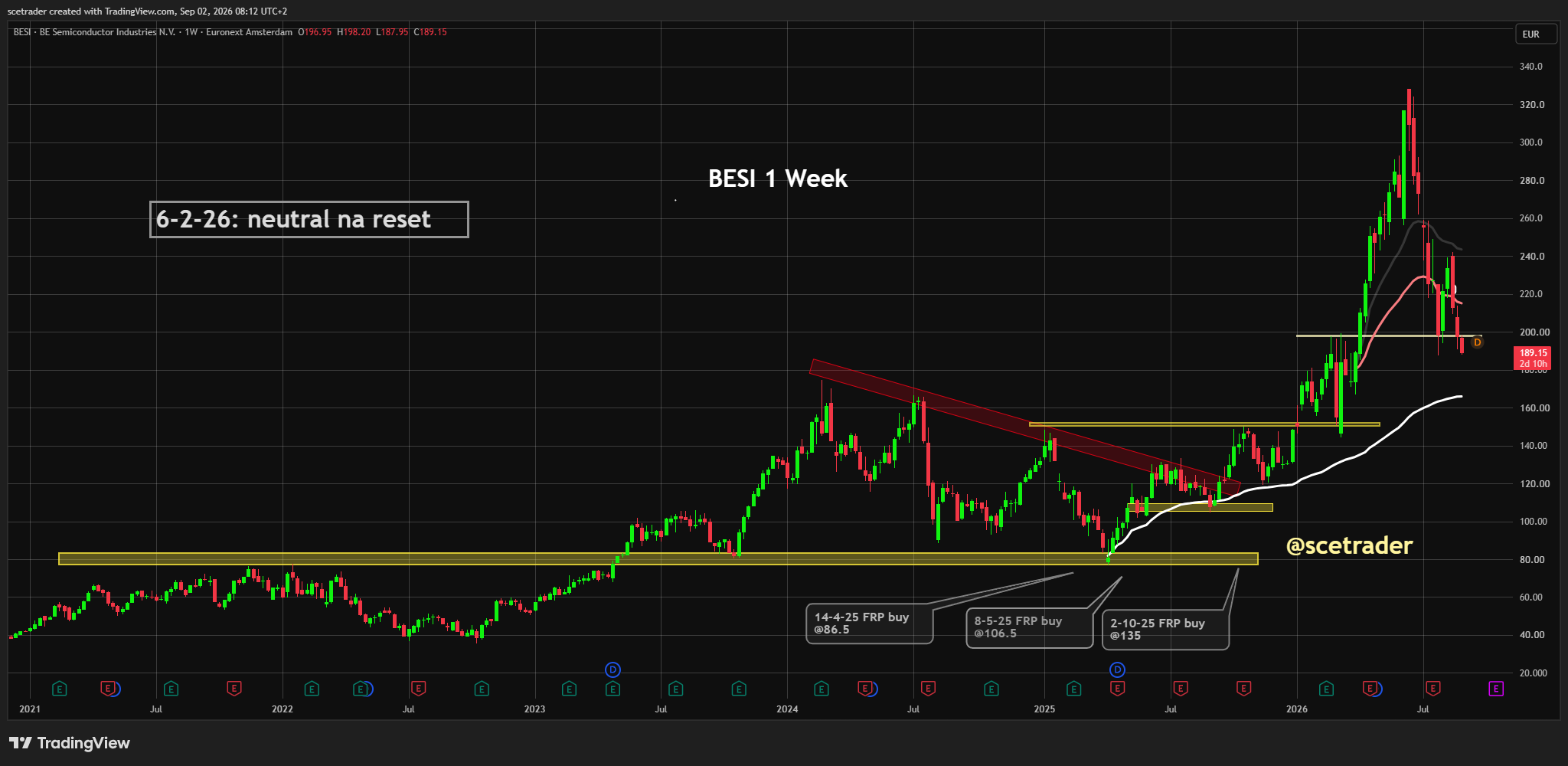
■ BESI: volgens berichten wil TSMC voor HBM-koppelingen voorlopig verder werken met steeds fijnere micro-bumps in plaats van direct breed over te stappen op hybrid bonding. Dat is op korte termijn niet gunstig voor BESI en technisch kan rond €165 een eerste belangrijke VWAP-support liggen. BESI is bovendien steeds meer een sentimentsaandeel geworden, waardoor dit soort berichten relatief hard kunnen aankomen. Voor de langere termijn blijven wij constructiever, maar chiptechnologie verandert razendsnel en het risico blijft dat uiteindelijk een andere techniek hybrid bonding voorbijstreeft.
■ KPN: plaatste voor €500 miljoen aan hybride obligaties met een coupon van 4,625%, terwijl het orderboek opliep tot meer dan €2,5 miljard. Dat de lening zo gemakkelijk werd geabsorbeerd, zien wij als een duidelijk teken van vertrouwen bij institutionele beleggers. De opbrengst wordt gebruikt voor algemene bedrijfsdoeleinden en herfinanciering, de stukken krijgen naar verwachting een BB+ rating van S&P en Fitch en worden genoteerd in Dublin. Tegelijk wil KPN voor €500 miljoen aan bestaande hybrides terugkopen, waarbij het bod op 8 september afloopt tenzij het wordt verlengd.
■ Adyen: Goldman Sachs zette Adyen dinsdag al op zijn Conviction List en handhaaft een koopadvies met een koersdoel van €1.850. De bank ziet vooral de tech stack als onderscheidend en rekent op verdere groei bij bestaande klanten, nieuwe klanten en productlanceringen, terwijl de ramingen voor 2027 tot en met 2029 circa 4% tot 6% boven de consensus liggen. De derdekwartaalcijfers in oktober zijn een volgende mogelijke katalysator. Omdat het brokerbericht al dinsdag naar buiten kwam, is het voor vandaag geen volledig nieuw signaal, maar het bevestigt wel de positieve fundamentele visie op Adyen.
■ ASML: UBS heeft het koersdoel verhoogd naar €2.350 en wijst vooral op ASML’s dominante positie in EUV, pricing power en de aanhoudende AI-vraag. Het rapport kwam al dinsdag naar buiten en is dus voor vandaag geen volledig nieuw bericht. Wij voegen daar verder geen nieuwe visie aan toe.
■ IBA: sluit zich aan bij het Europese PFAROS-project, waarin 91 partijen samenwerken aan oplossingen om PFAS-uitstoot in zorg en farmacie terug te dringen. Samen met Bayer gaat IBA het werk rond end-of-life- en afvaltechnologie leiden en onderzoeken of electron beam- en Rhodotron-technologie PFAS kan vernietigen. Strategisch interessant, maar nog onderzoek en geen commerciële doorbraak.
■ Biotalys: heeft in Californië goedkeuring gekregen voor EVOCA, het eerste eiwitgebaseerde biofungicide van het bedrijf. Californië hanteert zeer strenge toelatingseisen en na eerdere registratie in Florida en goedkeuring door de EPA wordt het Amerikaanse regulatoire fundament daarmee duidelijk sterker. De beslissing ondersteunt ook het ontwikkelingspad van EVOCA NG richting mogelijke commercialisering in 2029. Het aandeel kan hier best tijdelijk op rallyen, maar wij blijven aan de zijlijn.
■ Prosus: het zwakke beursbeeld in Hongkong kan vandaag opnieuw tegenwind geven. Voorlopig is dat vooral een markt- en sentimentseffect en geen nieuwe fundamentele ontwikkeling bij Prosus zelf.
■ Dell: kwam met sterke cijfers en verhoogde de verwachtingen, waarna het aandeel nabeurs hoger lag. Dat is opnieuw positief voor chips en AI-infrastructuur. De koers is echter al enorm vooruitgelopen en wij zien inmiddels ook een stukje overwaardering, waardoor wij liever op een correctie wachten dan nu achter de rally aan te rennen.
■ Palo Alto Networks: kwam eveneens met sterke cijfers. Cybersecurity blijft gewoon een groeigebied en AI kan daar juist extra vraag naar beveiliging creëren. Fundamenteel positief dus, zonder dat de koers daarom per se onmiddellijk verder omhoog moet.
■ GitLab: rapporteerde beter dan verwacht en sprong nabeurs ongeveer 17% omhoog. De cijfers waren sterk, maar het aandeel is inmiddels bepaald niet goedkoop en blijft voor ons speculatief. Na zo’n beweging gaan wij er niet achteraan rennen.
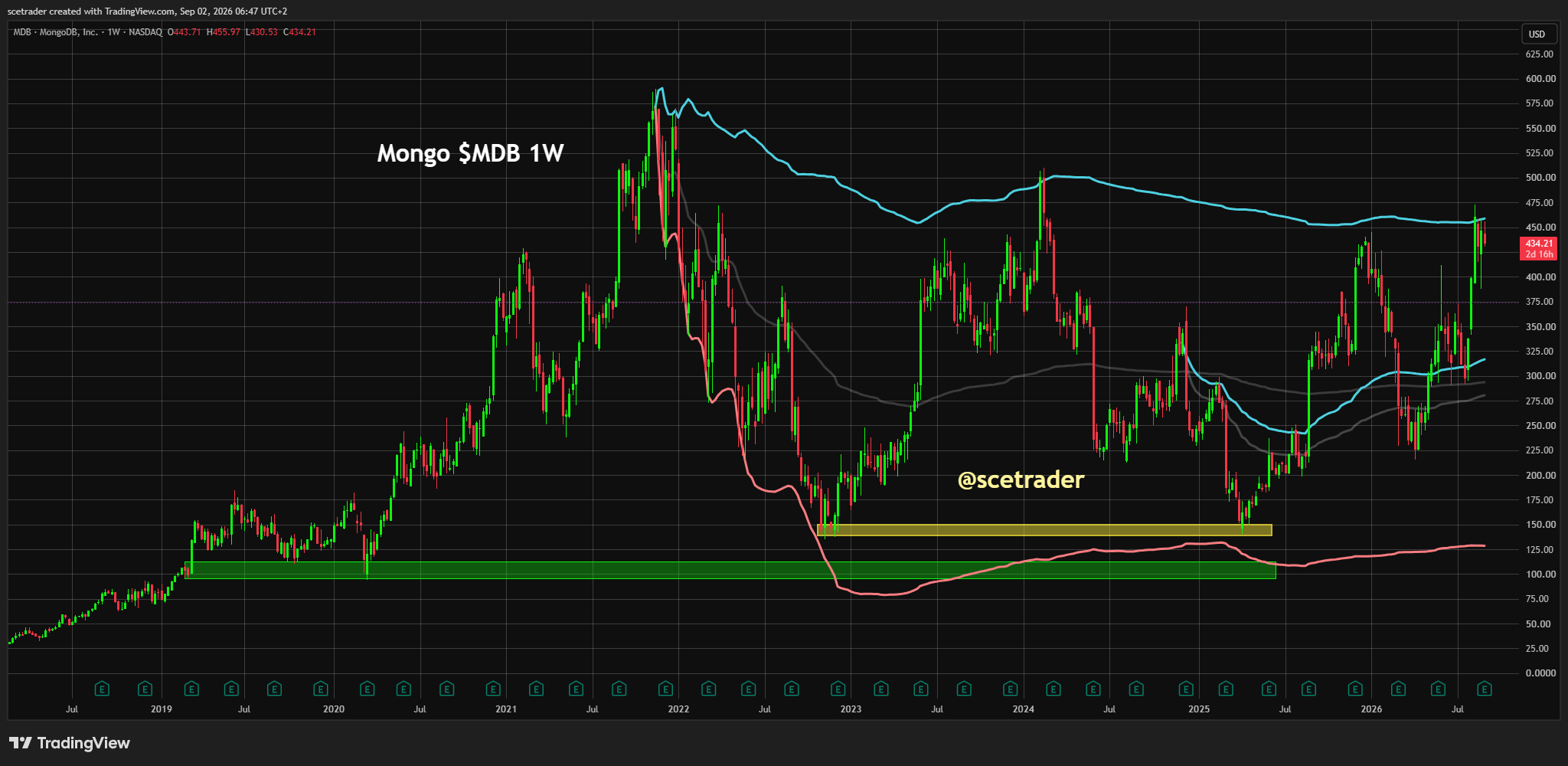
■ MongoDB: kwam met sterke cijfers, maar verloor desondanks ongeveer 14%. Dat maakt de technische weerstand des te interessanter: het aandeel liep opnieuw tegen belangrijke VWAP-lijnen aan en kwam daar niet doorheen. Goede cijfers worden in deze markt dus niet automatisch beloond.
■ Micron Technology: rond de productie in Taiwan dreigt arbeidsactie doordat werknemers hogere lonen eisen, terwijl er tegelijkertijd tekorten in memory zijn. Dat kan Micron en de memoryketen tijdelijk nerveus maken, maar wij denken dat de arbeidskwestie uiteindelijk met een sisser kan aflopen. De bestaande schaarste in memory blijft voor de langere cyclus belangrijker.
■ Technologie / AI: de Philadelphia Semiconductor Index verloor ongeveer 2%, wat wij gezien de bredere risk-off-beweging nog relatief beheersbaar vinden. Hogere rente maakt de enorme investeringen in chips, datacenters en AI-infrastructuur duurder, maar de bedrijfsresultaten blijven sterk. Het structurele AI-verhaal staat daarmee nog overeind, terwijl vooral de waarderingen meer tegenwind krijgen.
■ Nasdaq 100-future: de future staat ongeveer 0,2% lager en blijft gevangen in dezelfde trading range. Net boven 29.000 ligt de eerste zone die wij vandaag in de gaten houden, met circa 28.850 daaronder als mogelijke volgende test. De vraag is vooral of kopers daar opnieuw terugkomen of dat de markt ditmaal echt doorzakt.
■ S&P-future: de future ligt ongeveer 0,1% lager en laat eveneens nog geen duidelijke uitbraak zien. Het patroon blijft hetzelfde: zodra een beweging naar boven lijkt te beginnen, verschijnt er weer een reden om terug te vallen.
■ Short gaan: je zou bijna zeggen dat een korte rit naar beneden aantrekkelijk wordt, zeker als support breekt. Toch blijven wij voorlopig vooral kijken, omdat Scott Bessent plotseling met een Treasury-bond-buybackplan kan komen of Trump met één headline de hele markt de andere kant op kan sturen. Dat maakt deze markt onzuiverder en is precies waarom wij nu niet agressief short gaan.
■ Investment view: het blijft tutti frutti. Rente, olie en geopolitiek drukken op de markt, terwijl de bedrijfsresultaten juist sterk blijven en Europa relatief taai ligt. Een paar procent terug, support testen en daarna weer omhoog zou zelfs gezond kunnen zijn, maar de headline-risico’s maken timing lastig. De langere visie blijft daarom staan, maar voor de korte termijn kijken wij vooral aan.
■ Market view: Europe is set to open around 0.3% to 0.4% lower, which is actually fairly modest given all the uncertainty. Oil, Iran and especially rates are once again driving the market, while strong corporate earnings provide an important counterweight. Ahead of US payrolls, the picture remains shaky and we prefer to take things day by day rather than chase every move.
English
■ Wall Street: the S&P 500 fell 0.7% on Tuesday, the Dow 0.8% and the Nasdaq 1.0%, marking a third consecutive losing session for the major indices. August was still positive across the main indices and corporate earnings remain notably strong. For now, we therefore do not see the weak start to September as evidence that the longer-term trend has broken.
■ Rates: this remains the main theme. The US 10-year yield is around 4.81%, versus roughly 4.20% at the start of 2026, while the 2-year is around 4.39% versus approximately 3.50% at the beginning of the year. Germany is around 3.35%, the Netherlands around 3.42% and Japan around 3.01%, with Japan above 3% for the first time since 1996. The US 10-year also traded around 4.8% in October 2023 before moving toward 5%, so the level itself is not new, but the speed of any further rise could hurt markets. In Germany, around 3.7% is a first technical resistance level and in a much more extreme scenario even 4.56% could come into view, while US government debt above $40 trillion and an implied roughly 66% probability of a September Fed hike are keeping the risk premium elevated. Higher yields also feed through into mortgages, corporate financing and valuations.
■ Oil / Iran / inflation: WTI is now close to $91 and was another roughly 0.5% higher overnight after the main rally had already taken place during Tuesday’s US session. Brent previously closed 4.6% higher at $94.65 and WTI 5.2% higher at $90.22, at the time its first close above $90 in more than a month. Iran again says two supertankers were hit in the Strait of Hormuz and a tanker actually catching fire or sinking could immediately worsen the situation. Our view remains that Trump does not want further escalation and is therefore somewhat boxed in, while Iran can create enormous uncertainty with relatively limited actions. Higher oil feeds into inflation and rates through energy and transportation costs, although we still believe oil can eventually move lower again.
■ Gas / commodities: European gas futures are also around 2% higher. At the same time, there are unconfirmed reports that Russia may seek to escalate military action against Ukraine again, which could affect not only energy but also commodities such as wheat. This is not a confirmed scenario, but it is something to watch.
■ Labor market / Fed: US payrolls are due on Friday and the current move in rates gives the report additional weight. Strong numbers could give the Fed more room to hike again, while weaker data could provide some relief for bonds and equities.
■ VIX / VVIX: the VIX jumped around 9% on Tuesday to 16.3, but that is still nowhere near panic territory. The VVIX rose around 5% to 91.25 and shows that some additional stress is emerging beneath the surface. Meanwhile, US financial television is producing plenty of noise, while the market itself is still taking the problems relatively calmly.
■ Asia: the picture is clearly weak, with the KOSPI down around 3.6%, the Nikkei roughly 3%, Shenzhen around 2% and Hong Kong about 1%. That is significant risk-off pressure, but not panic yet.
■ EUR/USD and USD/JPY: EUR/USD is around 1.1580 and USD/JPY around 160.1. The weak yen in particular fits the broader rates story and highlights the large differences in monetary policy and capital flows.
■ Gold and silver: silver is around $64.20 after almost reaching $70, where clear resistance is visible. Gold is roughly unchanged around $4,327. Another upward run remains possible, but both metals first need to work through this more difficult phase; with silver, we also remain cautious because trading around the fix can at times become very distorted.
■ Bitcoin / crypto: Bitcoin is around $77,700 after once again failing to break through $80,000 and crypto-related US stocks were also weak. The entire White House crypto spectacle still gives us a sense of manipulation, although we have no evidence for that. For now, we prefer to watch.
■ Corporate earnings: this is not where the biggest problem currently lies. Dell, GitLab, MongoDB and Palo Alto Networks all delivered strong numbers, although share-price reactions have not always been positive. The market is increasingly asking what will ultimately carry more weight: rates and oil or strong earnings growth.
■ European semiconductors: chip stocks may initially face some pressure at the weaker open, but fundamentally the picture is not poor. The current Taiwan symposium sounds reasonably positive and Dell’s comments also provide a constructive read-through. For the longer term, strong European semiconductor names therefore remain interesting on weakness.
■ Luxury: French luxury stocks may come under renewed pressure from Iran, higher oil and broader risk-off sentiment. For now, we mainly see that as a short-term market reaction.
■ Banks / insurers: European banks and insurers continue to show notable strength. We think banks can ultimately move higher, although some short-term profit-taking or price pressure is certainly possible. For now, that does not change the longer-term trend.
■ Syensqo: Performance & Care has been under strategic review since May and Bloomberg reports that Blackstone, Apollo, Cinven and Advent are among those looking at the division, with a valuation of around €3 billion being discussed. The business generated roughly €2 billion of revenue and €358 million of EBITDA in 2025, so €3 billion would imply around 8.4 times EBITDA and would be clearly above earlier valuations of roughly €2 billion to €2.5 billion. We mainly see a strong sale price as temporarily positive, while Syensqo could then focus more strongly on specialty materials and advanced technologies. However, Performance & Care also represents a meaningful earnings contribution, so longer-term value creation will depend on the final sale price and, above all, how management deploys the proceeds.
■ BESI: according to reports, TSMC currently intends to continue using increasingly fine micro-bumps for HBM connections rather than immediately moving broadly to hybrid bonding. That is not favorable for BESI in the short term and around €165 could become the first important VWAP support. BESI has also increasingly become a sentiment-driven stock, meaning this type of news can hit the shares relatively hard. We remain more constructive longer term, but semiconductor technology changes extremely quickly and the risk remains that another technology could eventually overtake hybrid bonding.
■ KPN: issued €500 million of hybrid bonds with a 4.625% coupon, while the order book exceeded €2.5 billion. We see the ease with which the deal was absorbed as a clear sign of institutional confidence in KPN. The proceeds will be used for general corporate purposes and refinancing, the bonds are expected to receive a BB+ rating from S&P and Fitch and will be listed in Dublin. KPN also intends to repurchase €500 million of existing hybrids, with the offer due to expire on September 8 unless extended.
■ Adyen: Goldman Sachs already added Adyen to its Conviction List on Tuesday and maintains a buy rating with a €1,850 price target. The bank sees the technology stack as a key differentiator and expects further growth with existing customers, new client wins and product launches, while its 2027 to 2029 estimates are around 4% to 6% above consensus. Third-quarter results in October are another potential catalyst. Because the broker report was already published on Tuesday, it is not a completely new signal for today, but it does reinforce the positive fundamental case for Adyen.
■ ASML: UBS has raised its price target to €2,350 and mainly points to ASML’s dominant EUV position, pricing power and continuing AI demand. The report was already released on Tuesday, so it is not completely new information for today. We are not adding any further view of our own.
■ IBA: is joining the European PFAROS project, in which 91 parties are working on solutions to reduce PFAS emissions in healthcare and pharmaceuticals. Together with Bayer, IBA will co-lead work on end-of-life and waste-management technologies and assess whether electron-beam and Rhodotron technology can destroy PFAS. Strategically interesting, but still research rather than a commercial breakthrough.
■ Biotalys: has received California approval for EVOCA, the company’s first protein-based biofungicide. California applies particularly stringent regulatory standards and, following earlier registration in Florida and approval by the EPA, the US regulatory foundation is becoming considerably stronger. The decision also supports the development path for EVOCA NG toward possible commercialization in 2029. The stock could certainly see a temporary rally on the news, but we remain on the sidelines.
■ Prosus: weak Hong Kong markets may create another headwind today. For now, however, this is mainly a market and sentiment effect rather than a new fundamental development at Prosus itself.
■ Dell: delivered strong results and raised guidance, with the shares trading higher after hours. That is another positive signal for semiconductors and AI infrastructure. The stock has already run a very long way, however, and we also see some overvaluation, so we would rather wait for a correction than chase the rally here.
■ Palo Alto Networks: also delivered strong results. Cybersecurity remains a genuine growth area and AI can actually create additional demand for security. Fundamentally positive, therefore, without implying that the share price must immediately move higher.
■ GitLab: reported better-than-expected results and jumped around 17% after hours. The numbers were strong, but the stock is certainly no longer cheap and remains speculative in our view. We are not chasing it after such a move.
■ MongoDB: delivered strong results but still fell around 14%. That makes the technical resistance all the more interesting, with the stock once again running into important VWAP lines and failing to break through. Strong earnings are therefore not automatically being rewarded in this market.
■ Micron Technology: labor action is being threatened around production in Taiwan as workers demand higher wages, while memory shortages already exist. That could create temporary nervousness around Micron and the memory supply chain, but we think the labor issue may eventually blow over. The existing shortage in memory remains more important for the longer-term cycle.
■ Technology / AI: the Philadelphia Semiconductor Index fell around 2%, which we view as relatively manageable given the broader risk-off move. Higher rates make the huge investments in chips, data centers and AI infrastructure more expensive, but corporate results remain strong. The structural AI story therefore remains intact, while valuations face more headwinds.
■ Nasdaq 100 future: the future is around 0.2% lower and remains trapped in the same trading range. Just above 29,000 is the first area we are watching today, with roughly 28,850 below as a possible next test. The key question is whether buyers return there or whether the market finally breaks lower.
■ S&P future: the future is around 0.1% lower and likewise shows no convincing breakout yet. The pattern remains the same: whenever an upside move appears to be starting, another reason emerges for the market to fall back.
■ Going short: you could almost argue that a short ride lower is becoming attractive, particularly if support breaks. For now, however, we prefer to watch because Scott Bessent could suddenly announce a Treasury bond buyback plan or Trump could send out one headline that reverses the entire market. That makes this market less clean and is exactly why we are not going aggressively short.
■ Investment view: the market remains tutti frutti. Rates, oil and geopolitics are weighing on sentiment, while corporate earnings remain strong and Europe continues to hold up relatively well. A few percent lower, a test of support and then another move higher could even be healthy, but headline risk makes the timing difficult. Our longer-term view therefore remains intact, while in the short term we mainly prefer to watch and wait.
Disclaimer Aan de door ons opgestelde informatie kan op geen enkele wijze rechten worden ontleend. Alle door ons verstrekte informatie en analyses zijn geheel vrijblijvend. Alle consequenties van het op welke wijze dan ook toepassen van de informatie blijven volledig voor uw eigen rekening.
Wij aanvaarden geen aansprakelijkheid voor de mogelijke gevolgen of schade die zouden kunnen voortvloeien uit het gebruik van de door ons gepubliceerde informatie. U bent zelf eindverantwoordelijk voor de beslissingen die u neemt met betrekking tot uw beleggingen.


