🎨 Marktoverzicht: Rente - Iran - Technip Energies - Zilver - CSG - RHM en meer
Wil je alle artikelen kunnen lezen en elke podcast beluisteren? Neem dan een abonnement en krijg toegang tot alle artikelen en de database met duizenden berichten.
■ Marktbeeld: de rente staat nu echt op het voorfront. Europa houdt zich ondanks de sombere wolken opvallend taai, terwijl de Amerikaanse futures duidelijk zwakker zijn geworden. Dat zegt veel over deze markt: hij is druilig, afwachtend en vooral een flippenkast. Stijgingen verdwijnen snel, maar dalingen lopen vooralsnog ook niet vanzelf door. Wij zien een eventuele verdere terugval daarom nog steeds eerder als een correctie dan als het begin van een bear market.
■ Amerikaanse futures: de daling is inmiddels fors genoeg om serieus te volgen. Bij de Nasdaq 100-future ligt rond 29.110 een eerste belangrijke support, met daaronder ongeveer 29.000 en 28.860 als mogelijke volgende zones. Een echte flush naar beneden zou misschien zelfs gezond zijn en spanning uit de markt halen. Alleen blijft het gevaar bestaan dat precies dan een bericht uit het Witte Huis of van Bessent de hele beweging weer omdraait. Daarom gaan we niet blind achter de daling aan.
■ Olie / Iran: de olieprijs blijft één van de duidelijkste negatieve factoren voor aandelen. Hogere olie werkt rechtstreeks door in inflatieverwachtingen en kan daarmee de lange rente nog verder opstuwen. Tegelijk zit Trump politiek in een lastige positie. Een grote nieuwe escalatie met Iran kan olie opnieuw veel hoger zetten, terwijl hij richting de midterms juist geen nieuwe inflatiegolf kan gebruiken.
■ Iran / Midden-Oosten: onze inschatting blijft dat Iran door de huidige situatie eerder sterker dan zwakker is komen te staan. Trump zal daarom met slimme beslissingen moeten komen als hij wil voorkomen dat het Midden-Oosten nog jarenlang een bron van onrust blijft. Dat is onze scenarioanalyse en geen vaststaand feit, maar het risico verdient wel degelijk aandacht.
■ Rusland / Oekraïne: ook hier blijft geopolitieke onrust meespelen. Tarwe handelt dicht bij het hoogste niveau in bijna drie jaar. Daarmee komt de inflatoire druk niet alleen uit energie, maar ook uit andere grondstoffen.
■ Wereldwijde rente: dit is inmiddels het hoofdthema. De Japanse 10-jaarsrente staat rond 3%, het hoogste niveau sinds 1996. Ook de Amerikaanse, Duitse en Nederlandse lange rente lopen op. De rentemarkten zijn gigantisch en overheden kunnen daar tijdelijk invloed op uitoefenen, maar uiteindelijk bepaalt de markt welke vergoeding beleggers eisen.
■ Japan: volgens de geluiden wordt vanuit de VS druk uitgeoefend op Japan om de rente sneller te verhogen. Dat maakt de beweging in Japan nog interessanter. De 3% op tien jaar is historisch en gaat uiteindelijk invloed hebben op kapitaalstromen, zeker omdat Japan jarenlang één van de goedkoopste financieringsbronnen ter wereld was.
■ Japan / staatsschuld: die hogere rente krijgt extra gewicht doordat de Japanse staatsschuld, afhankelijk van de berekening, rond 230%-248% van het BBP ligt. Tegelijk wil de overheid fors blijven uitgeven. Hogere financieringskosten hoeven de aandelenmarkt niet onmiddellijk te breken, maar kunnen op termijn steeds zwaarder gaan wegen.
■ Amerikaanse rente: de 10-jaarsrente schuift richting 5% en precies daar ontstaat een interessante discussie. Sommige partijen verwachten dat grote instituten dan Treasuries gaan kopen, terwijl andere beleggers juist een nog hogere risk premium willen. Voor ons is vooral de snelheid belangrijk. Een geleidelijke stijging kan de beurs absorberen, een rente die blijft doordenderen wordt een ander verhaal.
■ Financieringskosten: hogere kapitaalmarktrentes blijven niet binnen de obligatiemarkt. Hypotheekrentes lopen mee omhoog en investeringen worden duurder, vooral voor het midden- en kleinbedrijf. Grote bedrijven hebben vaak betere financieringsmogelijkheden en sommige hebben eerder al grote bedragen geleend voordat de rente verder opliep. Daardoor wordt de pijn niet overal tegelijk gevoeld.
■ Amerikaanse staatsschuld: de Amerikaanse overheidsschuld is boven $40 biljoen uitgekomen. Hoe langer de rente hoog blijft, hoe zwaarder de rentelasten en hoe groter de vraag welke vergoeding beleggers uiteindelijk willen om nieuwe schuld te blijven absorberen.
■ Kevin Warsh / Fed: de havikachtige boodschap van Warsh krijgt meer gewicht nu olie en rente tegelijkertijd oplopen. De markt houdt serieus rekening met een nieuwe renteverhoging. Daarmee is het inflatierisico geen theoretisch verhaal meer, maar iets wat daadwerkelijk in de rentecurve terechtkomt.
■ Amerikaanse arbeidsmarkt: de payrolls worden daardoor extra belangrijk. Sterke cijfers kunnen de rente opnieuw omhoog duwen, terwijl zwakkere data juist lucht kunnen geven aan obligaties en aandelen. Het is één van de eerstvolgende momenten waarop de markt mogelijk uit deze range probeert te breken.
■ Scott Bessent / Treasuries: een bondbuybackprogramma kan de lange rente tijdelijk omlaag drukken en daarmee een forse short squeeze in aandelen veroorzaken. Alleen verandert dat niets aan het structurele probleem dat de obligatiemarkt uiteindelijk zelf bepaalt welke rentevergoeding nodig is. Bessent kan dus rust creëren, maar niet onbeperkt tegen zo'n enorme markt ingaan. Juist daarom blijft blind short gaan gevaarlijk.
■ Duitsland / begroting: in Duitsland gaan steeds meer geluiden rond dat de overheid kritischer naar de eigen financiën kijkt. Uitgaven kunnen mogelijk over meerdere jaren worden uitgesmeerd en ook defensie wordt daarbij genoemd. Dat is nog geen besloten beleid, maar de stijgende rente maakt de discussie over de Duitse financiële boekhouding wel steeds relevanter.
■ Rheinmetall: de trend blijft zwak en daar komt de discussie over toekomstige defensiebudgetten bovenop. Bovendien verandert droneoorlogvoering de manier waarop naar dure tanks en traditioneel materieel wordt gekeken. Dat betekent niet dat defensie structureel voorbij is, maar wel dat niet iedere defensienaam automatisch dezelfde winnaar blijft. De eerder genoemde zone rond €900 blijft voor ons in beeld.
■ CSG: krijgt met hetzelfde vraagstuk te maken. Als Europese defensiebudgetten anders worden verdeeld of investeringen in traditioneel materieel worden uitgesmeerd, kan dat ook hier de verwachtingen temperen. Voorlopig zien we daarom geen reden om de recente zwakte zomaar als koopkans te bestempelen.
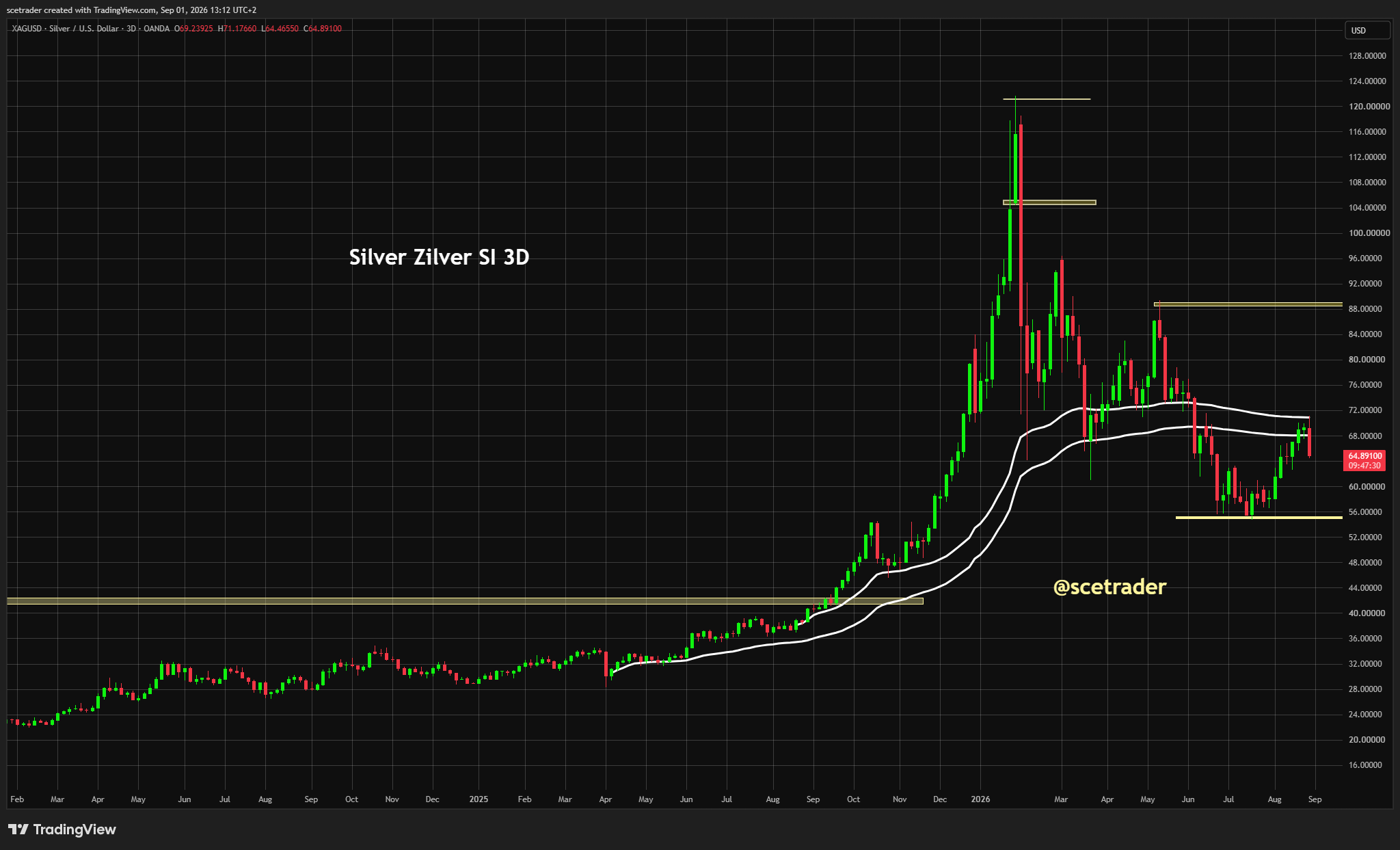
■ Goud en zilver: beide metalen zijn duidelijk teruggevallen. Toch denken wij niet dat het langere verhaal daarmee voorbij is. Vooral zilver blijft technisch interessant: rond $70 ligt volgens onze eerder ingetekende VWAP-lijnen een belangrijke weerstand. Breekt zilver daar uiteindelijk overtuigend doorheen, dan zien we ruimte voor een vervolgrally richting boven $80. Eerst moet die weerstand echter uit de weg.
■ Europese energie: hogere olie zorgt voor een opvallende tweedeling. Voor de brede beurs werkt het als rem, maar energiebedrijven profiteren rechtstreeks. Luchtvaartmaatschappijen krijgen juist de andere kant van het verhaal, omdat hun brandstofkosten oplopen.
■ Europese chips: fundamenteel blijven we hier positief. Nieuwe chipfaciliteiten worden nog steeds gebouwd en de AI-vraag vertaalt zich steeds duidelijker in investeringen, productie en handelsstromen. Koersmatig blijft het flip-flop, maar voor de langere termijn blijven sterke chippers juist interessant op dips.
■ Europese software: hogere rente raakt software harder omdat dit vaak high-gear-aandelen zijn waarvan veel toekomstige groei in de waardering zit. Tegelijk denken wij dat juist daar op stevige dips voorzichtig kleine plukjes interessant kunnen worden. AI vormt een bedreiging voor delen van het bestaande model, maar kan tegelijkertijd nieuwe omzet en productiviteit opleveren.
■ Europese auto en luxe: beide sectoren liggen zwak en dat past bij de huidige risk-off-rotatie. Hogere rente, duurdere energie en onzekerheid over de economische groei maken beleggers terughoudender bij cyclische consumptie en dure waarderingen.
■ UCB: het aandeel ligt beter en het akkoord met de Amerikaanse overheid haalt onzekerheid weg. UCB levert Keppra-API en tabletten aan de nationale ASPR-voorraad en blijft buiten Section 232-tarieven en toekomstige prijsmandaten. Toch zien wij UCB nog niet als de oude performer waar we blind achteraan willen. In het verleden hebben we hier goed mee gehandeld en uiteindelijk kunnen we opnieuw instappen, maar op dit moment twijfelen we nog.
■ Aedifica: de cijfers waren gewoon goed en een tegenvallende koersreactie verandert dat niet. De huurinkomsten bedroegen €292,3 miljoen, de EPRA-winst €189,9 miljoen en de EPRA-winst per aandeel steeg naar €2,71. De bezettingsgraad van 99,1%, lange huurcontracten, het hogere dividend en verdere synergieën ondersteunen het langere verhaal. Voor ons blijft Aedifica duidelijk ondergewaardeerd voor de lange termijn en een pluk in portefeuille vinden wij nog steeds logisch.
■ Argenx: op 8 september staat de Wells Fargo Healthcare Conference op de agenda en op 14 september volgt de Morgan Stanley Global Healthcare Conference. Dat zijn interessante momenten voor traders omdat nieuwe opmerkingen over de pijplijn, commerciële ontwikkeling of vooruitzichten beweging kunnen veroorzaken. Bij bullish nieuws kan daar een korte rit naar boven in zitten. Eerst het nieuws, dan de trade.
■ SBM Offshore: hogere olie werkt rechtstreeks mee en maakt het aandeel op dit soort dagen relatief sterk. De eerdere koersdoelverhoging van Bernstein van €46 naar €48 geeft daar nog een extra steunpunt bij.
■ Vopak: past eveneens in het sterkere energiecomplex. De huidige omgeving kan opnieuw koopinteresse opleveren, zonder dat wij vinden dat je achter iedere opwaartse tik aan moet rennen.
■ Shell: is een andere logische winnaar van hogere olie. De factor die voor de brede beurs vervelend is, levert Shell juist rugwind op.
■ ArcelorMittal: houdt zich opvallend goed ondanks de hogere energieprijzen. Omdat staalbedrijven juist gevoelig zijn voor energiekosten willen we eerst zien of deze relatieve kracht standhoudt voordat we daar een groter verhaal van maken.
■ Arcadis: de recente zwakte verandert onze langere visie niet. Wij blijven ruimte richting €50 zien. De overnamestrijd rond het bedrijf blijft daarnaast een extra factor die beweging kan veroorzaken.
■ Alfen: de zone rond €10 blijft cruciaal. Na de eerste positieve reactie op de cijfers kwam het aandeel hard terug. Als €10 ook breekt, wordt het steeds moeilijker om de daling alleen als winstnemingen af te doen.
■ Fugro: probeert voorzichtig weer omhoog te kruipen en begint wat meer support te vinden. Dat is nog geen bewijs van een nieuwe trend, maar het technische beeld is in ieder geval minder zwak.
■ Fastned: blijft richting €40 werken. Dat zou technisch een mooie stap zijn, terwijl ABN AMRO met een koersdoel van €60 veel meer ruimte ziet. Zolang het opgaande patroon intact blijft, houden we het aandeel in de smiezen.
■ PostNL: kan best een paar procent stijgen, maar daar doen wij niets mee. Wij zien nog steeds geen reden om een positie in te nemen.
■ Solvay: laat zien dat mid-cycle en cyclische namen op dips worden opgepakt. Het is nog geen overtuigende nieuwe bullfase, maar wel een vorm van verbreding buiten AI. Voor ons blijft Solvay vooral een tradersaandeel.
■ Syensqo: past in hetzelfde beeld. Op zwakke dagen verschijnen weer kopers en dat kan voor korte ritten zorgen wanneer de industriecyclus wat verbetert. Structureel blijft het voor ons minder interessant dan de echte kwaliteitsgroeiers.
■ SIPEF: Barclays verwacht dat El Niño mogelijk tot forse stijgingen van palmolie, kokosolie, rubber en andere agrarische grondstoffen kan leiden. Dat kan SIPEF rechtstreeks helpen. Als hogere agriprijzen de marges ondersteunen terwijl de zone rond €100 standhoudt, ontstaat een aantrekkelijke combinatie van fundamentele rugwind en technische bodemvorming.
■ DEME: blijft voor ons een prachtig aandeel. De recente kracht is terecht, maar we willen eerst kijken of het aandeel opnieuw tegen weerstand aanloopt. Misschien missen we daarmee een deel van de volgende rally, maar we hoeven niet overal achteraan.
■ Air Liquide: Elliott Investment Management heeft een belang opgebouwd en dringt aan op hogere marges en operationele verbeteringen. Daarnaast profiteert Air Liquide van de chipindustrie en AI-datacenters. Wij zien het als een mooie lange termijn groeier, maar ook hier gaat niets in een rechte lijn omhoog. Juist terugvallen kunnen daarom interessant zijn om kleine plukjes op te bouwen.
■ DSM-Firmenich: Jefferies heeft het koersdoel verhoogd van €95 naar €117. Dat is een forse verhoging, maar voor ons verandert het niets. Wij zien geen reden om iets met het aandeel te doen en blijven aan de zijlijn.
■ Ekopak: rapporteerde over H1 2026 een omzet van €23,5 miljoen en een EBITDA van €3,4 miljoen, waarbij eenmalige effecten een rol speelden. Voor verdere groei is maximaal €5,6 miljoen extra financiering nodig via een achtergestelde converteerbare lening en daarnaast wordt aanvullend kapitaal gezocht. Dat geeft ons geen reden om positief te worden. Wij zien geen aanleiding om hier een positie in te nemen.
■ Siemens Energy: de korte termijn blijft beweeglijk, maar structureel blijven elektriciteitsnetten, energie-infrastructuur en de enorme stroombehoefte van AI interessante groeimotoren. Wij denken nog steeds dat het aandeel uiteindelijk hoger kan, alleen is de markt tijdelijk veel kritischer geworden op alles wat met AI samenhangt.
■ Prosus: wordt steeds gevoeliger voor Hongkong. Tencent vertegenwoordigt veel waarde en kan steun bieden, maar buiten dat belang blijven wij moeite houden met bedrijven met lage marges of nauwelijks winst. Just Eat Takeaway past precies in die twijfel. Alleen een duidelijk sterkere AI-focus of verbetering van de kwaliteit van de overige portefeuille kan onze visie aantrekkelijker maken.
■ Kinepolis: wij zien nog steeds geen reden om iets met het aandeel te doen. Een tijdelijk sterker bioscoopbezoek is voor ons te dun om daar een serieuze langetermijncase van te maken.
■ SAP: het aandeel staat onder druk door de combinatie van hogere rente en onzekerheid over de gevolgen van AI voor software. Dat hoeft voor de langere termijn niet negatief te zijn, want AI kan ook nieuwe mogelijkheden creëren. Technisch loopt SAP tegen een belangrijke weerstandslijn aan. Eerst daar doorheen voordat de langere opwaartse trend echt weer ruimte krijgt. Een correctie kan juist later een nieuwe kans opleveren.
■ ASML: lange termijn blijven we bullish, terwijl het korte termijnbeeld blijft flipperen. UBS denkt dat beleggers het winstpotentieel onderschatten. Hogere prijzen voor machines, meer productie en grotere blootstelling aan memory kunnen volgens de bank de winstgroei sterker maken dan nu wordt ingeprijsd. UBS denkt dat de brutomarge al rond 2028 richting 60% kan gaan in plaats van pas in 2030, handhaaft het koopadvies en verhoogt het koersdoel van €2.250 naar €2.350. Dat past bij onze visie: korte termijn kan ASML blijven schudden, langere termijn zien wij duidelijk hogere koersen.
■ Technip Energies: een bevriende handelaar heeft na de forse SpaceX-rally een speculatieve shortpositie geopend via een 3x hefboomproduct. De gedachte is nadrukkelijk niet dat Technip fundamenteel zwak is, maar dat de markt mogelijk te snel te veel succes heeft ingeprijsd rond een mogelijk contract van meer dan $10 miljard terwijl een officiële gunning nog ontbreekt. Het is puur een korte timingtrade, waarbij bevestiging van Technip als winnaar het belangrijkste risico vormt.
■ Azië: het beeld blijft verdeeld. Taiwan houdt zich relatief sterk, Zuid-Korea is rustiger en Hongkong blijft achter. AI en chips zorgen voor steun, terwijl hogere rente en onzekerheid rond China de bredere markt afremmen.
■ Zuid-Korea: de exportgroei lag duidelijk boven verwachting en vooral halfgeleiders profiteerden van de wereldwijde AI-boom. Dat vinden wij belangrijker dan één goede beursdag. Het laat zien dat de chipvraag daadwerkelijk terugkomt in de echte economie en handelsstromen.
■ China: de industriële PMI verbeterde, waarbij productie, nieuwe orders en export aantrokken. Dat is nog geen alles-clear, maar het industriële beeld wordt wel iets minder somber.
■ Shein: de beursintroductie in Hongkong blijft moeizaam verlopen. Beleggers tonen weinig enthousiasme, terwijl veranderingen in tarieven en douaneregels in de VS en Europa juist het goedkope bedrijfsmodel onder druk zetten.
■ Sandisk: de sterke slotbeweging blijft voor ons vooral technisch en waarschijnlijk deels geholpen door einde-maandsstromen. Daar gaan we niet achteraan. Dat staat los van de lange termijnvisie. Zo'n aandeel kan onderweg gemakkelijk 30% dalen en een paar jaar later toch veel hoger staan. Je moet alleen tegen die swings kunnen.
■ NVIDIA: de Anthropic-Lambda-deal van circa $35 miljard laat opnieuw zien hoe breed NVIDIA door de AI-keten heen zit. Anthropic huurt compute, Lambda levert capaciteit op NVIDIA-systemen en NVIDIA heeft zelf in Lambda geïnvesteerd. Zolang de uiteindelijke vraag daadwerkelijk blijft groeien kan dat krachtig zijn, maar de circulaire economiedeals stapelen zich wel op. De markt gaat daardoor steeds nadrukkelijker vragen wie uiteindelijk wie financiert. Wij blijven bullish, maar het verhaal is minder schoon geworden nu NVIDIA steeds vaker bankje speelt.
■ Hut 8: past rechtstreeks binnen die ontwikkeling. Voormalige crypto miners beschikken over stroom, grond en datacentercapaciteit en juist daar heeft AI enorme behoefte aan. Daarmee kunnen ze veranderen van pure miners in AI-facilitators. Hut 8 blijft extreem volatiel, maar forse dips kunnen interessant worden wanneer contracten en infrastructuurpositie verder verbeteren.
■ Eli Lilly: neemt Merida Biosciences over voor maximaal $2,875 miljard in contanten, inclusief mijlpaalbetalingen. Merida ontwikkelt precisiegeneesmiddelen voor ernstige auto-immuun- en allergische aandoeningen waarbij pathogene auto-antilichamen gericht worden aangepakt. Daarmee verbreedt Lilly zijn positie binnen immunologie.
■ Crypto-aandelen: de recente opleving is interessant, maar bewijst voor ons nog niet dat de volgende grote bullfase begonnen is. We willen niet achter iedere plotselinge stijging aanrennen.
■ Bitcoin: beweegt rond $78.000. Dat kan uiteindelijk opnieuw een bodemgebied worden, maar consolidatie of nog een tik omlaag hoort net zo goed bij de mogelijkheden. Liever een kans missen dan een onduidelijke beweging najagen.
■ Lange termijn: grote tussentijdse dalingen horen bij groeiaandelen. NVIDIA, Amazon en ASML hebben allemaal periodes gekend waarin de koersen volledig werden afgezeefd. Dat betekent niet dat iedere daler vanzelf terugkomt, maar wel dat een forse correctie bij een fundamenteel sterk bedrijf niet automatisch het lange termijnverhaal kapotmaakt. Je moet alleen tegen grotere swings in de portefeuille kunnen.
■ Aandelenstrategie: buy-on-dips blijft de rode draad. Fundamenteel sterke chippers, fallen angels, infrastructuurbedrijven en duidelijk ondergewaardeerde aandelen blijven interessant wanneer ze terugvallen. We werken daarbij onder meer met VWAP-lijnen om betere instapmomenten te zoeken. Voorzichtig kleine plukjes, niet iedere dip automatisch kopen.
■ Opties: ik doe nog steeds bijna niets. Er staan slechts enkele posities open en die leveren momenteel ook weinig op. Wanneer ik vol gas in opties zit, kunnen het twintig tot dertig posities zijn. Daar zijn we nu mijlenver vandaan. Misschien missen we daardoor een prachtige short, maar dat hoort erbij. In deze flippermarkt kan precies wanneer je short gaat een Trump-post of Bessent-plan verschijnen waardoor alles weer omhoog schiet. Niets doen is ook beleggen.
■ Investment view: rente is nu de zwakke plek die de markt heeft gevonden. Japan staat op het hoogste 10-jaarsniveau sinds 1996, de Amerikaanse rente schuift richting 5%, Europese yields lopen mee omhoog en tegelijkertijd blijft olie sterk. Toch houdt Europa zich opvallend taai en zien wij een eventuele verdere daling voorlopig nog steeds als correctie en niet als bear market. Een goede flush naar beneden kan zelfs gezond zijn, maar we gaan daar niet blind op gokken. Korte termijn zo weinig mogelijk doen, fundamenteel sterke aandelen op dips voorzichtig oppakken en wachten tot deze flippenkast weer een duidelijkere trend laat zien.
English
■ Market view: rates have now clearly moved to the front line. Europe is holding up surprisingly well despite the dark clouds, while US futures have weakened considerably. That says a lot about this market: it is sluggish, hesitant and above all a flip-flop market. Rallies disappear quickly, but declines are not automatically accelerating either. We therefore still see a further pullback as more likely to be a correction than the start of a bear market.
■ US futures: the decline is now large enough to take seriously. In the Nasdaq 100 future, around 29,110 is the first important support, followed by roughly 29,000 and 28,860 as possible lower zones. A proper flush lower might even be healthy and remove some tension from the market. The problem is that exactly then a White House or Bessent headline could suddenly reverse the entire move. That is why we are not blindly chasing the decline.
■ Oil / Iran: oil remains one of the clearest negative factors for equities. Higher oil feeds directly into inflation expectations and can therefore push long-term yields even higher. At the same time, Trump is in a difficult political position. A major new escalation with Iran could send oil substantially higher again, while heading into the midterms he can hardly use another inflation wave.
■ Iran / Middle East: our assessment remains that Iran has become stronger rather than weaker from the current situation. Trump will therefore need smart decisions if he wants to prevent the Middle East from remaining a source of instability for years. That is our scenario analysis rather than an established fact, but the risk certainly deserves attention.
■ Russia / Ukraine: geopolitical tension also remains a factor here. Wheat is trading close to its highest level in almost three years. Inflationary pressure is therefore coming not only from energy but also from other commodities.
■ Global rates: this has now become the main theme. Japan's 10-year yield is around 3%, the highest since 1996. US, German and Dutch long-term yields are also rising. Bond markets are enormous and governments can influence them temporarily, but ultimately the market determines what return investors demand.
■ Japan: according to market talk, the US is putting pressure on Japan to raise rates more quickly. That makes the Japanese move even more interesting. A 3% 10-year yield is historically significant and will ultimately affect capital flows, particularly because Japan has been one of the world's cheapest funding sources for decades.
■ Japan / government debt: higher rates carry additional significance because Japanese government debt stands at roughly 230%-248% of GDP depending on the calculation method. At the same time, the government continues to plan substantial spending. Higher financing costs do not have to break the equity market immediately, but they can become increasingly burdensome over time.
■ US rates: the 10-year yield is moving toward 5% and that is where the debate becomes particularly interesting. Some investors expect major institutions to start buying Treasuries, while others argue that an even higher risk premium will be required. For us, the speed of the move is what matters most. A gradual rise can be absorbed by equities, a yield that keeps racing higher is a different story.
■ Financing costs: higher capital-market rates do not stay confined to the bond market. Mortgage rates rise with them and investment becomes more expensive, particularly for small and medium-sized companies. Large corporations often have better access to finance and some already borrowed heavily before rates moved higher. The pain is therefore not felt everywhere at the same time.
■ US government debt: US government debt has exceeded $40 trillion. The longer rates remain elevated, the heavier the interest burden becomes and the more investors will ask what return is ultimately required to absorb all that new debt.
■ Kevin Warsh / Fed: Warsh's hawkish message carries greater weight now that oil and rates are rising together. Markets are seriously considering another rate increase. Inflation risk is therefore no longer merely theoretical, but something being reflected directly in the yield curve.
■ US labor market: payrolls are becoming even more important as a result. Strong figures could push rates higher again, while weaker data could provide relief for bonds and equities. It is one of the next moments when the market may try to break out of its current range.
■ Scott Bessent / Treasuries: a bond buyback program could temporarily push long-term yields lower and trigger a significant short squeeze in equities. But it would not change the structural fact that the bond market ultimately determines what yield investors require. Bessent can create temporary calm, but cannot fight such an enormous market indefinitely. That is exactly why blindly shorting remains dangerous.
■ Germany / budget: there is increasing talk that Germany is becoming more critical of its own government finances. Spending could potentially be spread over more years and defense is also being mentioned. Nothing has been decided, but rising rates make the debate around Germany's fiscal position increasingly relevant.
■ Rheinmetall: the trend remains weak and the debate about future defense budgets now comes on top of that. Drone warfare is also changing the way investors look at expensive tanks and traditional military equipment. That does not mean the structural defense story is over, but it does mean not every defense stock will automatically remain the same winner. The previously mentioned €900 area remains in view for us.
■ CSG: faces a similar issue. If European defense budgets are allocated differently or spending on traditional equipment is spread over a longer period, expectations can also come under pressure here. For now, we see no reason to automatically treat the recent weakness as a buying opportunity.
■ Gold and silver: both metals have fallen noticeably. Even so, we do not think the longer-term story is necessarily over. Silver in particular remains technically interesting: around $70 lies an important resistance area according to our previously drawn VWAP lines. If silver eventually breaks that level convincingly, we see room for a further rally above $80. First, however, that resistance has to be cleared.
■ European energy: higher oil creates a striking split. It restrains the broader equity market but directly benefits energy companies. Airlines face the opposite effect because their fuel costs rise.
■ European semiconductors: fundamentally we remain positive. New semiconductor facilities are still being built and AI demand is increasingly translating into investment, production and trade flows. Price action remains flip-flop, but for the longer term strong semiconductor names remain particularly interesting on dips.
■ European software: higher rates hit software harder because these are often high-gear stocks with substantial future growth embedded in valuations. At the same time, we think sizeable dips can create opportunities to cautiously build small positions. AI threatens parts of existing business models but can also generate new revenue and productivity.
■ European autos and luxury: both sectors are weak and that fits the current risk-off rotation. Higher rates, more expensive energy and uncertainty about economic growth make investors more cautious around cyclical consumption and demanding valuations.
■ UCB: the stock is holding up better and the agreement with the US government removes uncertainty. UCB will supply Keppra API and tablets to the national ASPR stockpile and remain outside Section 232 pharmaceutical tariffs and future pricing mandates. Even so, we do not yet see UCB as the old performer that we want to chase blindly. We have traded it very well in the past and may ultimately enter again, but for now we still have doubts.
■ Aedifica: the numbers were simply good and a disappointing share-price reaction does not change that. Rental income reached €292.3 million, EPRA earnings €189.9 million and EPRA earnings per share rose to €2.71. Occupancy of 99.1%, long leases, the higher dividend and further synergies support the longer-term story. In our view Aedifica remains clearly undervalued for the long term and holding a small position still makes sense.
■ Argenx: the Wells Fargo Healthcare Conference is scheduled for September 8 and the Morgan Stanley Global Healthcare Conference follows on September 14. Those are interesting moments for traders because new comments on the pipeline, commercial development or outlook can create movement. Bullish news could offer a short upside trade. First the news, then the trade.
■ SBM Offshore: higher oil directly helps and makes the stock relatively strong on days like this. Bernstein's earlier price-target increase from €46 to €48 adds another supportive factor.
■ Vopak: also fits the stronger energy complex. The current environment can attract renewed buying interest without giving us a reason to chase every uptick.
■ Shell: is another logical beneficiary of higher oil. The factor that hurts the broader market provides a tailwind for Shell.
■ ArcelorMittal: is holding up surprisingly well despite higher energy prices. Because steel companies are sensitive to energy costs, we first want to see whether that relative strength persists before building a larger story around it.
■ Arcadis: recent weakness does not change our longer-term view. We still see room toward €50. The takeover battle around the company remains another factor that can continue to create movement.
■ Alfen: the area around €10 remains crucial. The stock fell sharply after the initial positive reaction to earnings. If €10 also breaks, it becomes increasingly difficult to dismiss the decline as simple profit taking.
■ Fugro: is cautiously trying to climb again and is beginning to find more support. That is not yet proof of a new trend, but the technical picture is at least less weak.
■ Fastned: continues to work toward €40. That would be a constructive technical step, while ABN AMRO's €60 price target points to significantly more upside. As long as the upward pattern remains intact, we keep the stock on our radar.
■ PostNL: can easily rise a few percent, but we are not doing anything with it. We still see no reason to take a position.
■ Solvay: shows that mid-cycle and cyclical names are being bought on dips. It is not yet a convincing new bull phase, but it does show broadening beyond AI. For us, Solvay remains mainly a trading stock.
■ Syensqo: fits the same pattern. Buyers return on weak days and that can create short-term trades if the industrial cycle improves somewhat. Structurally it remains less interesting to us than the true quality-growth names.
■ SIPEF: Barclays expects El Niño could potentially drive sharp increases in palm oil, coconut oil, rubber and other agricultural commodities. That could directly benefit SIPEF. If higher agricultural prices support margins while the area around €100 holds, the stock gains an attractive combination of fundamental tailwinds and technical bottoming.
■ DEME: remains a great company in our view. The recent strength is justified, but we first want to see whether the stock again runs into resistance. Perhaps we miss part of the next rally, but we do not need to chase everything.
■ Air Liquide: Elliott Investment Management has built a position and is pushing for higher margins and operational improvements. Air Liquide also benefits from the semiconductor industry and AI data centers. We see it as an attractive long-term compounder, but nothing moves higher in a straight line. Pullbacks can therefore be interesting moments to build small positions.
■ DSM-Firmenich: Jefferies has raised its price target from €95 to €117. That is a substantial increase, but it changes nothing for us. We see no reason to do anything with the stock and remain on the sidelines.
■ Ekopak: reported H1 2026 revenue of €23.5 million and EBITDA of €3.4 million, with one-off effects playing a role. Further growth requires up to €5.6 million of additional financing through a subordinated convertible loan and the company is also seeking additional capital. That gives us no reason to become positive. We see no reason to take a position.
■ Siemens Energy: the short term remains volatile, but structurally power grids, energy infrastructure and the enormous electricity requirements of AI remain interesting growth drivers. We still think the stock can ultimately move higher, although markets have temporarily become much more critical of everything related to AI.
■ Prosus: is becoming increasingly sensitive to Hong Kong. Tencent represents substantial value and can provide support, but outside that holding we remain uncomfortable with businesses that have low margins or little profit. Just Eat Takeaway fits exactly into that concern. Only a clearly stronger AI focus or an improvement in the quality of the rest of the portfolio would make the story more attractive to us.
■ Kinepolis: we still see no reason to do anything with the stock. A temporary improvement in cinema attendance is too thin for us to build a serious long-term investment case around.
■ SAP: the stock is under pressure from the combination of higher rates and uncertainty about the impact of AI on software. That does not have to be negative for the longer term because AI can also create new opportunities. Technically, SAP is running into an important resistance line. It first needs to clear that level before the longer upward trend gains real room again. A correction could instead create another opportunity later.
■ ASML: we remain bullish for the long term while the short-term picture continues to flip around. UBS believes investors are overlooking the company's earnings potential. Higher machine pricing, greater output and increased exposure to memory could make earnings growth stronger than currently priced in. UBS believes gross margin could move toward 60% as early as 2028 rather than 2030, reiterates its buy rating and raises its price target from €2,250 to €2,350. That fits our view: ASML can continue to shake around in the short term, but over the longer term we still see clearly higher prices.
■ Technip Energies: a friendly trader has opened a speculative short position through a 3x leveraged product following the sharp SpaceX rally. The idea is explicitly not that Technip is fundamentally weak, but that the market may have priced in too much success too quickly around a possible contract worth more than $10 billion while an official award is still missing. This is purely a short-term timing trade, with confirmation of Technip as the winner as the main risk.
■ Asia: the picture remains mixed. Taiwan is holding up relatively well, South Korea is quieter and Hong Kong continues to lag. AI and semiconductors provide support, while higher rates and uncertainty around China restrain the broader market.
■ South Korea: export growth came in clearly above expectations and semiconductors in particular benefited from the global AI boom. We find that more meaningful than one good trading day. It shows that semiconductor demand is actually reappearing in the real economy and trade flows.
■ China: the manufacturing PMI improved, with production, new orders and exports all strengthening. That is not an all-clear, but it does make the industrial picture somewhat less negative.
■ Shein: the Hong Kong market debut remains difficult. Investors show limited enthusiasm while changes in tariffs and customs rules in the US and Europe are putting the low-cost business model itself under pressure.
■ Sandisk: the strong closing move still looks mainly technical to us and was probably helped partly by month-end flows. We are not chasing it. That is separate from the longer-term view. This type of stock can easily fall 30% along the way and still trade much higher a few years later. You simply have to be able to handle those swings.
■ NVIDIA: the roughly $35 billion Anthropic-Lambda deal again shows how broadly NVIDIA now sits across the AI chain. Anthropic rents compute, Lambda provides capacity on NVIDIA systems and NVIDIA itself has invested in Lambda. As long as final demand genuinely keeps growing, that can be powerful, but circular-economy deals are starting to pile up. Markets will therefore increasingly ask who is ultimately financing whom. We remain bullish, but the story has become less clean as NVIDIA increasingly plays bank.
■ Hut 8: fits directly into that development. Former crypto miners control power, land and data-center capacity, exactly what AI increasingly needs. They can therefore evolve from pure miners into AI facilitators. Hut 8 remains extremely volatile, but large dips can become interesting if contracts and infrastructure positioning continue to improve.
■ Eli Lilly: is acquiring Merida Biosciences for up to $2.875 billion in cash, including milestone payments. Merida develops precision medicines for severe autoimmune and allergic diseases by specifically targeting pathogenic autoantibodies. The acquisition further expands Lilly's position in immunology.
■ Crypto stocks: the recent rebound is interesting, but for us it has not yet proved that the next major bull phase has started. We do not want to chase every sudden rise.
■ Bitcoin: is trading around $78,000. That could eventually become another bottoming area, but consolidation or another move lower are equally possible. We would rather miss an opportunity than chase an unclear move.
■ Long term: large interim declines are part of owning growth stocks. NVIDIA, Amazon and ASML have all gone through periods in which their share prices were completely crushed. That does not mean every falling stock automatically recovers, but it does show that a sharp correction in a fundamentally strong company does not automatically destroy the long-term story. You simply need to be able to handle larger portfolio swings.
■ Equity strategy: buy-on-dips remains the common thread. Fundamentally strong semiconductor names, fallen angels, infrastructure companies and clearly undervalued stocks remain interesting when they fall back. We also use VWAP lines to look for better entry points. Small cautious positions, rather than automatically buying every dip.
■ Options: I am still doing almost nothing. Only a few positions are open and they are currently doing very little. When I am going full throttle in options, that can mean twenty to thirty positions. We are nowhere near that now. Perhaps we miss a beautiful short, but that is part of the game. In this flip-flop market, the moment you go short can be exactly when a Trump post or Bessent plan appears and sends everything higher again. Doing nothing is also investing.
■ Investment view: rates are now the weak spot the market has found. Japan's 10-year yield is at its highest level since 1996, US yields are moving toward 5%, European yields are rising as well and oil remains strong at the same time. Yet Europe is holding up surprisingly well and we still see a further decline as a correction rather than a bear market for now. A proper flush lower could even be healthy, but we are not going to blindly bet on it. Do as little as possible in the short term, cautiously buy fundamentally strong stocks on dips and wait until this flip-flop market finally returns to a clearer trend.
Disclaimer Aan de door ons opgestelde informatie kan op geen enkele wijze rechten worden ontleend. Alle door ons verstrekte informatie en analyses zijn geheel vrijblijvend. Alle consequenties van het op welke wijze dan ook toepassen van de informatie blijven volledig voor uw eigen rekening.
Wij aanvaarden geen aansprakelijkheid voor de mogelijke gevolgen of schade die zouden kunnen voortvloeien uit het gebruik van de door ons gepubliceerde informatie. U bent zelf eindverantwoordelijk voor de beslissingen die u neemt met betrekking tot uw beleggingen.


