Indices Europa na Wall Street: NVIDIA, software en single-stock flow
Dit gaat om het slot in Amerika. We gebruiken geen informatie uit de overnight-sessie.
Wall Street kreeg een duidelijke techrally na sterke cijfers van NVIDIA en meerdere softwarebedrijven. De beweging was krachtig, maar niet breed. Semiconductors stegen met SMH +3% en software sprong eruit met IGV +7%. De meeste sectoren buiten technologie bleven achter. Dit was dus geen klassieke brede risk-on sessie, maar een gerichte herwaardering van AI-hardware, semiconductors, software, cloud, cybersecurity, data en IT-diensten.
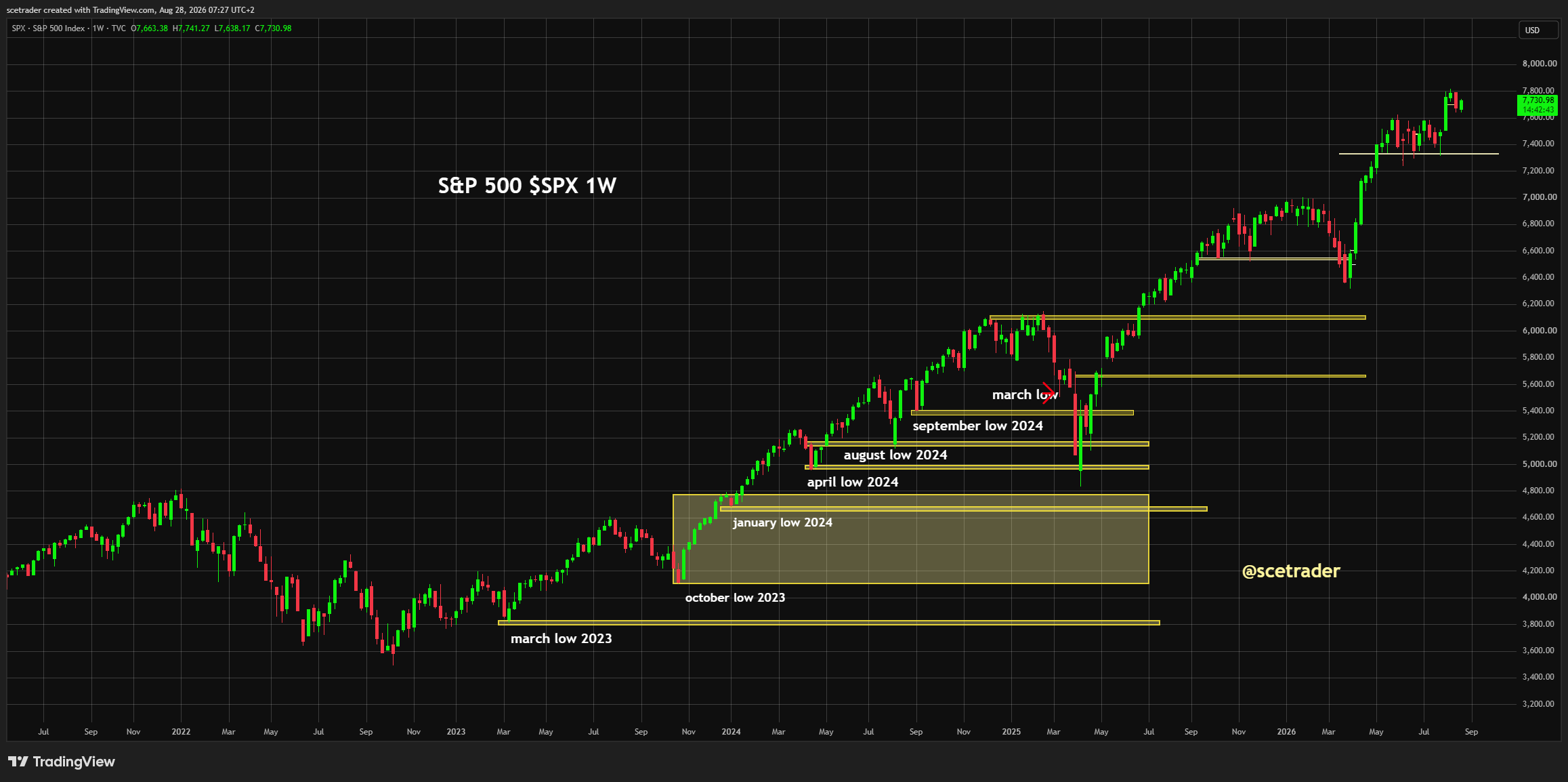
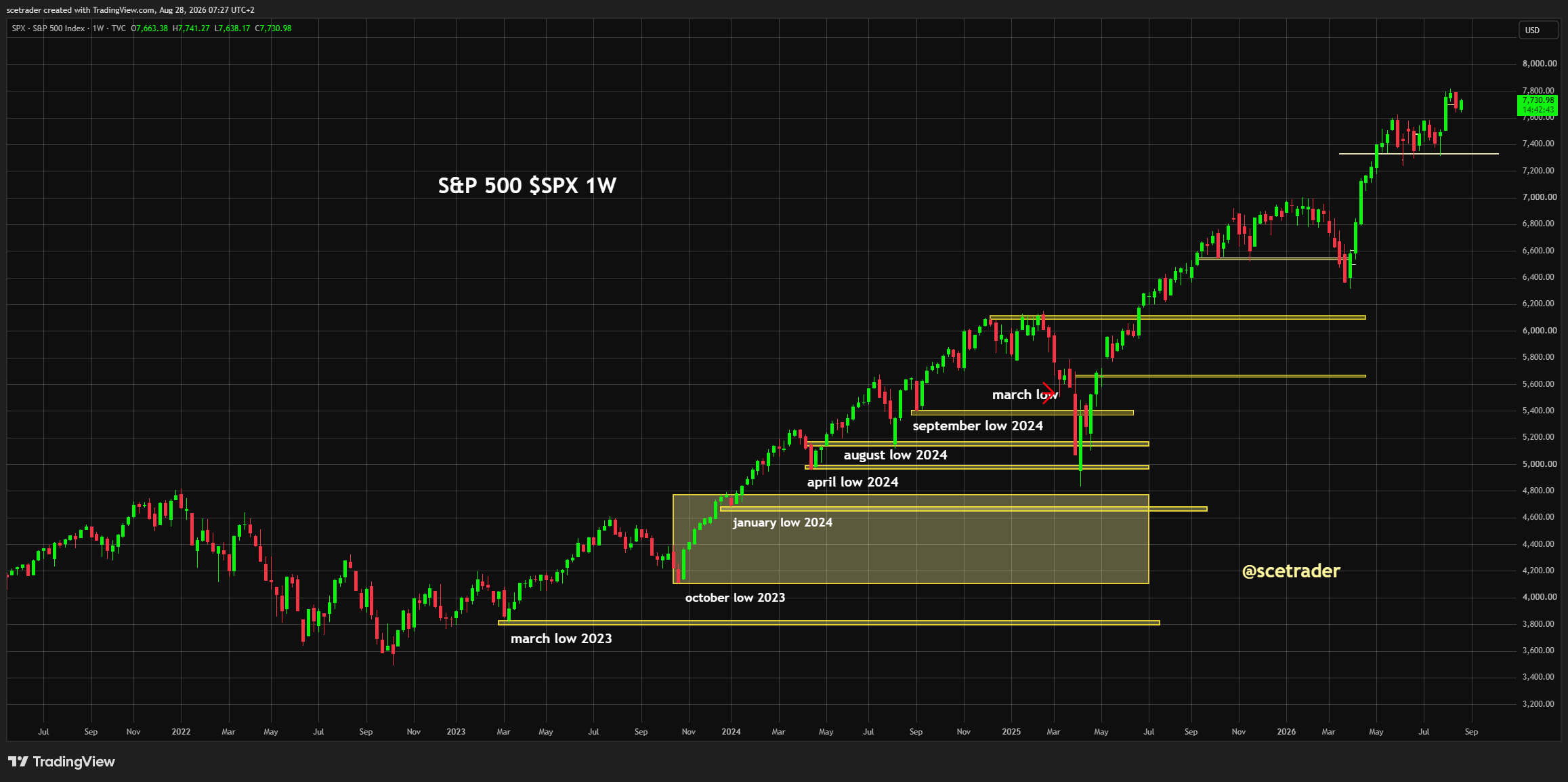
SPX bewoog binnen een range van 67 basispunten en sloot 0,7% hoger op 7.731. Daarmee bleef de index ruim boven de Risk Pivot op 7.650. VIX daalde 5% naar 14,50 en VVIX zakte 3% naar 82,90. Fixed-strike volatility daalde breed en gaf een duidelijke tailwind aan de stijging.
De kern zat niet in brede indexkoop. S&P 500 HIRO eindigde op -$1,3 miljard delta, gedreven door call buying en put buying, met meer dan de helft van de flow in 0DTE. Dat wijst op long-volatility zonder zware netto indexrichting. De echte kracht zat in losse aandelen: S&P 500 single-stock HIRO kwam uit op +$5,5 miljard delta, de hoogste stand van de afgelopen 30 dagen. NVIDIA was goed voor $4,6 miljard daarvan, vooral door longer-dated call buying. Ook Salesforce, Okta en CrowdStrike zagen callflow op 30-daagse hoogtepunten.
■ SPX — bullish: de index sloot 0,7% hoger op 7.731 en bleef ruim boven de Risk Pivot op 7.650.
■ 7.650 — stevige steun: dit niveau ligt duidelijk onder de markt en is niet direct onder druk.
■ 7.730 — belangrijk gamma-niveau: daar lag de 99e percentiel gamma strike met een 10.000-lot 0DTE short call-positie van klanten.
■ Gamma-doorbraak — positief: toen SPX boven 7.730 brak, werden short calls gesloten en draaide HIRO rond 13:00 ET.
■ VIX — bullish: VIX daalde 5% naar 14,50 en ondersteunde risk appetite.
■ VVIX — bullish: VVIX daalde 3% naar 82,90; ook de onzekerheid rond volatility nam af.
■ SMH — bullish: semiconductors stegen 3% en waren een duidelijke leider.
■ IGV — zeer bullish: software won 7% en was de sterkste sectorread-through buiten NVIDIA zelf.
■ NVIDIA — zeer bullish: $4,6 miljard van de single-stock HIRO-flow kwam uit NVIDIA, vooral via longer-dated call buying.
■ Single-stock HIRO — zeer bullish: +$5,5 miljard delta was de hoogste stand in 30 dagen.
■ S&P 500 HIRO — gemengd: index-HIRO eindigde op -$1,3 miljard delta; het brede indexsignaal was minder sterk dan de aandelenflow.
■ Salesforce — zeer bullish: CRM steeg 23% en trok enterprise software mee.
■ Okta — zeer bullish: OKTA steeg 29% en bevestigde kracht in identity- en cloudsoftware.
■ CrowdStrike — zeer bullish: CRWD steeg 21% en gaf directe steun aan cybersecurity.
■ MSFT — bullish: Microsoft steeg 2% naar 505 en de November 545/625 call spread won 40%.
■ TLT — bullish watch: traders kochten 24.000 TLT September 30 85 calls; positief voor bonds, maar nog geen breed equitysignaal.
■ Warsh-speech — katalysator: morgen om 10:00 ET wordt belangrijk voor volatility en rentegevoelige reacties.
Marktbeeld voor Europa
Voor Europa moet dit per index en per land worden gelezen, maar zonder namen geforceerd in het artikel te trekken. De rally zat in technologie, niet in de hele markt. Alleen namen met een echte verbinding naar AI-hardware, semicap, software, cybersecurity, data, workflow, IT-diensten en datacenter-infrastructuur verdienen een plek.
De selectie moet breed genoeg zijn, maar zuiver blijven. Financials, defensieve consumentennamen, energie, airlines en vastgoed horen niet in de kern van dit bericht. De beste read-through zit in technologie en aanpalende infrastructuur. In Nederland betekent dat niet alleen ASML, ASM International en Besi, maar ook Adyen, Wolters Kluwer, RELX en geselecteerde local tech. In Europa komen daar software-, IT-, semicap- en datacenter-powernamen bij.
AEX en Nederland
■ ASML — bullish: SMH +3% en sterke NVIDIA-call buying geven directe steun aan AI-chipproductie en lithografie. Dit is de zuiverste Nederlandse read-through op de Amerikaanse semirally.
■ ASM International — bullish: ASMI heeft een directe semicap-link met waferapparatuur, chipinvesteringen en AI-hardware. De combinatie van NVIDIA-flow en SMH-kracht maakt het signaal overtuigend positief.
■ Besi — bullish: advanced packaging is direct verbonden met AI-chips. Als NVIDIA en SMH verder worden gekocht, blijft Besi een van de beste Europese vertalingen.
■ Adyen — bullish/speculatief: Adyen is geen Salesforce- of CrowdStrike-read-through, maar hoort wel bij Europese high-quality growth-beta. Als single-stock techrisk opnieuw wordt gekocht, mag Adyen mee als speculatieve AEX-naam.
■ Wolters Kluwer — bullish: data, workflowsoftware, compliance en analytics passen goed bij een rally in softwarekwaliteit en professionele digitale platformen.
■ RELX — bullish: data, analytics, workflow en informatieplatforms sluiten aan bij de herwaardering van softwarekwaliteit en professionele data. RELX heeft minder beta dan pure software, maar is wel een sterke quality-tech read-through.
AMX en Nederlandse locals
■ TKH Group — bullish/speculatief: TKH past bij industrial tech, machinevision, smart systems en elektrificatie. Niet zo direct als ASML of ASMI, maar wel een serieuze Nederlandse local-tech read-through.
■ Nedap — bullish/speculatief: Nedap is geen chipnaam, maar wel local tech via identificatie, connected systems en security-achtige technologie. Dit is een kleinere, speculatievere vertaling van de techrally.
■ CM.com — bullish/speculatief: software, klantcommunicatie en digitale platformen maken CM.com logischer dan generieke groeiaandelen bij een sterke softwaredag. Het blijft wel een high-beta local.
■ Theon International — neutraal tot bullish/speculatief: high-tech, optonica en defensietechnologie geven een local-techhoek, maar de koppeling met NVIDIA en software is indirecter.
■ Alfen — watch: elektrificatie en energie-infrastructuur kunnen later relevant worden als datacenter-power sterker meespeelt, maar dit is geen kernnaam in de huidige techrally.
België en lokale Benelux
■ Melexis — neutraal tot bullish/speculatief: chipbeta helpt, maar de auto- en sensorblootstelling maakt de correlatie minder zuiver dan bij AI-hardware en semicap.
■ X-FAB — neutraal tot bullish/speculatief: bredere semisterkte helpt, maar dit blijft een local foundry-beta en geen directe NVIDIA-read-through.
■ Barco — watch: Barco is local techhardware, maar de verbinding met AI-chips, enterprise software of cybersecurity is niet sterk genoeg voor een harde bullcase.
DAX en Duitsland
■ SUSS MicroTec — bullish: semicap-exposure sluit direct aan bij AI-hardware, chipproductie en hernieuwde koopinteresse in semiconductors.
■ SAP — bullish: CRM +23% is een directe enterprise-software-read-through. SAP krijgt daardoor een duidelijk positief signaal.
■ Aixtron — bullish/speculatief: compound-semiconductor en semicap-beta kunnen hard reageren als chipmomentum aanhoudt.
■ Siltronic — neutraal tot bullish/speculatief: wafer-exposure past bij een betere chipketen, maar de link met NVIDIA is minder direct dan bij equipment en packaging.
■ Infineon — neutraal tot bullish: SMH +3% helpt brede Europese semis, maar Infineon is cyclischer en minder zuiver AI dan de semicapkern.
■ Nemetschek — bullish/speculatief: softwarekwaliteit krijgt steun van IGV +7%, maar de correlatie met Salesforce, Okta en CrowdStrike is minder direct dan bij SAP.
■ Siemens — neutraal tot bullish: Siemens past in digital industries, automation en infrastructuur. Dit is geen pure software- of semicapnaam, maar wel een betere AI-infra read-through dan klassieke cyclicals.
CAC 40 en Frankrijk
■ Capgemini — bullish: sterke cijfers bij Salesforce, Okta en CrowdStrike ondersteunen IT-budgetten, cloudprojecten, data, AI en cybersecurity. Capgemini heeft hier een duidelijke read-through.
■ Dassault Systèmes — neutraal tot bullish: software-sentiment verbetert breed, maar de link met CRM, identity en cybersecurity is minder direct dan bij SAP.
■ STMicroelectronics — neutraal tot bullish: SMH +3% ondersteunt brede Europese chips, maar STM is minder zuiver AI-hardware dan de sterkste semicapnamen.
■ Soitec — bullish/speculatief: substrate-exposure past bij hernieuwde koopinteresse in semis en AI-hardware, maar blijft gevoeliger voor beta.
■ Sopra Steria — bullish/speculatief: IT-diensten krijgen steun als enterprise-techbudgetten en softwareprojecten aantrekken. De naam heeft meer beta dan Capgemini.
■ Schneider Electric — bullish: AI-datacenters vragen stroom, koeling, automation en power management. Schneider is een veel betere infrastructuur-read-through dan willekeurige industriële namen.
■ Legrand — bullish: datacenter-elektrificatie en digitale infrastructuur maken Legrand logisch binnen de AI-powerketen.
FTSE en Verenigd Koninkrijk
■ Sage Group — bullish/speculatief: Europese softwarekwaliteit met duidelijke koppeling aan bedrijfssoftware. Minder direct dan SAP, maar veel beter passend dan generieke groeiaandelen.
■ NCC Group — bullish/speculatief: een van de zuiverdere Europese cyber-servicesnamen. De link met CrowdStrike is inhoudelijk logisch, maar de naam is kleiner en minder liquide.
■ Computacenter — neutraal tot bullish/speculatief: IT-infrastructuur, cloud en enterprise tech spending kunnen steun krijgen, maar de link is minder direct dan bij Capgemini.
Zwitserland, Oostenrijk, Scandinavië en breder Europa
■ VAT Group — bullish/speculatief: vacuümtechnologie en toelevering aan semiconductor tools maken VAT een sterke semicap-supply-chain naam. Minder bekend, maar veel logischer dan brede techclichés.
■ Comet — bullish/speculatief: Zwitserse high-tech toeleverancier met semicap-achtige blootstelling. Interessant als local beta op semiconductor tools en electronics.
■ AT&S — bullish/speculatief: IC-substrates en advanced packaging maken AT&S een goede Oostenrijkse AI-hardware-read-through.
■ ams OSRAM — neutraal tot bullish/speculatief: optical semis en sensoren geven chipbeta, maar dit is geen kern-AI-read-through.
■ OVHcloud — bullish/speculatief: cloud-infrastructuur past bij AI, software en enterprise cloud, maar blijft een high-beta naam.
■ Alten — bullish/speculatief: engineering en IT-consulting kunnen profiteren als enterprise-techbudgetten verbeteren. Minder zuiver dan Capgemini, maar relevant als local IT-beta.
■ Aubay — bullish/speculatief: Franse local IT-servicesnaam. Logisch bij betere software- en cloudbudgetten, maar kleiner en volatieler.
■ Neurones — bullish/speculatief: IT-services en digitale projecten maken de naam relevant in een bredere software- en IT-dienstencyclus.
■ Thales — neutraal tot bullish: digital identity, cyber en defensietechnologie geven een securityhoek. Niet pure CrowdStrike, maar inhoudelijk beter dan vage softwareclichés.
■ Indra — neutraal tot bullish/speculatief: digital, defence en cyber exposure geven een lokale security/digital-defence link, al is de koppeling minder direct.
SOX en Europese chipketen
De semibeweging is bullish, maar de rangorde is belangrijk. SMH +3% en $4,6 miljard NVIDIA-flow tonen dat beleggers opnieuw upside kopen in AI-hardware. De zuiverste Europese namen zitten in lithografie, waferapparatuur, packaging, semicap-toelevering, substrates en vacuum/tooling.
Brede chipnamen mogen positief worden gelezen, maar niet met hetzelfde gewicht. Bedrijven met veel auto-, industrial- of algemene cyclische exposure hebben een minder directe correlatie met NVIDIA dan de pure AI- en semicapketen. Daarom ligt het zwaartepunt bij de gespecialiseerde equipment-, packaging- en supply-chainnamen. De bredere semis horen lager in de rangorde.
Software, data, cybersecurity en IT-diensten
Software was minstens zo belangrijk als semis. IGV steeg 7%, Salesforce won 23%, Okta steeg 29% en CrowdStrike won 21%. De HIRO-flow in deze software- en securitynamen bereikte 30-daagse hoogtepunten en werd gedomineerd door call buying. Dat is een krachtig signaal voor enterprise software, cloud, identity, cybersecurity, data en workflow.
Voor Europa betekent dit dat enterprise software en IT-diensten steun krijgen, maar niet elke softwareachtige naam evenveel. De beste doorvertaling zit bij bedrijfssoftware, IT-budgetten, cloud, data, AI-projecten, workflowplatforms en cybersecurity. Data- en analyticsnamen horen erbij als quality-tech, terwijl high-beta softwarelocals alleen in de speculatieve laag thuishoren.
Datacenter-power en AI-infrastructuur
AI is niet alleen chips en software; het vraagt ook stroom, koeling, kabels, datacenterinfrastructuur en power management. Daarom vormen datacenter-power en elektrificatie een extra blok naast semis en software.
Dit blok is minder direct dan NVIDIA/SMH of Salesforce/IGV, maar duidelijk beter dan willekeurige cyclische namen. Het hoort dus als aparte tweede pijler in het artikel, niet door elkaar met semis of software.
Optiebeeld
Het indexoptiebeeld was minder bullish dan de beweging in losse aandelen. S&P 500 HIRO eindigde op -$1,3 miljard delta. De flow kwam uit een combinatie van call buying en put buying, waarbij meer dan de helft in 0DTE zat. Dat betekent dat traders long volatility waren, maar geen grote netto indexrichting droegen.
De doorbraak rond 7.730 was wel belangrijk. Op de 99e percentiel gamma strike lag een 10.000-lot 0DTE short call-positie van klanten. Toen SPX boven die strike brak, werden deze short calls geleidelijk gesloten. Rond 13:00 ET draaide HIRO, waardoor de markt boven dat niveau steun vond.
De echte bullish bevestiging kwam uit single stocks. S&P 500 single-stock HIRO registreerde +$5,5 miljard delta, de hoogste stand van de afgelopen 30 dagen. NVIDIA leverde daarvan $4,6 miljard, vooral via longer-dated call buying. Dat is sterker dan een tijdelijke indextrade, omdat beleggers gericht upside kochten in de grootste techwinnaars.
Ook software kreeg sterke callflow. Salesforce, Okta en CrowdStrike zagen HIRO-flow op 30-daagse hoogtepunten, gedomineerd door call buying. Deze aandelen zitten nu in een positieve gamma-regime. Dat ondersteunt de beweging, maar de positionering moet opnieuw worden gevolgd als de rally verder doorloopt.
Cross-asset: TLT
De bullish TLT-flow liep door. Traders kochten 24.000 TLT September 30 85 calls. Dat wijst op overtuiging in TLT-upside en maakt bonds een belangrijke cross-asset watch.
Voor aandelen is de doorvertaling nog beperkt. Hogere TLT betekent lagere yields en kan later durationgevoelige aandelen helpen, maar de beweging moet eerst verder worden bevestigd. Daarom is dit nog geen reden om vastgoed, defensieve groei of rentegevoelige aandelen breed bullish te maken.
Voor nu is TLT vooral een secundair signaal. De primaire equitysignalen zitten veel duidelijker in semis, software, cybersecurity, datacenter-infrastructuur en single-stock call buying.
Volatiliteit en katalysatoren
Volatility werkte mee aan de rally. Fixed-strike volatility daalde breed en gaf een tailwind aan upside momentum. VIX zakte naar 14,50 en VVIX naar 82,90. Minder volatilitydruk maakte het makkelijker voor tech om door te lopen.
Toch blijft het belangrijk dat de indexflow niet zwaar directioneel was. Traders kochten opties, maar de netto indexdelta bleef klein. De echte richting kwam uit single-stock calls in NVIDIA, Salesforce, Okta, CrowdStrike en Microsoft. Dat maakt de rally krachtig binnen tech, maar minder breed voor de hele markt.
Morgen staat de speech van Warsh om 10:00 ET op de radar. De vraag is of lagere volatility en sterke single-stock flow aanhouden. Als dat gebeurt, kan tech steun houden. Als volatility terug oploopt, wordt de rally waarschijnlijk opnieuw selectiever.
Conclusie
Wall Street kreeg een duidelijke techrally, maar geen brede marktrotatie. SPX sloot hoger en bleef ruim boven de Risk Pivot op 7.650, terwijl VIX en VVIX daalden en lagere volatility de stijging ondersteunde. De sterkste signalen kwamen niet uit brede indexkoop, maar uit single-stock flow.
Voor Europa blijft de vertaalslag daarom selectief. De belangrijkste steun zit bij AI-hardware, semiconductors, software, data, cybersecurity, IT-diensten en datacenter-infrastructuur. Buiten die thema’s is de doorwerking beperkter. De kern is dat beleggers opnieuw gericht risico nemen in technologie, maar niet automatisch in de hele markt.
🔵 English version
Wall Street tech rally: NVIDIA, software and single-stock flow set up a selective European read-through
This is about the U.S. close. We are not using information from the overnight session.
Wall Street saw a clear tech rally after strong earnings from NVIDIA and several software companies. The move was powerful, but not broad. Semiconductors rose, with SMH up 3%, while software jumped even more, with IGV up 7%. Most sectors outside technology lagged. This was therefore not a classic broad risk-on session, but a targeted repricing of AI hardware, semiconductors, software, cloud, cybersecurity, data and IT services.
SPX traded within a 67 basis point range and closed 0.7% higher at 7,731. That kept the index well above the 7,650 Risk Pivot. VIX fell 5% to 14.50 and VVIX declined 3% to 82.90. Fixed-strike volatility declined across the board and provided a tailwind to the rally.
The core was not broad index buying. S&P 500 HIRO ended at -$1.3 billion of delta, driven by call buying and put buying, with more than half of the flow in 0DTE. That points to long volatility without heavy net index direction. The real strength was in single stocks: S&P 500 single-stock HIRO reached +$5.5 billion of delta, the highest reading of the past 30 days. NVIDIA accounted for $4.6 billion of that, mainly through longer-dated call buying. Salesforce, Okta and CrowdStrike also saw call flow at 30-day highs.
■ SPX — bullish: the index closed 0.7% higher at 7,731 and remained well above the 7,650 Risk Pivot.
■ 7,650 — firm support: this level is clearly below the market and not under immediate pressure.
■ 7,730 — important gamma level: the 99th percentile gamma strike sat there with a 10,000-lot 0DTE customer short call position.
■ Gamma break — positive: as SPX moved above 7,730, short calls were closed and HIRO reversed around 1:00 p.m. ET.
■ VIX — bullish: VIX fell 5% to 14.50 and supported risk appetite.
■ VVIX — bullish: VVIX declined 3% to 82.90; uncertainty around volatility also eased.
■ SMH — bullish: semiconductors rose 3% and were a clear leader.
■ IGV — very bullish: software gained 7% and was the strongest sector read-through outside NVIDIA itself.
■ NVIDIA — very bullish: $4.6 billion of single-stock HIRO flow came from NVIDIA, mainly through longer-dated call buying.
■ Single-stock HIRO — very bullish: +$5.5 billion of delta was the highest reading in 30 days.
■ S&P 500 HIRO — mixed: index HIRO ended at -$1.3 billion; the broad index signal was weaker than single-stock flow.
■ Salesforce — very bullish: CRM rose 23% and pulled enterprise software higher.
■ Okta — very bullish: OKTA rose 29% and confirmed strength in identity and cloud software.
■ CrowdStrike — very bullish: CRWD rose 21% and directly supported cybersecurity.
■ MSFT — bullish: Microsoft rose 2% to 505 and the November 545/625 call spread gained 40%.
■ TLT — bullish watch: traders bought 24,000 TLT September 30 85 calls; this is positive for bonds, but not yet a broad equity signal.
■ Warsh speech — catalyst: tomorrow’s 10:00 a.m. ET speech will matter for volatility and rate-sensitive reactions.
Market picture for Europe
For Europe, this needs to be read by index and country, but without forcing names into the article. The rally was in technology, not the whole market. Only names with a real link to AI hardware, semicap, software, cybersecurity, data, workflow, IT services and datacenter infrastructure deserve a place.
The selection should be broad enough, but remain clean. Financials, defensive consumer names, energy, airlines and real estate are not the core of this message. The best read-through is in technology and adjacent infrastructure. In the Netherlands, that means not only ASML, ASM International and Besi, but also Adyen, Wolters Kluwer, RELX and selected local tech names. Across Europe, the list expands into software, IT, semicap and datacenter power.
AEX and the Netherlands
■ ASML — bullish: SMH +3% and strong NVIDIA call buying directly support AI chip production and lithography. This is the cleanest Dutch read-through to the U.S. semis rally.
■ ASM International — bullish: ASMI has a direct semicap link to wafer equipment, chip investment and AI hardware. The combination of NVIDIA flow and SMH strength makes the signal clearly positive.
■ Besi — bullish: advanced packaging is directly linked to AI chips. If NVIDIA and SMH continue to be bought, Besi remains one of the best European read-throughs.
■ Adyen — bullish/speculative: Adyen is not a Salesforce or CrowdStrike read-through, but it does belong to European high-quality growth beta. If single-stock tech risk is being bought again, Adyen can participate as a speculative AEX name.
■ Wolters Kluwer — bullish: data, workflow software, compliance and analytics fit well with a rally in software quality and professional digital platforms.
■ RELX — bullish: data, analytics, workflow and information platforms align with the repricing of software quality and professional data. RELX has less beta than pure software, but is a strong quality-tech read-through.
AMX and Dutch locals
■ TKH Group — bullish/speculative: TKH fits industrial tech, machine vision, smart systems and electrification. Not as direct as ASML or ASMI, but a serious Dutch local-tech read-through.
■ Nedap — bullish/speculative: Nedap is not a chip name, but it is local tech through identification, connected systems and security-like technology. This is a smaller, more speculative translation of the tech rally.
■ CM.com — bullish/speculative: software, customer communication and digital platforms make CM.com more logical than generic growth stocks on a strong software day. It remains a high-beta local.
■ Theon International — neutral to bullish/speculative: high-tech, optronics and defence technology offer a local-tech angle, but the link with NVIDIA and software is more indirect.
■ Alfen — watch: electrification and energy infrastructure can become relevant if datacenter power becomes a stronger theme, but this is not a core name in the current tech rally.
Belgium and local Benelux
■ Melexis — neutral to bullish/speculative: chip beta helps, but auto and sensor exposure make the correlation less clean than AI hardware and semicap.
■ X-FAB — neutral to bullish/speculative: broader semis strength helps, but this remains a local foundry beta and not a direct NVIDIA read-through.
■ Barco — watch: Barco is local tech hardware, but the link with AI chips, enterprise software or cybersecurity is not strong enough for a firm bull case.
DAX and Germany
■ SUSS MicroTec — bullish: semicap exposure maps directly to AI hardware, chip production and renewed buying interest in semiconductors.
■ SAP — bullish: CRM +23% is a direct enterprise-software read-through. SAP therefore receives a clear positive signal.
■ Aixtron — bullish/speculative: compound-semiconductor and semicap beta can react strongly if chip momentum continues.
■ Siltronic — neutral to bullish/speculative: wafer exposure fits a better chip chain, but the link with NVIDIA is less direct than equipment and packaging.
■ Infineon — neutral to bullish: SMH +3% helps broad European semis, but Infineon is more cyclical and less pure AI than the semicap core.
■ Nemetschek — bullish/speculative: software quality receives support from IGV +7%, but the correlation with Salesforce, Okta and CrowdStrike is less direct than SAP.
■ Siemens — neutral to bullish: Siemens fits digital industries, automation and infrastructure. It is not pure software or semicap, but it is a better AI-infrastructure read-through than traditional cyclicals.
CAC 40 and France
■ Capgemini — bullish: strong earnings from Salesforce, Okta and CrowdStrike support IT budgets, cloud projects, data, AI and cybersecurity. Capgemini has a clear read-through here.
■ Dassault Systèmes — neutral to bullish: software sentiment improves broadly, but the link to CRM, identity and cybersecurity is less direct than SAP.
■ STMicroelectronics — neutral to bullish: SMH +3% supports broad European chips, but STM is less pure AI hardware than the strongest semicap names.
■ Soitec — bullish/speculative: substrate exposure fits renewed buying interest in semis and AI hardware, but remains more beta-sensitive.
■ Sopra Steria — bullish/speculative: IT services receive support if enterprise tech budgets and software projects improve. The name has more beta than Capgemini.
■ Schneider Electric — bullish: AI datacenters need power, cooling, automation and power management. Schneider is a much better infrastructure read-through than random industrials.
■ Legrand — bullish: datacenter electrification and digital infrastructure make Legrand logical within the AI power chain.
FTSE and United Kingdom
■ Sage Group — bullish/speculative: European software quality with a clear business-software link. Less direct than SAP, but much better suited than generic growth names.
■ NCC Group — bullish/speculative: one of the cleaner European cyber-services names. The link with CrowdStrike is logical, but the name is smaller and less liquid.
■ Computacenter — neutral to bullish/speculative: IT infrastructure, cloud and enterprise tech spending can receive support, but the link is less direct than Capgemini.
Switzerland, Austria, Scandinavia and broader Europe
■ VAT Group — bullish/speculative: vacuum technology and supply into semiconductor tools make VAT a strong semicap supply-chain name. Less familiar, but much more logical than broad tech clichés.
■ Comet — bullish/speculative: Swiss high-tech supplier with semicap-like exposure. Interesting as local beta on semiconductor tools and electronics.
■ AT&S — bullish/speculative: IC substrates and advanced packaging make AT&S a good Austrian AI hardware read-through.
■ ams OSRAM — neutral to bullish/speculative: optical semis and sensors provide chip beta, but this is not a core AI read-through.
■ OVHcloud — bullish/speculative: cloud infrastructure fits AI, software and enterprise cloud, but remains a high-beta name.
■ Alten — bullish/speculative: engineering and IT consulting can benefit if enterprise tech budgets improve. Less clean than Capgemini, but relevant as local IT beta.
■ Aubay — bullish/speculative: French local IT services. Logical in a better software and cloud budget cycle, but smaller and more volatile.
■ Neurones — bullish/speculative: IT services and digital projects make the name relevant in a broader software and IT services cycle.
■ Thales — neutral to bullish: digital identity, cyber and defence technology provide a security angle. Not pure CrowdStrike, but better than vague software clichés.
■ Indra — neutral to bullish/speculative: digital, defence and cyber exposure provide a local security and digital-defence link, though less direct.
SOX and the European chip chain
The semis move is bullish, but the hierarchy matters. SMH +3% and $4.6 billion of NVIDIA flow show that investors are buying AI hardware upside again. The cleanest European names sit in lithography, wafer equipment, packaging, semicap supply, substrates and vacuum/tooling.
Broad chip names can be read positively, but not with the same weight. Companies with large auto, industrial or general cyclical exposure have a less direct correlation with NVIDIA than the pure AI and semicap chain. That keeps the focus on specialized equipment, packaging and supply-chain names. Broader semis rank lower.
Software, data, cybersecurity and IT services
Software was at least as important as semis. IGV rose 7%, Salesforce gained 23%, Okta rose 29% and CrowdStrike gained 21%. HIRO flow in these software and security names reached 30-day highs and was dominated by call buying. That is a powerful signal for enterprise software, cloud, identity, cybersecurity, data and workflow.
For Europe, this supports enterprise software and IT services, but not every software-like name equally. The best read-through sits in business software, IT budgets, cloud, data, AI projects, workflow platforms and cybersecurity. Data and analytics names belong in the quality-tech bucket, while high-beta software locals belong in the speculative layer.
Datacenter power and AI infrastructure
AI is not only chips and software; it also needs power, cooling, cables, datacenter infrastructure and power management. That makes datacenter power and electrification an extra block next to semis and software.
This block is less direct than NVIDIA/SMH or Salesforce/IGV, but clearly better than random cyclicals. It therefore belongs as a separate second pillar, not mixed into semis or software.
Options picture
The index options picture was less bullish than the move in single stocks. S&P 500 HIRO ended at -$1.3 billion of delta. The flow came from a combination of call buying and put buying, with more than half in 0DTE. That means traders were long volatility, but did not carry major net index direction.
The break around 7,730 mattered. At the 99th percentile gamma strike, there was a 10,000-lot 0DTE customer short call position. As SPX moved above that strike, these short calls were gradually closed. Around 1:00 p.m. ET, HIRO reversed, helping the market find support above that level.
The real bullish confirmation came from single stocks. S&P 500 single-stock HIRO registered +$5.5 billion of delta, the highest reading of the past 30 days. NVIDIA delivered $4.6 billion of that, mainly through longer-dated call buying. That is stronger than a temporary index trade, because investors bought upside directly in the largest tech winners.
Software also saw strong call flow. Salesforce, Okta and CrowdStrike saw HIRO flow at 30-day highs, dominated by call buying. These stocks are now in a positive gamma regime. That supports the move, but positioning needs to be watched again if the rally extends.
Cross-asset: TLT
Bullish TLT flow continued. Traders bought 24,000 TLT September 30 85 calls. That points to conviction in TLT upside and makes bonds an important cross-asset watch.
For equities, the read-through remains limited. Higher TLT means lower yields and can later support duration-sensitive equities, but the move needs more confirmation first. That is why this is not yet a reason to make real estate, defensive growth or rate-sensitive equities broadly bullish.
For now, TLT is mainly a secondary signal. The primary equity signals are much clearer in semis, software, cybersecurity, datacenter infrastructure and single-stock call buying.
Volatility and catalysts
Volatility supported the rally. Fixed-strike volatility declined broadly and provided a tailwind to upside momentum. VIX fell to 14.50 and VVIX to 82.90. Lower volatility pressure made it easier for tech to extend.
Still, it matters that index flow was not heavily directional. Traders bought options, but net index delta remained small. The real direction came from single-stock calls in NVIDIA, Salesforce, Okta, CrowdStrike and Microsoft. That makes the rally powerful inside tech, but less broad for the whole market.
Tomorrow, Warsh’s speech at 10:00 a.m. ET is on the radar. The question is whether lower volatility and strong single-stock flow continue. If they do, tech can stay supported. If volatility rises again, the rally will likely become more selective.
Conclusion
Wall Street saw a clear tech rally, but not a broad market rotation. SPX closed higher and remained well above the 7,650 Risk Pivot, while VIX and VVIX declined and lower volatility supported the move. The strongest signals did not come from broad index buying, but from single-stock flow.
For Europe, the read-through remains selective. The main support is in AI hardware, semiconductors, software, data, cybersecurity, IT services and datacenter infrastructure. Outside those themes, the read-through is more limited. The key point is that investors are again taking targeted risk in technology, but not automatically across the whole market.
Disclaimer Aan de door ons opgestelde informatie kan op geen enkele wijze rechten worden ontleend. Alle door ons verstrekte informatie en analyses zijn geheel vrijblijvend. Alle consequenties van het op welke wijze dan ook toepassen van de informatie blijven volledig voor uw eigen rekening.
Wij aanvaarden geen aansprakelijkheid voor de mogelijke gevolgen of schade die zouden kunnen voortvloeien uit het gebruik van de door ons gepubliceerde informatie. U bent zelf eindverantwoordelijk voor de beslissingen die u neemt met betrekking tot uw beleggingen.


