🛰️ SpaceX zet opnieuw sterke stap met Starlink Mobile: Bearish voor AST SpaceMobile
■ SpaceX heeft een overeenkomst gesloten voor de aankoop van een landelijk pakket laagfrequente spectrumlicenties in de Verenigde Staten voor Starlink Mobile. Dat is opnieuw een sterke strategische zet, omdat SpaceX daarmee meer eigen frequenties krijgt en minder afhankelijk wordt van spectrum dat via bestaande mobiele operators beschikbaar moet worden gesteld. In combinatie met de snel groeiende satellietcapaciteit, eigen lanceringen en verdere uitbouw van het netwerk krijgt SpaceX steeds meer controle over de volledige mobiele keten.
■ Voor SpaceX beoordelen wij deze ontwikkeling duidelijk bullish. Starlink Mobile kan geleidelijk veranderen van een aanvullende dienst voor gebieden zonder mobiel bereik naar een veel bredere communicatiepropositie waarbij SpaceX kan kiezen tussen samenwerking met operators, wholesale-capaciteit en uiteindelijk meer rechtstreekse dienstverlening. Het belangrijkste bezit dat SpaceX koopt is daarom niet alleen spectrum, maar strategische vrijheid.
■ Voor AST SpaceMobile is dezelfde ontwikkeling duidelijk bearish voor de relatieve concurrentiepositie. ASTS bouwt zijn model rond samenwerking met mobiele operators, terwijl SpaceX stap voor stap beperkingen verwijdert die een zelfstandiger mobiel aanbod eerder afremden. De direct-to-device markt kan nog steeds enorm worden, maar een grotere markt helpt ASTS minder wanneer tegelijkertijd een veel sterkere concurrent een groter gedeelte van die markt kan veroveren. Daardoor moeten toekomstige aannames over marktaandeel, marges en waardering kritischer worden.
■ De ontwikkeling is tegelijkertijd positief voor de bredere trend rond satellietconnectiviteit. SpaceX bevestigt opnieuw dat directe communicatie tussen satellieten en normale mobiele apparaten zich ontwikkelt van experiment naar een serieuze commerciële markt. Dat kan ook de belangstelling voor andere ruimtevaart- en satellietaandelen ondersteunen, omdat beleggers meer waarde kunnen gaan toekennen aan satellietcapaciteit, lanceringen, componenten en connectiviteit. Een bullish sectortrend is echter niet automatisch bullish voor ASTS wanneer juist zijn belangrijkste concurrent sneller sterker wordt.
■ Ook traditionele telecomaandelen kunnen op verdere expansie van Starlink Mobile onder druk komen, omdat een sterkere SpaceX op termijn extra concurrentie kan creëren voor AT&T, Verizon en T-Mobile US. Die impact is voorlopig veel minder direct dan bij AST SpaceMobile, omdat bestaande operators beschikken over enorme terrestrische netwerken, spectrum, klanten en cashflows. De hoofdfocus van onze analyse blijft daarom ASTS: SpaceX krijgt meer opties en meer controle, terwijl AST SpaceMobile minder ruimte krijgt voor vertraging, extra financiering of teleurstellende commerciële uitrol.
Investment view
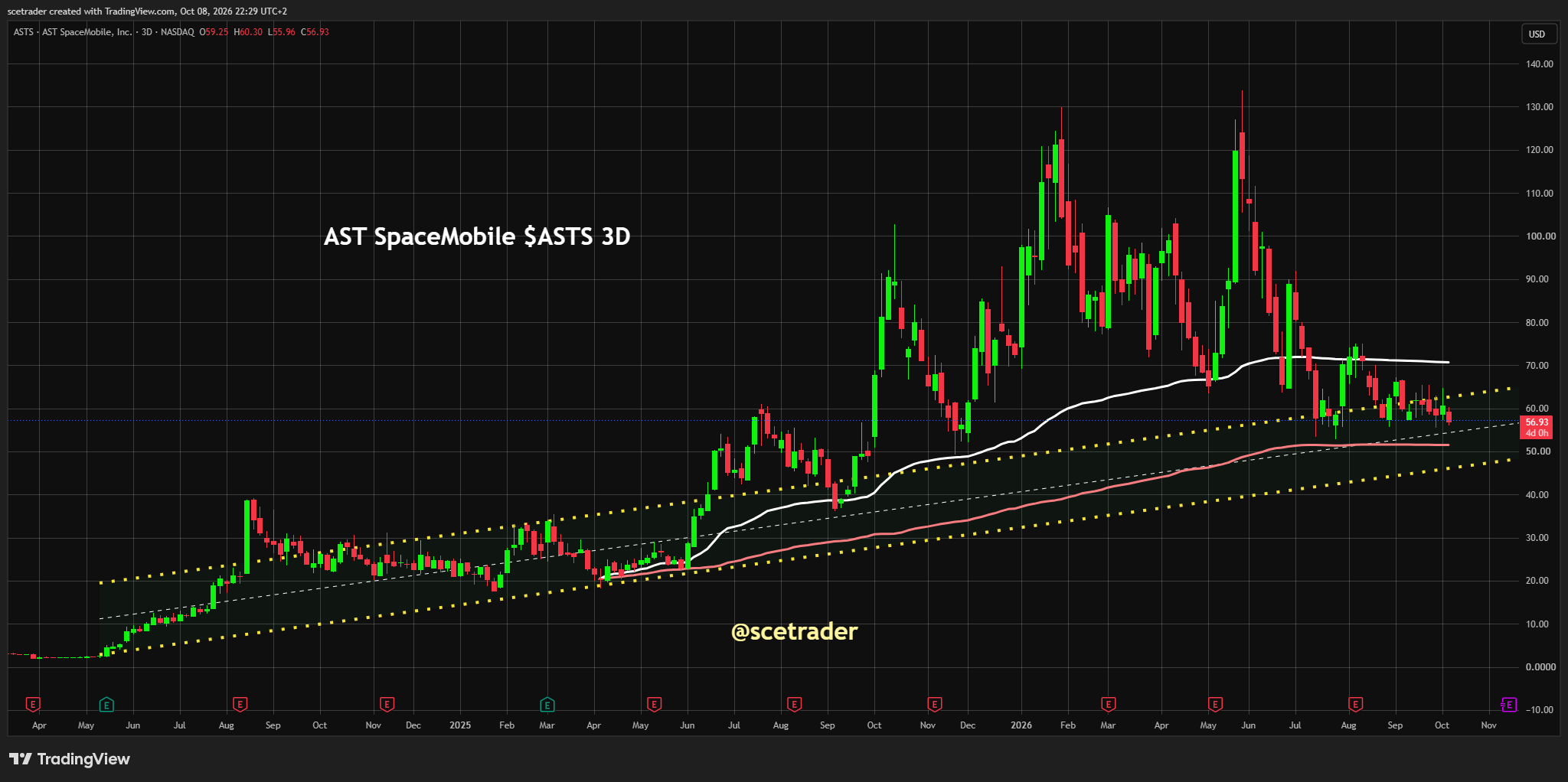
De nieuwe spectrumdeal van SpaceX moet niet worden behandeld als een losse aankoop van frequenties. Spectrum is één van de fundamentele schaarse inputs van ieder mobiel netwerk en daarmee een strategische asset. Satellieten kunnen technisch uitstekend functioneren, maar zonder voldoende geschikte frequenties kan de capaciteit niet efficiënt naar miljoenen gewone telefoons worden gebracht. Iedere stap waarmee SpaceX meer van deze infrastructuur zelf controleert, vergroot daarom de strategische waarde van Starlink Mobile.
Dat past bovendien in een veel breder patroon binnen SpaceX. Het bedrijf heeft eerst een uitzonderlijke positie opgebouwd in lanceringen, vervolgens een enorme Starlink-constellatie neergezet en investeert nu steeds nadrukkelijker in de frequenties en netwerkstructuur die nodig zijn om mobiele apparaten rechtstreeks te bedienen. De rode draad is verticale integratie: iedere keer wordt een externe afhankelijkheid kleiner en krijgt SpaceX meer vrijheid om de eigen economics te bepalen.
Juist daarom vinden wij dit opnieuw een bijzonder sterke zet van SpaceX. Het bedrijf hoeft vandaag nog helemaal niet te beslissen of Starlink Mobile uiteindelijk een zelfstandige operator, een wholesale-netwerk of vooral een partner van bestaande mobiele aanbieders wordt. Door de benodigde assets alvast te controleren, kan SpaceX later kiezen welke commerciële route per markt het hoogste rendement oplevert.
Het nieuwe spectrum geeft SpaceX vooral meer keuze
Het strategische voordeel van extra eigen spectrum zit niet alleen in meer capaciteit. SpaceX krijgt ook een sterkere positie in onderhandelingen met mobiele operators. Een onderneming die volledig afhankelijk is van de spectrumrechten van een partner moet andere commerciële voorwaarden accepteren dan een onderneming die een geloofwaardig alternatief bezit.
Dat betekent niet dat SpaceX zijn bestaande partnerships niet meer nodig heeft. Mobiele operators bezitten nog altijd zeer waardevolle netwerken op de grond, klanten, billing, retaildistributie en spectrumposities die SpaceX niet eenvoudig kan vervangen. Juist een hybride model waarin satelliet- en terrestrische capaciteit worden gecombineerd kan zeer efficiënt zijn.
Het verschil is dat SpaceX steeds minder gedwongen is om uitsluitend dat model te gebruiken. Meer eigen spectrum geeft het bedrijf ruimte om samenwerking, wholesale en directe dienstverlening naast elkaar te laten bestaan. Die optionaliteit vergroot de strategische waarde van Starlink Mobile veel meer dan de aankoopprijs van de frequenties alleen suggereert.
Starlink Mobile wordt geleidelijk groter dan Direct-to-Cell
De eerste fase van direct-to-device draaide vooral om bereik op plaatsen waar een klassieke zendmast ontbreekt. Satellieten konden noodcommunicatie, berichten en uiteindelijk bredere mobiele diensten leveren in gebieden waar terrestrische infrastructuur economisch moeilijk te bouwen was.
SpaceX bouwt nu aan iets breders. Naarmate het bedrijf meer spectrum, satellietcapaciteit en aanvullende infrastructuur controleert, ontstaat de mogelijkheid om een steeds groter gedeelte van de mobiele dienstverlening zelf vorm te geven. Starlink Mobile kan daarmee evolueren van een aanvulling op het netwerk van een operator naar een volwaardiger onderdeel van SpaceX' communicatieplatform.
Dat hoeft niet te betekenen dat satellieten het volledige mobiele netwerk vervangen. In dichtbevolkte gebieden blijft terrestrische infrastructuur veel efficiënter voor grote hoeveelheden dataverkeer. Maar SpaceX hoeft de hele markt niet te vervangen om enorme economische waarde te creëren. Zelfs een beperkt gedeelte van mobiele abonnementen, roaming, afgelegen dekking en zakelijke connectiviteit kan een zeer grote markt vormen.
De echte kracht zit in de combinatie van verschillende assets
SpaceX onderscheidt zich niet alleen door één goede satelliet of één pakket frequenties. De kracht zit in de combinatie van satellieten, eigen lanceringen, spectrum, software, grondinfrastructuur, een wereldwijde Starlink-klantenbasis en toegang tot grote hoeveelheden kapitaal.
Die onderdelen versterken elkaar. Meer spectrum maakt de bestaande constellatie waardevoller, terwijl meer satellieten het nut van het spectrum verhogen. Goedkopere en frequentere eigen lanceringen maken het vervolgens eenvoudiger om capaciteit uit te breiden en nieuwe generaties hardware sneller in een baan om de aarde te brengen.
Daar ontstaat een systeemvoordeel dat moeilijker is te kopiëren dan één afzonderlijke technologie. Een concurrent kan op één onderdeel zeer sterk zijn en toch economisch achterblijven wanneer andere onderdelen van de keten duurder, trager of afhankelijker van derden zijn.
Juist daarom is het nieuws bearish voor AST SpaceMobile
AST SpaceMobile heeft een overtuigend technisch uitgangspunt: rechtstreeks mobiele breedband leveren aan normale smartphones via satellieten. Het bedrijf beschikt bovendien over relaties met grote mobiele operators en kan daarmee profiteren van bestaande klanten, spectrum en distributie.
Het probleem is niet dat die strategie ineens niet meer werkt. Het probleem is dat SpaceX steeds meer van dezelfde toekomstige markt kan bedienen terwijl het tegelijkertijd minder afhankelijk wordt van diezelfde operators.
Daarmee verandert de relatieve positie. ASTS kan technisch exact dezelfde vooruitgang boeken als gisteren en toch economisch minder aantrekkelijk worden wanneer SpaceX sneller marktaandeel wint, de prijsdruk verhoogt of meer capaciteit kan toevoegen.
Voor een onderneming waarvan een groot gedeelte van de beurswaarde gebaseerd is op toekomstige omzet en marges is dat geen klein detail. Het raakt rechtstreeks de aannames waarop de waardering wordt gebouwd.
De schaarstepremie van ASTS neemt af
Een belangrijk deel van de aantrekkingskracht van AST SpaceMobile was altijd de combinatie van een enorme potentiële markt en een zeer beperkt aantal geloofwaardige aanbieders. Wanneer weinig ondernemingen technisch in staat zijn om gewone telefoons via satellieten breedband te leveren, kan iedere succesvolle speler in theorie een groot gedeelte van de waarde van die nieuwe markt veroveren.
SpaceX verzwakt die schaarste. Het bedrijf is niet alleen een concurrent op papier, maar beschikt al over een grote constellatie, eigen lanceringen, een wereldwijd netwerk en een bestaande commerciële Starlink-organisatie. Meer eigen spectrum verwijdert opnieuw een hindernis voor verdere mobiele expansie.
Dat betekent dat beleggers minder gemakkelijk een uitzonderlijk groot toekomstig marktaandeel aan ASTS kunnen toekennen. De totale markt kan zeer groot worden en AST SpaceMobile kan succesvol zijn, terwijl het aandeel toch minder aantrekkelijk wordt wanneer de vooraf ingeprijsde verwachtingen te hoog blijken.
ASTS hoeft dus niet te mislukken om bearish te worden
Dit onderscheid is belangrijk. Een bearish visie op ASTS betekent niet dat wij verwachten dat het bedrijf failliet gaat of dat de technologie niet werkt. Een onderneming kan operationeel slagen en als belegging toch tegenvallen wanneer de markt vooraf een nog veel groter succes heeft ingeprijsd.
Wanneer SpaceX bijvoorbeeld een groter gedeelte van de Amerikaanse direct-to-device markt verovert dan eerder werd verondersteld, daalt automatisch het gedeelte dat voor andere spelers beschikbaar blijft. Wanneer concurrentie daarnaast de prijs per gebruiker verlaagt, kan ook de verwachte marge dalen.
Daarbovenop kan ASTS meer kapitaal nodig hebben om voldoende capaciteit te bouwen en concurrerend te blijven. Marktaandeel, pricing en kapitaalbehoefte kunnen dus tegelijkertijd minder gunstig bewegen zonder dat de technologie zelf mislukt.
Dat is voor ons de kern van de bearish ASTS-case.
De operatorpartners blijven de belangrijkste verdediging van ASTS
De analyse heeft wel een belangrijk tegenargument. AST SpaceMobile werkt juist met bestaande operators en hoeft daarom niet in ieder land een volledige telecomorganisatie vanaf nul op te bouwen. De partners hebben al spectrum, miljoenen klanten, billing, retailkanalen en netwerken op de grond.
Dat kan een zeer krachtige distributiestructuur zijn. ASTS levert de satellietlaag, terwijl de mobiele operator de klantrelatie behoudt. Hierdoor kunnen diensten relatief snel aan bestaande abonnementen worden toegevoegd wanneer voldoende satellietcapaciteit beschikbaar is.
Een steeds zelfstandiger SpaceX kan die relatie zelfs strategisch belangrijker maken. Operators kunnen huiveriger worden om te veel afhankelijk te worden van Starlink wanneer SpaceX uiteindelijk om dezelfde eindklant kan concurreren.
Juist daardoor kan ASTS het onafhankelijke satellietalternatief voor de bestaande telecomsector worden.
AT&T en Verizon kunnen ASTS juist harder nodig krijgen
Dit is waarschijnlijk het sterkste bullish argument binnen de ASTS-case. Een operator wil niet noodzakelijk zijn toekomstige satellietstrategie afhankelijk maken van een bedrijf dat tegelijkertijd een eigen mobiel merk en eigen klantenrelaties kan ontwikkelen.
AST SpaceMobile kan een andere propositie aanbieden. De operator behoudt de klant, het abonnement en het spectrum, terwijl ASTS alleen de infrastructuur in de ruimte toevoegt. Daarmee blijven de belangen van beide partijen veel beter op elkaar afgestemd.
Als grote operators ASTS om die reden extra financieel en commercieel ondersteunen, kan het bedrijf ondanks SpaceX een zeer sterke marktpositie opbouwen. De direct-to-device markt is bovendien groot genoeg om meerdere netwerken te ondersteunen.
Het probleem is timing. ASTS moet deze strategische waarde nu sneller in concrete capaciteit, gebruikers en omzet omzetten.
De grootste zwakte van ASTS wordt daarmee snelheid
SpaceX beschikt over een systeem waarin satellietproductie en lancering grotendeels intern kunnen worden gepland. Dat maakt het mogelijk nieuwe capaciteit relatief snel toe te voegen en nieuwe satellietgeneraties sneller uit te rollen.
AST SpaceMobile is afhankelijker van externe onderdelen van de keten. Dat hoeft geen structureel probleem te zijn wanneer alles volgens plan verloopt, maar iedere vertraging is kostbaar wanneer de grootste concurrent tegelijkertijd verder bouwt.
Tijd krijgt daardoor een economische waarde. Een jaar vertraging betekent niet alleen een jaar later omzet; het betekent ook een extra jaar waarin SpaceX spectrum kan toevoegen, satellieten kan lanceren en nieuwe klanten kan aansluiten.
Daarom wordt execution steeds belangrijker in de ASTS-case.
De strijd verschuift van techniek naar economics
Het bewijs dat direct-to-device technisch mogelijk is, wordt steeds overtuigender. De volgende fase draait daarom minder om de vraag of een telefoon verbinding kan maken met een satelliet en steeds meer om hoeveel die verbinding economisch kost.
ASTS moet aantonen hoeveel capaciteit iedere satelliet kan leveren, hoeveel gebruikers tegelijk kunnen worden bediend en hoeveel omzet uiteindelijk bij AST SpaceMobile blijft nadat de mobiele operator zijn aandeel heeft ontvangen. Vervolgens moet worden gekeken hoeveel kapitaal nodig is om steeds meer capaciteit toe te voegen.
Dat bepaalt uiteindelijk de vrije kasstroom en de waarde voor aandeelhouders. Een technisch indrukwekkend netwerk kan een matige belegging worden wanneer de kosten per gebruiker te hoog zijn of de concurrentie marges onder druk zet.
SpaceX heeft door schaal en verticale integratie op dat vlak een steeds moeilijker te negeren voordeel.
De kapitaalpositie van SpaceX is onderdeel van het concurrentievoordeel
Direct-to-device vergt enorme investeringen voordat alle inkomsten beschikbaar zijn. Satellieten moeten worden gebouwd, gelanceerd en onderhouden, spectrum kost geld en de infrastructuur moet worden uitgebreid voordat miljoenen gebruikers een betrouwbare dienst krijgen.
SpaceX kan die investeringen dragen binnen een bredere Starlink-organisatie die al op grote schaal actief is. AST SpaceMobile bevindt zich veel eerder in zijn commerciële ontwikkeling en moet daarom relatief meer investeren voordat de omzetbasis dezelfde omvang krijgt.
Kapitaal wordt daardoor een concurrentiewapen. Een bedrijf dat langere tijd kan investeren zonder afhankelijk te zijn van onmiddellijke opbrengsten kan sneller capaciteit neerzetten en een groter gedeelte van de toekomstige markt bezetten.
Dat vergroot opnieuw de druk op ASTS om snel commerciële schaal te bereiken.
Dit is opnieuw een sterke zet van SpaceX
Los van de directe concurrentie met ASTS laat de spectrumdeal opnieuw zien hoe SpaceX strategisch opereert. Het bedrijf identificeert kritische beperkingen binnen een markt en probeert die vervolgens zelf onder controle te brengen.
Bij lanceringen werd de afhankelijkheid van externe raketten weggehaald. Bij satellietbreedband bouwde SpaceX zijn eigen constellatie. Nu Starlink steeds meer richting mobiel beweegt, wordt ook spectrum nadrukkelijker onderdeel van de eigen assetbasis.
Die aanpak creëert steeds meer verticale integratie en daarmee meer mogelijkheden om kosten, innovatie en marktintroductie zelf te sturen.
Dat is voor ons de belangrijkste reden om dit nieuws nadrukkelijk bullish voor SpaceX te beoordelen.
De bredere direct-to-device trend wordt hierdoor ook sterker
Er is tegelijkertijd een belangrijke sectorboodschap. Een onderneming als SpaceX investeert niet zoveel tijd en kapitaal in spectrum, satellieten en mobiele infrastructuur wanneer direct-to-device slechts een kleine nichemarkt zou zijn.
De nieuwe stap bevestigt opnieuw dat satellietconnectiviteit naar normale mobiele apparaten een serieuze commerciële categorie aan het worden is. Dat kan beleggers ook enthousiaster maken over andere ondernemingen die profiteren van groeiende investeringen in ruimte-infrastructuur, satellieten, communicatieapparatuur en lanceringen.
Hier ontstaat dus een interessante tegenstelling. De structurele trend voor de ruimtevaart- en satellietsector kan bullish worden terwijl hetzelfde nieuws bearish is voor één specifiek aandeel binnen die sector.
AST SpaceMobile is daarvan het duidelijkste voorbeeld: validatie van de markt is positief, maar validatie door een steeds sterkere concurrent is veel minder positief voor de eigen waardering.
Andere ruimtevaartaandelen kunnen via het sentiment profiteren
Een grotere commerciële rol voor satellietconnectiviteit kan de hele ruimte-infrastructuur hoger op de agenda van beleggers zetten. Meer satellieten vragen om lanceringen, componenten, antennes, grondsystemen en verschillende vormen van communicatie-infrastructuur.
Dat kan gunstig zijn voor het sentiment rond andere beursgenoteerde ruimtevaartbedrijven, ook wanneer zij niet rechtstreeks concurreren met Starlink Mobile. De markt kan een hogere waarde gaan toekennen aan ondernemingen die cruciale onderdelen leveren binnen een steeds groter wordende ruimte-economie.
Daarbij moet onderscheid worden gemaakt tussen trend en directe omzet. Een onderneming profiteert niet automatisch fundamenteel omdat SpaceX meer spectrum koopt. Wel kan het nieuws bevestigen dat de achterliggende eindmarkt sneller professionaliseert dan eerder werd aangenomen.
Wij zouden een brede stijging van ruimtevaartaandelen daarom vooral als positieve sector read-through zien en per bedrijf afzonderlijk controleren of daar ook daadwerkelijk extra omzet of vraag tegenover staat.
Globalstar en Iridium laten zien dat satellietconnectiviteit breder is dan één model
De bestaande satellietcommunicatiemarkt bestaat al uit verschillende technische en commerciële modellen. Globalstar heeft bijvoorbeeld een andere architectuur en klantrelatie dan AST SpaceMobile, terwijl Iridium eveneens een wereldwijd communicatienetwerk exploiteert met andere toepassingen en spectrumstructuren.
De verdere opkomst van direct-to-device kan de belangstelling voor zulke ondernemingen vergroten, omdat beleggers opnieuw gaan kijken naar de strategische waarde van spectrum, bestaande constellaties en langlopende communicatie-infrastructuur.
Dat betekent niet dat iedere bestaande satellietoperator automatisch dezelfde groeimogelijkheid heeft als Starlink Mobile. De technische capaciteiten, klanten en economische modellen verschillen daarvoor te sterk.
Wel bevestigt SpaceX opnieuw dat spectrum en constellaties strategische assets zijn waarvan de waarde kan stijgen naarmate satellietcommunicatie dichter bij de massamarkt komt.
Ook leveranciers rond satellieten en lanceringen kunnen aandacht krijgen
Een structureel grotere direct-to-device markt betekent uiteindelijk dat meer capaciteit in een baan om de aarde moet worden gebracht. Dat kan positief zijn voor de bredere vraag naar raketten, satellietcomponenten, communicatiesystemen en grondinfrastructuur.
Bedrijven die zich bezighouden met lanceringen of satellietsystemen kunnen daardoor indirect profiteren van de trend, zelfs wanneer zij zelf geen mobiele dienst aanbieden. De economische relatie is minder direct dan bij ASTS, maar de sector kan als geheel aantrekkelijker worden wanneer commerciële volumes blijven groeien.
Ook hier moet echter worden voorkomen dat een sterke trend automatisch wordt vertaald naar ieder ruimteaandeel. De concurrentie blijft hoog en verschillende bedrijven moeten nog bewijzen dat omzetgroei uiteindelijk in winst en vrije kasstroom verandert.
De trend wordt sterker; de selectie van aandelen moet juist kritischer worden.
Traditionele telecomaandelen krijgen een nieuwe concurrent op de radar
De ontwikkeling kan tegelijkertijd druk veroorzaken bij AT&T, Verizon en T-Mobile US. Starlink Mobile hoeft vandaag nog maar een klein gedeelte van hun kernmarkt te bedienen om beleggers te laten nadenken over de concurrentie over vijf of tien jaar.
Wanneer SpaceX breedband, satellietconnectiviteit en mobiel uiteindelijk kan bundelen, ontstaat een product dat traditionele operators vandaag niet volledig kunnen repliceren. Dat kan vooral aantrekkelijk worden voor klanten die vaak reizen, in afgelegen gebieden wonen of verschillende vormen van connectiviteit binnen één abonnement willen combineren.
Voor telecombedrijven kan daardoor op termijn extra prijsdruk ontstaan. Ook de waarde van een langdurige klantrelatie kan veranderen wanneer consumenten een geloofwaardig alternatief krijgen.
Dat betekent dat telecomaandelen op dergelijke SpaceX-ontwikkelingen negatief kunnen reageren, zelfs voordat de winst daadwerkelijk wordt geraakt.
Maar telecom is veel minder kwetsbaar dan ASTS
De bestaande mobiele operators hebben een enorme verdediging: dichtbebouwde terrestrische netwerken, zeer grote spectrumposities, miljoenen klanten en sterke kasstromen.
Starlink kan die infrastructuur niet eenvoudig vervangen. Een satellietnetwerk is bijzonder sterk in coverage, maar een dicht netwerk van mobiele masten blijft veel beter geschikt om enorme hoeveelheden verkeer in steden te verwerken.
Daarom verwachten wij niet dat SpaceX traditionele operators op korte termijn wegvaagt. De waarschijnlijkere uitkomst is meer concurrentie en druk op bepaalde delen van de markt.
Voor AST SpaceMobile is het effect veel groter, omdat direct-to-device juist de kern van de toekomstige onderneming vormt. Bij AT&T of Verizon is Starlink een nieuwe concurrent binnen een bestaand bedrijf; bij ASTS is SpaceX een concurrent binnen de markt waarop vrijwel alle toekomstige waarde moet worden gebouwd.
T-Mobile US is een bijzonder interessante testcase
T-Mobile US heeft al sterke mobiele schaal en waardevolle laagfrequente spectrumposities. Daardoor is de onderneming moeilijk direct te repliceren en kan zij tegelijkertijd satellietconnectiviteit toevoegen aan een al omvangrijk netwerk.
Een zelfstandig sterker Starlink Mobile kan op langere termijn wel de verhouding veranderen. SpaceX krijgt uiteindelijk de mogelijkheid om bepaalde diensten zelfstandig aan consumenten aan te bieden die vandaag via een mobiele operator lopen.
Daarmee ontstaat voor T-Mobile hetzelfde dilemma als voor andere operators: samenwerken met satellietproviders kan het product verbeteren, terwijl dezelfde technologie op termijn een nieuwe concurrent kan creëren.
Het is daarmee vooral een lange termijn risico voor de sector, niet een onmiddellijke winstschok.
Internationaal blijft de markt veel opener
De Amerikaanse spectrumdeal zegt veel over de ambities van SpaceX, maar spectrum en telecomregelgeving zijn sterk nationaal bepaald. De strategie kan dus niet automatisch in ieder land op dezelfde manier worden uitgevoerd.
AST SpaceMobile heeft juist een model dat sterk leunt op partnerships met lokale operators. In landen waar lokale licenties, spectrum en distributie doorslaggevend zijn, kan dat een belangrijk voordeel blijven.
SpaceX moet daar eveneens partnerships sluiten of op andere manieren toegang krijgen tot de markt. Daardoor kan de concurrentiestructuur internationaal veel meer gefragmenteerd blijven dan in de Verenigde Staten.
Dit is een belangrijk tegenwicht tegen een te eenvoudige conclusie dat SpaceX na één Amerikaanse spectrumdeal de mondiale direct-to-device markt heeft gewonnen.
De wereldmarkt kan ruim genoeg zijn voor meerdere spelers
Mobiele communicatie is een enorme markt en de vraag naar connectiviteit blijft stijgen. Bovendien hebben verschillende geografische gebieden andere technische en commerciële vereisten.
Er is daarom geen fundamentele reden waarom maar één direct-to-device netwerk kan bestaan. Operators kunnen verschillende satellietpartners kiezen en klanten kunnen verschillende niveaus van capaciteit of dekking nodig hebben.
Voor ASTS-aandeelhouders is de vraag echter niet of het bedrijf überhaupt omzet kan maken. Het gaat erom hoeveel toekomstige omzet, marge en marktaandeel al in de koers verwerkt zit.
Hoe sterker SpaceX wordt, hoe moeilijker het wordt om de meest optimistische ASTS-scenario’s zonder extra korting te waarderen.
Wat ASTS nu moet laten zien
AST SpaceMobile heeft drie punten nodig om de bearish concurrentieread-through te verminderen. Ten eerste moet de uitrol van de constellatie snel genoeg verlopen om daadwerkelijk grote hoeveelheden commerciële capaciteit beschikbaar te maken.
Ten tweede moeten operators bestaande overeenkomsten omzetten in betalende klanten en betekenisvolle omzet. De waarde van partnerships ligt uiteindelijk niet in het aantal namen op een persbericht, maar in gebruik en cashflow.
Ten derde moeten de unit economics overtuigen. Wanneer ASTS na revenue sharing sterke marges kan behalen en voldoende capaciteit per geïnvesteerde dollar kan toevoegen, kan het operatorgerichte model een echte economische tegenhanger van SpaceX blijven.
Zonder deze bewijzen wordt de waardering kwetsbaarder naarmate SpaceX verder opschaalt.
Wat SpaceX nog moet bewijzen
Ook SpaceX heeft nog veel werk te doen. Een combinatie van eigen spectrum en duizenden satellieten betekent niet automatisch dat een volwaardige mobiele dienst eenvoudig kan worden uitgerold.
Capaciteit, indoor coverage, handovers, betrouwbaarheid en netwerkbeheer moeten op grote schaal functioneren. De hoeveelheid mobiel dataverkeer in stedelijke gebieden is bovendien zo groot dat satellieten terrestrische netwerken daar waarschijnlijk vooral zullen aanvullen.
Ook regelgeving blijft een factor. Nieuwe frequenties en mobiele diensten vereisen technische goedkeuringen en kunnen juridische weerstand oproepen van concurrenten en andere spectrumgebruikers.
De ontwikkeling is dus bullish vanwege de sterkere strategische positie, niet omdat de uitvoering zonder risico is.
SpaceX krijgt vooral een steeds grotere optie op telecom
Dat is uiteindelijk misschien de beste manier om de ontwikkeling te bekijken. SpaceX hoeft vandaag nog geen exacte omzetprognose voor een zelfstandige mobiele dienst te kunnen geven om economische waarde te creëren.
Het bedrijf bouwt een optie. Wanneer Starlink Mobile sterk blijkt te werken, bezit SpaceX steeds meer van de assets die nodig zijn om agressief op te schalen. Wanneer partnership met operators economisch aantrekkelijker blijft, kan het dezelfde infrastructuur gebruiken om wholesale-diensten te verkopen.
Een dergelijke optie is veel waardevoller wanneer de onderneming spectrum, launches en satellietcapaciteit zelf controleert.
Daarom vinden wij de strategische waarde van de huidige stap groter dan de directe financiële impact op korte termijn.
Voor ASTS neemt de foutmarge juist af
De andere kant van dezelfde ontwikkeling is dat AST SpaceMobile steeds minder ruimte krijgt voor fouten. Een vertraging in de satellietuitrol, hogere financieringskosten of een trage commerciële start heeft meer consequenties wanneer SpaceX tegelijkertijd blijft opschalen.
Dat maakt de komende fases van ASTS veel belangrijker. Het aandeel kan niet alleen worden gedragen door de omvang van de theoretische markt; uitvoering moet steeds zichtbaarder worden.
De operatorpartners blijven een echte strategische asset en de technologie kan nog steeds een grote onderneming creëren. Maar de concurrentieomgeving rechtvaardigt naar onze mening een hogere risicopremie dan voordat SpaceX deze beperkingen begon weg te nemen.
Dat is waarom wij het nieuws duidelijk bearish voor ASTS noemen zonder het bedrijf af te schrijven.
Onze visie
SpaceX heeft opnieuw een sterke strategische zet gedaan. De aankoop van extra laagfrequente spectrumlicenties past bij een veel grotere beweging waarin het bedrijf steeds meer onderdelen van zijn communicatie-infrastructuur zelf controleert. Starlink Mobile krijgt daardoor meer keuze tussen samenwerking, wholesale en directe klantrelaties, terwijl het potentieel van de hele direct-to-device markt opnieuw wordt bevestigd.
Dat laatste kan positief zijn voor het bredere sentiment rond ruimtevaart, satellietconnectiviteit, satellietcomponenten en lanceerinfrastructuur. De markt wordt groter en serieuzer, wat ook andere beursgenoteerde ruimtevaartbedrijven opnieuw onder de aandacht kan brengen. Het blijft echter essentieel om per aandeel te onderscheiden tussen een positieve sectortrend en daadwerkelijke economische exposure.
Voor AST SpaceMobile is de read-through juist duidelijk bearish. ASTS kan nog steeds uitgroeien tot een belangrijke satellietpartner voor de mondiale telecomsector en operators kunnen het bedrijf zelfs harder nodig krijgen als tegenwicht tegen SpaceX. Maar SpaceX krijgt meer spectrum, meer controle en meer strategische vrijheid, waardoor de schaarstepremie van ASTS afneemt en de toekomstige aannames over marktaandeel, marges en kapitaalbehoefte risicovoller worden.
Traditionele telecombedrijven vormen de secundaire negatieve read-through. Zij kunnen op verdere expansie van Starlink Mobile onder druk komen, maar beschikken over bestaande infrastructuur en cashflows die de concurrentiedreiging veel beter absorberen. De kern van dit nieuws blijft daarom helder: zeer positief voor de strategische ontwikkeling van SpaceX, positief voor de bredere satellietconnectiviteitstrend en duidelijk negatief voor de relatieve positie van AST SpaceMobile.
Conclusie
SpaceX heeft met de aankoop van extra laagfrequente spectrumlicenties opnieuw een sterke strategische stap gezet en bouwt Starlink Mobile steeds verder uit van aanvullende satellietdekking naar een veel breder communicatieplatform, wat wij duidelijk bullish vinden voor SpaceX en positief voor de bredere trend rond satellietconnectiviteit en andere ruimtevaartaandelen. Traditionele telecombedrijven kunnen op termijn extra concurrentiedruk ervaren, maar beschikken over voldoende infrastructuur en cashflow om die dreiging veel beter op te vangen. Voor AST SpaceMobile is dezelfde ontwikkeling juist duidelijk bearish: de direct-to-device markt wordt weliswaar verder gevalideerd, maar SpaceX wordt tegelijkertijd een completere, zelfstandiger en financieel sterkere concurrent, waardoor de schaarstepremie afneemt en ASTS veel sneller commerciële schaal, sterke unit economics en waarde uit zijn operatorpartners moet bewijzen.
English version
SpaceX makes another powerful strategic move: bullish for Starlink Mobile, clearly bearish for AST SpaceMobile
■ SpaceX has entered into an agreement to purchase a nationwide portfolio of low-band spectrum licences in the United States for Starlink Mobile. This is another powerful strategic move because it gives SpaceX more spectrum of its own and reduces reliance on frequencies made available through incumbent mobile operators. Combined with rapidly expanding satellite capacity, internal launch capabilities and continued network development, SpaceX gains increasing control over the entire mobile stack.
■ We view the development as clearly bullish for SpaceX. Starlink Mobile can gradually evolve from a supplemental service covering areas without terrestrial connectivity into a much broader communications offering where SpaceX can choose between carrier partnerships, wholesale capacity and increasingly direct services. The most valuable asset SpaceX is acquiring is therefore not simply spectrum, but greater strategic freedom.
■ For AST SpaceMobile, the same development is clearly bearish for its relative competitive position. ASTS has built its model around partnerships with mobile operators, while SpaceX is progressively removing constraints that previously limited a more independent mobile offering. The direct-to-device market can still become enormous, but a larger market is less beneficial to ASTS if a much stronger competitor simultaneously captures a greater portion of that opportunity. Future assumptions around market share, margins and valuation therefore deserve greater scrutiny.
■ At the same time, the development is positive for the broader satellite-connectivity trend. SpaceX is once again validating the idea that direct communication between satellites and conventional mobile devices is moving from experiment toward a serious commercial market. This can also support investor interest in other space and satellite stocks as greater value is assigned to satellite capacity, launches, components and connectivity. A bullish sector trend, however, is not automatically bullish for ASTS when its most important competitor is becoming stronger faster.
■ Traditional telecom stocks can also come under pressure as Starlink Mobile expands because a stronger SpaceX can eventually increase competition for AT&T, Verizon and T-Mobile US. That impact remains much less direct than it is for AST SpaceMobile because incumbent operators own enormous terrestrial networks, spectrum, customers and cash flows. Our primary focus therefore remains ASTS: SpaceX gains more options and greater control while AST SpaceMobile has less room for delays, additional funding requirements or disappointing commercial execution.
Investment View
SpaceX's new spectrum agreement should not be treated as an isolated purchase of frequencies. Spectrum is one of the fundamental scarce inputs of every mobile network and therefore a strategic asset. Satellites can perform extremely well technically, but without sufficient suitable spectrum their capacity cannot be delivered efficiently to millions of ordinary phones. Every step that gives SpaceX more direct control of this infrastructure increases the strategic value of Starlink Mobile.
The move also fits a much broader pattern at SpaceX. The company first built an exceptional launch position, then created an enormous Starlink constellation and is now increasingly investing in the spectrum and network structure required to serve mobile devices directly. The common thread is vertical integration: each step reduces external dependency and gives SpaceX more freedom to determine its own economics.
This is why we regard the move as another particularly strong strategic decision. SpaceX does not need to decide today whether Starlink Mobile ultimately becomes a standalone operator, a wholesale network or primarily a partner to incumbent carriers. By controlling the critical assets first, it can later select whichever commercial route generates the highest returns in each market.
The new spectrum primarily gives SpaceX more choice
The strategic advantage of additional proprietary spectrum is not merely incremental capacity. SpaceX also gains a stronger negotiating position with mobile carriers. A company fully dependent on partner-owned frequencies must accept different commercial terms from one holding a credible alternative.
This does not mean SpaceX no longer needs existing carrier partnerships. Mobile operators still possess highly valuable terrestrial networks, customers, billing systems, retail distribution and spectrum positions that SpaceX cannot easily replace. A hybrid model combining satellite and terrestrial capacity may in fact be highly efficient.
The difference is that SpaceX becomes less constrained to one commercial model. More proprietary spectrum allows partnerships, wholesale and direct services to coexist. That optionality increases the strategic value of Starlink Mobile far more than the spectrum purchase price alone would suggest.
Starlink Mobile is becoming larger than Direct-to-Cell
The first phase of direct-to-device focused primarily on coverage where conventional towers were unavailable. Satellites could provide emergency communications, messaging and eventually broader mobile functionality in places where terrestrial infrastructure was uneconomic.
SpaceX is now building toward something broader. As the company gains more spectrum, satellite capacity and supporting infrastructure, it gains the ability to shape a larger portion of the mobile service itself. Starlink Mobile can evolve from a supplement to an operator's network into a more comprehensive part of SpaceX's communications platform.
That does not mean satellites replace the entire mobile network. In dense urban areas, terrestrial infrastructure remains far more efficient at serving enormous data volumes. SpaceX does not need to replace the whole market to create exceptional economic value. Even a modest share of mobile subscriptions, roaming, remote coverage and enterprise connectivity can represent a very large opportunity.
The real strength lies in combining multiple assets
SpaceX does not differentiate itself through one good satellite or one spectrum portfolio. Its strength is the combination of satellites, internal launch capability, spectrum, software, ground infrastructure, a global Starlink customer base and access to substantial capital.
These components reinforce one another. More spectrum makes the existing constellation more valuable, while more satellites increase the utility of the spectrum. Lower-cost and frequent internal launches then make it easier to add capacity and deploy new generations of hardware more quickly.
This creates a systems advantage that is harder to replicate than any individual technology. A competitor can be excellent in one area and still lag economically if other components of the stack are more expensive, slower or dependent on third parties.
This is precisely why the news is bearish for AST SpaceMobile
AST SpaceMobile has a compelling technical proposition: delivering mobile broadband directly to standard smartphones using satellites. The company also maintains relationships with major mobile operators and can therefore benefit from existing customers, spectrum and distribution.
The problem is not that this strategy suddenly stops working. The problem is that SpaceX can increasingly address the same future market while becoming less dependent on those same operators.
The relative position therefore changes. ASTS can make exactly the same technological progress as before and still become less attractive economically if SpaceX captures market share faster, increases pricing pressure or adds capacity more rapidly.
For a company whose market value depends heavily on future revenue and margins, this is not a minor change. It directly affects the assumptions underlying valuation.
The scarcity premium surrounding ASTS is declining
A major part of AST SpaceMobile's appeal has always been the combination of an enormous potential market and a very limited number of credible providers. If only a handful of companies can deliver broadband directly from satellites to ordinary phones at scale, each successful participant could theoretically capture a significant share of the value.
SpaceX weakens that scarcity. It is not simply a competitor on paper but already owns a major constellation, internal launch capabilities, a global network and an existing commercial Starlink organisation. Additional proprietary spectrum removes another obstacle to greater mobile expansion.
Investors therefore have less reason to assign an exceptionally large future market share to ASTS. The total market can become very large and AST SpaceMobile can succeed while the stock still becomes less attractive if expectations embedded in the valuation prove too optimistic.
ASTS does not need to fail for the investment case to turn bearish
This distinction matters. A bearish ASTS view does not mean we expect the company to fail or its technology not to work. A business can succeed operationally and still disappoint investors if the market had priced in an even larger level of success.
If SpaceX captures a larger share of the US direct-to-device market than previously expected, the share available to other providers automatically falls. If competition also lowers pricing, expected margins can decline as well.
ASTS may additionally need more capital to build sufficient capacity and remain competitive. Market share, pricing and capital requirements can therefore all move in a less favourable direction without the underlying technology failing.
That is the core of our bearish ASTS thesis.
Carrier partnerships remain ASTS's primary defence
There is an important counterargument. AST SpaceMobile works with existing carriers and therefore does not need to build a full telecom organisation from scratch in every country. Its partners already possess spectrum, millions of customers, billing, retail channels and terrestrial networks.
This can be a powerful distribution structure. ASTS supplies the satellite layer while the mobile operator maintains the customer relationship. Services can therefore be added relatively quickly to existing subscriptions once sufficient satellite capacity becomes available.
A more independent SpaceX can even make that relationship strategically more valuable. Carriers may become increasingly reluctant to rely too heavily on Starlink if SpaceX can eventually compete for those same customers.
ASTS can therefore become the independent satellite alternative for the incumbent telecom industry.
AT&T and Verizon may need ASTS more, not less
This is probably the strongest bullish counterpoint in the ASTS case. A carrier does not necessarily want its future satellite strategy to depend on a company that could simultaneously develop its own mobile brand and direct customer relationships.
AST SpaceMobile offers a different proposition. The operator retains the customer, the subscription and the spectrum while ASTS supplies the space-based infrastructure. The interests of both parties can therefore remain better aligned.
If major carriers provide greater financial and commercial support to ASTS for this reason, the company can still establish a strong market position despite SpaceX. The direct-to-device market is also large enough to support multiple networks.
The challenge is timing. ASTS needs to convert that strategic value into real capacity, users and revenue faster.
ASTS's biggest weakness increasingly becomes speed
SpaceX operates a system where satellite production and launch can largely be planned internally. This enables relatively rapid capacity additions and faster deployment of new hardware generations.
AST SpaceMobile is more dependent on external elements of the stack. This does not need to become a structural problem if execution remains on schedule, but every delay becomes costly while the largest competitor continues expanding.
Time therefore acquires economic value. A one-year delay does not only mean revenue arrives one year later; it gives SpaceX another year to add spectrum, launch satellites and sign up customers.
Execution therefore becomes increasingly important in the ASTS case.
The competition shifts from technology toward economics
Evidence that direct-to-device is technically possible is becoming increasingly convincing. The next phase therefore focuses less on whether a phone can connect to a satellite and more on how much that connection costs economically.
ASTS needs to demonstrate how much capacity each satellite provides, how many users can share that capacity and how much revenue ultimately remains with AST SpaceMobile after its carrier partner receives its share. Investors then need to estimate how much capital is required to keep adding capacity.
Those factors ultimately determine free cash flow and shareholder value. A technically impressive network can still be a mediocre investment if cost per user is too high or competition compresses margins.
SpaceX's scale and vertical integration increasingly create an advantage on precisely this dimension.
SpaceX's capital position is part of the competitive advantage
Direct-to-device requires enormous investment before all associated revenue becomes available. Satellites need to be built, launched and maintained, spectrum costs money and infrastructure needs to expand before millions of customers receive dependable service.
SpaceX can support those investments within a broader Starlink organisation already operating at scale. AST SpaceMobile remains much earlier in its commercial development and therefore needs to deploy relatively more capital before reaching a similar revenue base.
Capital consequently becomes a competitive weapon. A company capable of investing for longer without requiring immediate returns can deploy capacity faster and occupy a greater share of the future market.
That increases the pressure on ASTS to reach commercial scale quickly.
This is another powerful strategic move by SpaceX
Beyond the direct competition with ASTS, the spectrum agreement once again demonstrates how SpaceX approaches strategy. The company identifies critical constraints in a market and then attempts to bring them under direct control.
In launch, SpaceX removed dependence on external rockets. In satellite broadband, it built its own constellation. As Starlink increasingly moves toward mobile, spectrum is becoming another part of its direct asset base.
The strategy produces increasing vertical integration and greater control over cost, innovation and market entry.
That is our main reason for describing the news as distinctly bullish for SpaceX.
The broader direct-to-device trend becomes stronger as well
There is also an important sector-level message. A company such as SpaceX does not commit this amount of time and capital to spectrum, satellites and mobile infrastructure if direct-to-device is expected to remain a small niche.
The new move further validates the idea that satellite connectivity to ordinary mobile devices is becoming a serious commercial category. This can increase investor interest in other companies benefiting from space infrastructure, satellites, communications equipment and launches.
This creates an interesting contradiction. The structural trend for space and satellite markets can become more bullish while the same development is bearish for one specific company within that sector.
AST SpaceMobile is the clearest example: validation of the market is positive, but validation by an increasingly powerful competitor is much less positive for ASTS's own valuation.
Other space stocks can benefit through sentiment
A larger commercial role for satellite connectivity can move the entire space infrastructure theme higher on investors' agendas. More satellites require launches, components, antennas, ground systems and communications infrastructure.
This can support sentiment around other listed space companies even when they do not compete directly with Starlink Mobile. Investors may assign more strategic value to companies supplying critical assets inside an expanding space economy.
The distinction between trend and direct revenue remains essential. A company does not automatically benefit fundamentally because SpaceX buys more spectrum. The news can nevertheless confirm that the underlying end market is professionalising faster than previously assumed.
We would therefore view a broader rise in space stocks as a positive sector read-through while still analysing each company's actual economic exposure separately.
Globalstar and Iridium show that satellite connectivity includes multiple models
The existing satellite communications market already contains different technical and commercial architectures. Globalstar operates a different system and customer model from AST SpaceMobile, while Iridium also operates a global communications network with different applications and spectrum characteristics.
The continued rise of direct-to-device can increase investor attention on such businesses as the strategic value of spectrum, established constellations and long-lived communications infrastructure receives greater recognition.
This does not mean every incumbent satellite provider has the same growth opportunity as Starlink Mobile. Technical capabilities, customers and economics differ too significantly.
SpaceX nevertheless reinforces the idea that spectrum and constellations are strategic assets whose value can rise as satellite communications move closer to mass-market adoption.
Satellite and launch suppliers can also attract attention
A structurally larger direct-to-device market ultimately requires more capacity in orbit. This can be positive for broader demand for rockets, satellite components, communications systems and ground infrastructure.
Companies involved in launches or satellite systems can therefore benefit indirectly from the trend even if they do not operate mobile services themselves. The economic connection is less direct than it is for ASTS, but the overall sector can become more attractive as commercial volumes increase.
The same caution still applies. A strong trend does not automatically create attractive economics for every space company. Competition remains intense and many businesses still need to prove that revenue growth converts into profits and free cash flow.
The trend becomes stronger; stock selection should become more demanding.
Traditional telecom stocks gain another potential competitor
The development can simultaneously pressure AT&T, Verizon and T-Mobile US. Starlink Mobile only needs to serve a modest share of their core market today for investors to start considering competitive conditions five or ten years from now.
If SpaceX can eventually bundle broadband, satellite connectivity and mobile service, it creates a proposition incumbent carriers cannot fully replicate today. This could be particularly attractive to customers who travel extensively, live in remote areas or want several forms of connectivity inside one subscription.
Traditional mobile companies could therefore face additional pricing pressure over time. The value of long-duration customer relationships may also change if consumers gain a credible alternative.
Telecom stocks can consequently react negatively to such SpaceX developments well before earnings are actually affected.
Telecom is much less vulnerable than ASTS
Incumbent operators retain an enormous defence: dense terrestrial networks, substantial spectrum holdings, millions of customers and strong cash flow.
Starlink cannot easily replace this infrastructure. A satellite network is exceptionally strong for coverage, while dense terrestrial cell networks remain much better suited to handling vast traffic volumes in urban areas.
We therefore do not expect SpaceX to sweep away incumbent operators in the near term. The more likely outcome is increased competition and pressure within specific market segments.
The effect on AST SpaceMobile is much more significant because direct-to-device sits at the core of its future business. For AT&T or Verizon, Starlink is a new competitor confronting an existing business; for ASTS, SpaceX is a competitor inside the market on which virtually all future value needs to be built.
T-Mobile US is a particularly interesting test case
T-Mobile US already operates at significant mobile scale and holds valuable low-band spectrum. This makes the business difficult to replicate directly while also allowing it to integrate satellite connectivity into an already extensive network.
A more independent Starlink Mobile can nevertheless alter the long-term competitive structure. SpaceX may eventually gain the ability to sell services directly that today run through traditional carriers.
T-Mobile therefore faces the same dilemma as other operators: collaboration with satellite providers can improve the product while the same technology can eventually create a new competitor.
For now, that is primarily a long-term sector risk rather than an immediate earnings shock.
Internationally, the market remains much more open
The US spectrum agreement says a great deal about SpaceX's ambitions, but telecom spectrum and regulation are heavily determined at national level. The same strategy therefore cannot automatically be replicated identically in every country.
AST SpaceMobile's model is heavily built around local carrier partnerships. In markets where local licences, spectrum and distribution are decisive, that can remain a meaningful advantage.
SpaceX also needs market-by-market regulatory access and may still need partnerships. International competitive structures can therefore remain much more fragmented than the US trajectory currently suggests.
This is an important counterweight to an overly simplistic conclusion that SpaceX has already won the global direct-to-device market.
The global market can support multiple players
Mobile communications is enormous and connectivity demand continues to expand. Different geographies also have different technical and commercial requirements.
There is therefore no fundamental reason only one direct-to-device network can exist. Operators can use different satellite partners and customers can require different combinations of capacity and coverage.
The key question for ASTS investors is not whether the company can generate any revenue. It is how much future revenue, margin and market share is already embedded in the valuation and how much remains realistic as SpaceX strengthens.
The stronger SpaceX becomes, the more difficult the most optimistic ASTS scenarios become to justify without additional discounting.
What ASTS now needs to demonstrate
AST SpaceMobile needs three things to reduce the bearish competitive read-through. First, constellation deployment needs to proceed rapidly enough to make substantial commercial capacity available.
Second, operators need to convert agreements into paying users and meaningful revenue. The value of partnerships is ultimately measured not by the number of logos in a presentation but by utilisation and cash generation.
Third, unit economics need to be compelling. If ASTS can generate strong margins after revenue sharing and add sufficient capacity per dollar invested, the carrier-led model can remain a genuine economic counterweight to SpaceX.
Without this evidence, valuation becomes more vulnerable as SpaceX continues scaling.
What SpaceX still needs to prove
SpaceX also has substantial execution ahead. Owning spectrum and operating thousands of satellites does not automatically make a broad mobile service easy to deliver.
Capacity, indoor coverage, handovers, reliability and network management all need to work at scale. Urban mobile data volumes are also so large that satellites are likely to complement terrestrial networks rather than replace them.
Regulation remains a factor as well. New spectrum and mobile services require technical approvals and can face resistance from competitors and other spectrum users.
Our bullish view is therefore based on the strengthened strategic position, not on an assumption that execution carries no risk.
SpaceX is increasingly building an option on telecom
This may ultimately be the best way to understand the strategy. SpaceX does not need to produce a precise revenue forecast for a standalone mobile service today in order to create economic value.
It is building an option. If Starlink Mobile proves highly successful, SpaceX will increasingly own the assets required to scale aggressively. If carrier partnerships remain more attractive, the same infrastructure can support wholesale models.
The value of such an option rises when the company controls spectrum, launches and satellite capacity itself.
This is why we regard the strategic value of the current move as substantially greater than its immediate financial impact.
ASTS's margin for error is moving the other way
The other side of the same development is that AST SpaceMobile has increasingly little room for mistakes. Delays in constellation deployment, higher financing costs or a slower commercial start matter more when SpaceX keeps expanding simultaneously.
The coming phases of ASTS execution therefore become increasingly important. The stock cannot rely indefinitely on the theoretical size of the market; execution needs to become more visible.
Carrier partnerships remain a genuine strategic asset and the technology can still support a large business. The competitive environment nevertheless warrants a higher risk premium than before SpaceX began removing these constraints.
This is why we view the news as clearly bearish for ASTS without writing off the company.
Our view
SpaceX has made another strong strategic move. The purchase of additional low-band spectrum licences fits a much larger trend in which the company increasingly controls its own communications infrastructure. Starlink Mobile gains greater freedom between partnerships, wholesale and direct customer relationships, while the potential of the overall direct-to-device market receives further validation.
That broader validation can be positive for sentiment across space, satellite connectivity, satellite components and launch infrastructure. The market is becoming larger and more credible, which can bring other listed space companies back into focus. It remains essential, however, to distinguish a positive sector trend from actual economic exposure at each company.
For AST SpaceMobile, the read-through is clearly bearish. ASTS can still become a strategically important satellite partner to the global telecom industry and carriers may even need the company more as a counterweight to SpaceX. But SpaceX gains more spectrum, more control and more strategic freedom, reducing ASTS's scarcity premium and increasing the risk surrounding future assumptions for market share, margins and capital requirements.
Traditional telecom companies are the secondary negative read-through. They can face pressure as Starlink Mobile expands, but their existing infrastructure and cash flows allow them to absorb the competitive threat far better. The core message therefore remains clear: highly positive for SpaceX's strategic development, positive for the broader satellite-connectivity trend and clearly negative for AST SpaceMobile's relative position.
Conclusion
SpaceX's purchase of additional low-band spectrum licences is another strong strategic step that moves Starlink Mobile further from supplemental satellite coverage toward a much broader communications platform, making the development clearly bullish for SpaceX and supportive of the wider satellite-connectivity and space-investment trend. Traditional telecom stocks can eventually face additional competitive pressure, but their existing infrastructure and cash flows make them a secondary read-through. For AST SpaceMobile, the same development is clearly bearish: the direct-to-device market receives further validation, but SpaceX simultaneously becomes a more complete, independent and financially powerful competitor, reducing ASTS's scarcity premium and forcing the company to demonstrate commercial scale, strong unit economics and tangible value from carrier partnerships much faster.
Disclaimer Aan de door ons opgestelde informatie kan op geen enkele wijze rechten worden ontleend. Alle door ons verstrekte informatie en analyses zijn geheel vrijblijvend. Alle consequenties van het op welke wijze dan ook toepassen van de informatie blijven volledig voor uw eigen rekening.
Wij aanvaarden geen aansprakelijkheid voor de mogelijke gevolgen of schade die zouden kunnen voortvloeien uit het gebruik van de door ons gepubliceerde informatie. U bent zelf eindverantwoordelijk voor de beslissingen die u neemt met betrekking tot uw beleggingen.


