Bitcoin en Iran: Waarom het effect op de prijs waarschijnlijk neutraal is
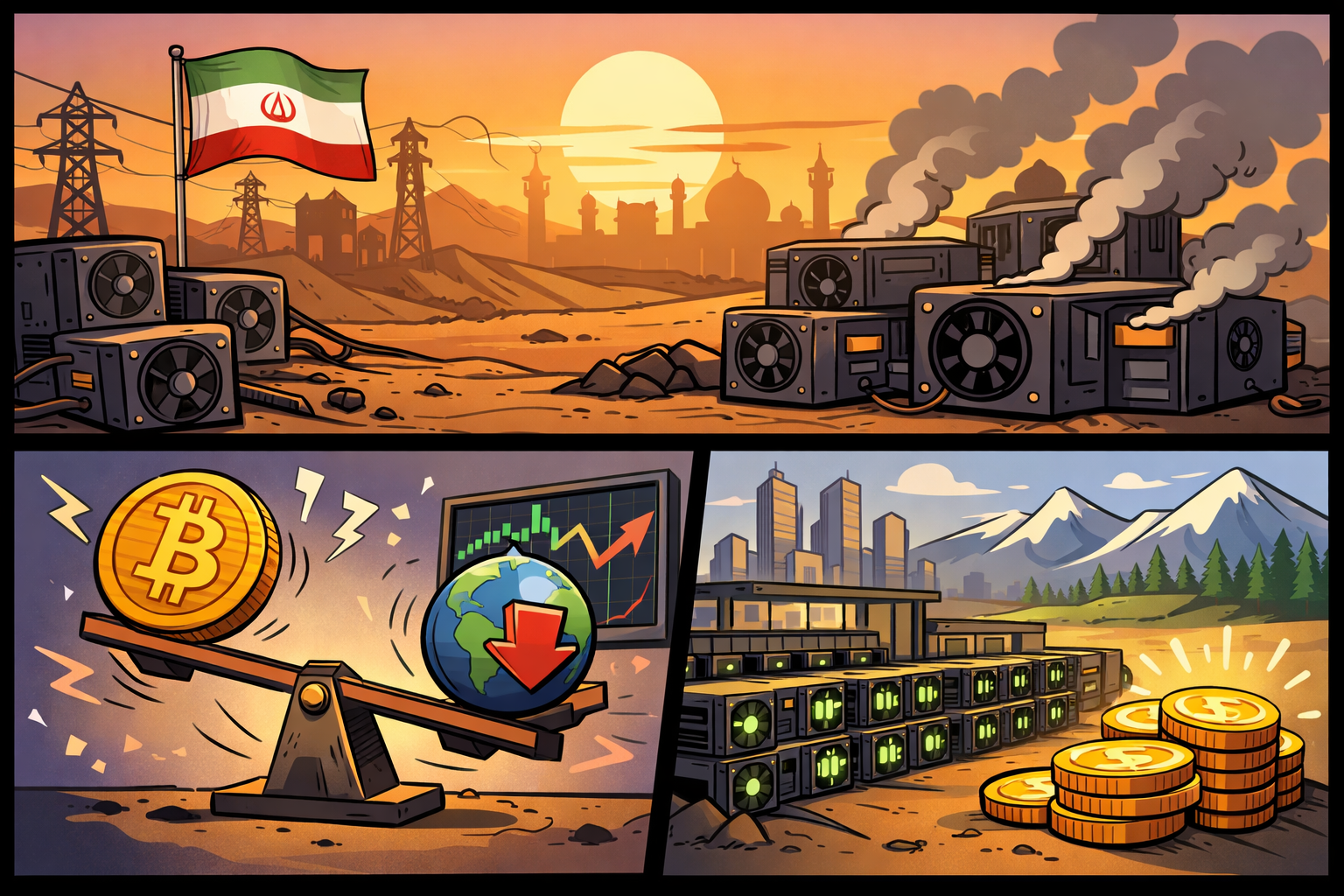
Als de Bitcoin-mininginfrastructuur in Iran volledig wegvalt, verdwijnt naar schatting 2 tot 5 procent van de wereldwijde hashrate. Dat is technisch zichtbaar, maar economisch beperkt.
Het Bitcoin-netwerk produceert gemiddeld 144 blocks per dag, uitgaande van een gemiddelde blocktijd van ongeveer tien minuten. Per block bedraagt de block subsidy in 2026 3,125 BTC. Dat betekent dat er gemiddeld ongeveer 450 BTC per dag aan nieuwe supply wordt uitgekeerd aan miners wereldwijd.
Iran controleert naar schatting 2 tot 5 procent van de hashrate. Dat komt neer op gemiddeld circa 9 tot 22 BTC per dag aan blockproductie.
• Het netwerk produceert gemiddeld 144 blocks per dag
• Elke block levert 3,125 BTC op
• Dat is ongeveer 450 BTC per dag aan nieuwe supply
• Iran controleert naar schatting 2 tot 5 procent van de hashrate
• Dat komt neer op circa 9 tot 22 BTC per dag
• Na difficulty-aanpassing blijft de totale blockproductie gelijk
• Het Iraanse aandeel in de wereldwijde supply is relatief klein
Technische impact
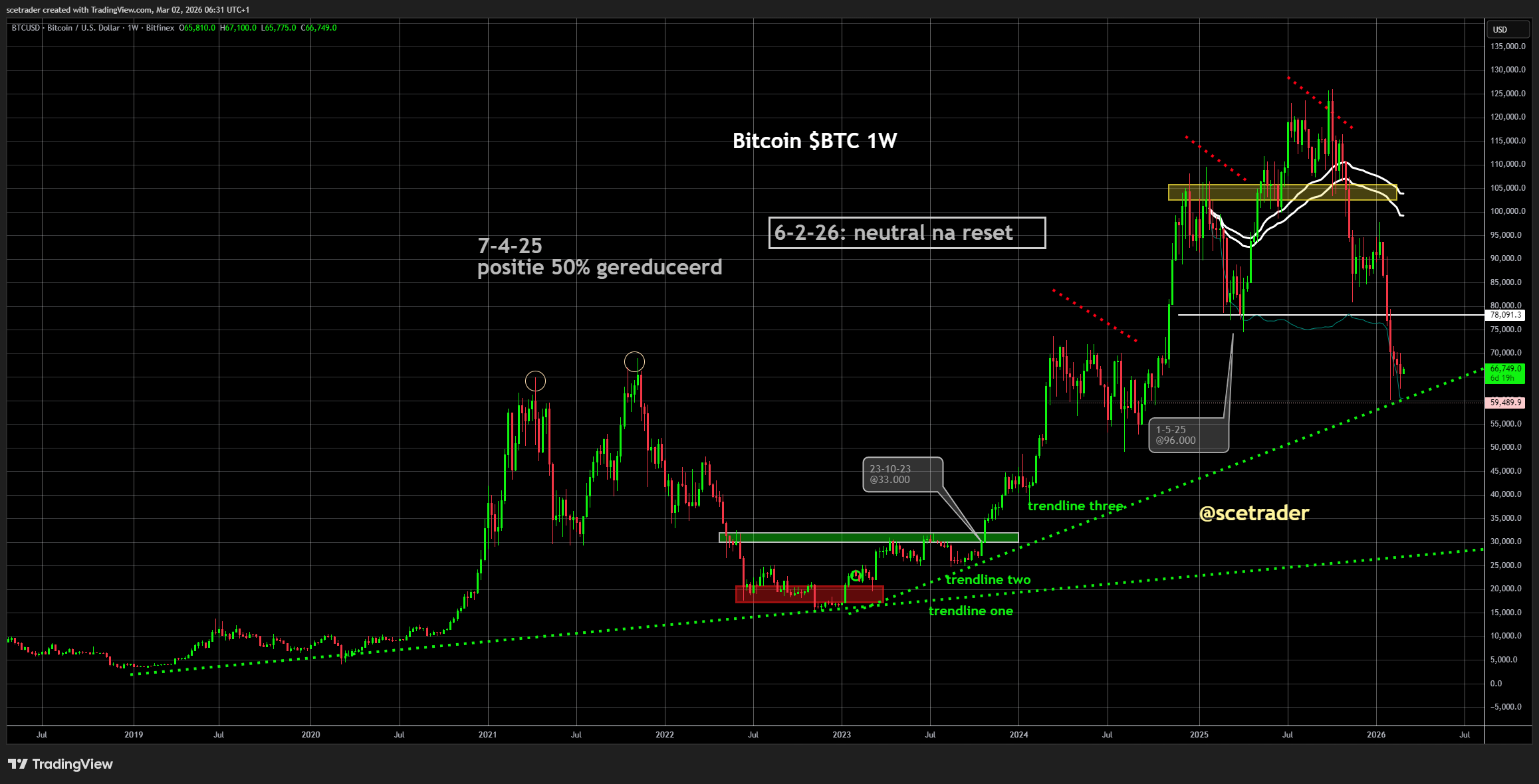
Wanneer Iraanse mining wegvalt, daalt tijdelijk de totale hashrate. Daardoor worden blocks gemiddeld iets langzamer gevonden.
Na 2016 blocks past het protocol automatisch de difficulty aan. Het tempo normaliseert daarna weer richting gemiddeld 144 blocks per dag.
De block subsidy van 3,125 BTC verandert niet.
De maximale supply van 21 miljoen BTC verandert niet.
Het netwerk blijft technisch stabiel functioneren.
Economisch effect op de prijs
Het wegvallen van gemiddeld 9 tot 22 BTC per dag aan Iraanse productie betekent dat een relatief klein deel van de dagelijkse wereldwijde supply verdwijnt.
In verhouding tot ongeveer 450 BTC per dag wereldwijd is dit percentage beperkt. Bovendien wordt de blockproductie na difficulty-aanpassing opnieuw verdeeld over miners in andere landen.
Dat betekent dat de structurele uitgifte van Bitcoin niet verandert, maar alleen de geografische verdeling van wie blocks vindt.
Omdat het Iraanse aandeel in de dagelijkse supply relatief klein is, is het meest waarschijnlijke scenario dat het netto-effect op de Bitcoin-prijs neutraal is, tenzij grotere macro- of marktfactoren tegelijkertijd een rol spelen.
🔵 English version
Bitcoin and Iran – Why the price impact is likely neutral
Introduction
If Bitcoin mining infrastructure in Iran were to shut down completely, an estimated 2 to 5 percent of global hash rate would disappear. This is technically measurable, but economically limited in scale.
The Bitcoin network produces an average of 144 blocks per day, based on an average block time of roughly ten minutes. Each block currently carries a subsidy of 3.125 BTC. This results in approximately 450 BTC per day in newly issued supply distributed to miners worldwide.
Iran is estimated to control between 2 and 5 percent of total hash rate. This translates into roughly 9 to 22 BTC per day in block production.
• The network produces an average of 144 blocks per day
• Each block pays 3.125 BTC
• This equals approximately 450 BTC per day in new supply
• Iran controls an estimated 2 to 5 percent of global hash rate
• That corresponds to roughly 9 to 22 BTC per day
• After difficulty adjustment, total block production normalizes
• Iran’s share of global supply is relatively small
Technical impact
If Iranian mining stops, total hash rate temporarily declines. As a result, blocks may be found slightly slower than the ten-minute average.
After 2016 blocks, the protocol automatically adjusts difficulty. Block production then returns toward the long-term average of approximately 144 blocks per day.
The 3.125 BTC block subsidy does not change.
The 21 million maximum supply does not change.
Network security and consensus remain intact.
Economic impact on price
The disappearance of roughly 9 to 22 BTC per day from Iranian production represents a relatively small portion of global daily issuance.
Compared to approximately 450 BTC issued per day worldwide, this share is limited. After difficulty adjustment, block production is redistributed among miners in other regions.
As a result, the structural issuance of Bitcoin remains unchanged, and only the geographic distribution of block production shifts.
Given the relatively small share of Iran in daily global supply, the most likely outcome is that the net price effect on Bitcoin remains neutral, unless broader macro or market forces dominate simultaneously.
Disclaimer Aan de door ons opgestelde informatie kan op geen enkele wijze rechten worden ontleend. Alle door ons verstrekte informatie en analyses zijn geheel vrijblijvend. Alle consequenties van het op welke wijze dan ook toepassen van de informatie blijven volledig voor uw eigen rekening.
Wij aanvaarden geen aansprakelijkheid voor de mogelijke gevolgen of schade die zouden kunnen voortvloeien uit het gebruik van de door ons gepubliceerde informatie. U bent zelf eindverantwoordelijk voor de beslissingen die u neemt met betrekking tot uw beleggingen.