Indices Europa na Wall Street: Records geven steun, maar ook om bredere deelname
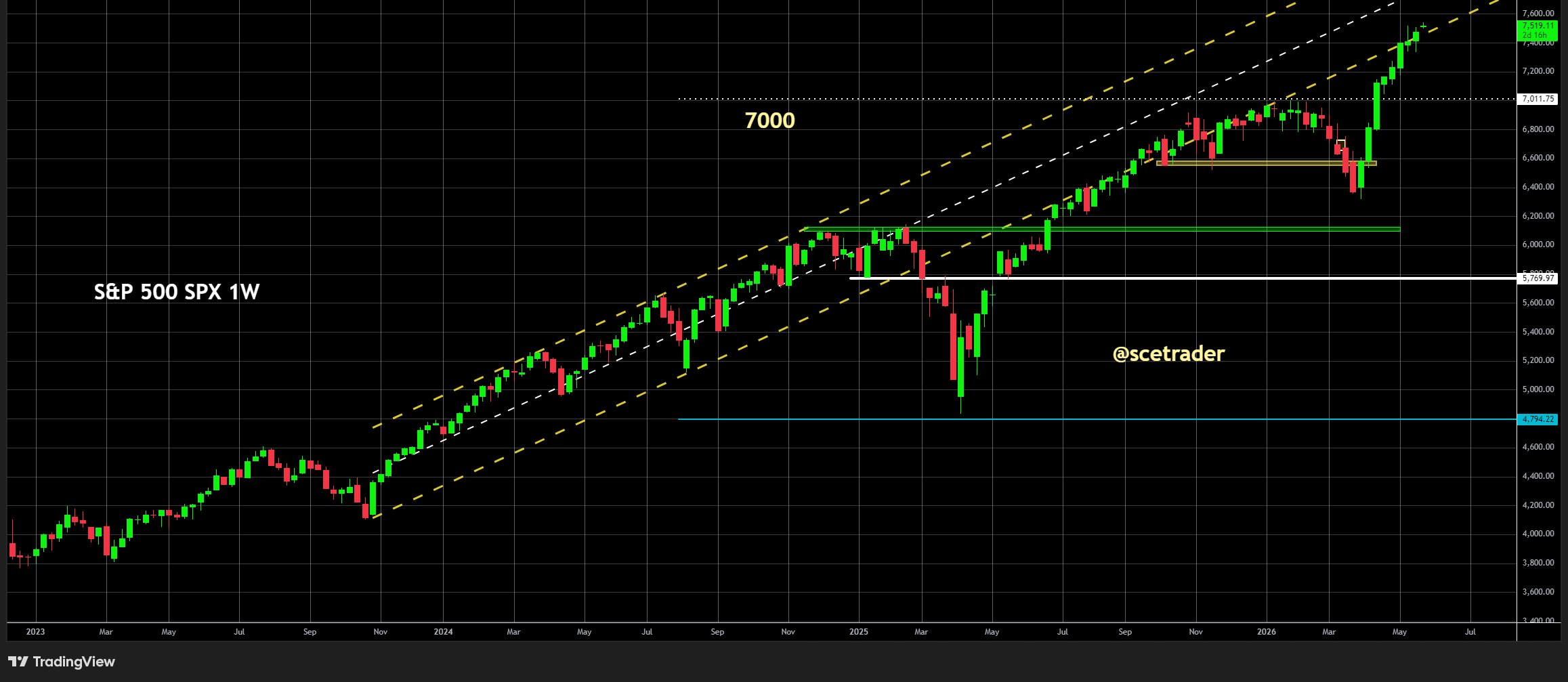
Europa lijkt positief te kunnen openen. De S&P 500 en Nasdaq braken dinsdag allebei naar nieuwe all-time highs, gedragen door technologie, semiconductors en sterke koopinteresse in AI-gerelateerde aandelen. SPX sloot op 7.519 en hield de belangrijke 7.500-zone vast, waardoor het technische beeld sterk blijft.
Wel kunnen de S&P 500 en Nasdaq op hogere niveaus opnieuw weerstand ondervinden, omdat de indices hard zijn opgelopen en beleggers rond recordstanden sneller winst beschermen.
Lagere Amerikaanse rentes en olie onder 100 dollar maken het Europese beeld breder dan alleen technologie. Dit ondersteunt ook industrie, consumentenaandelen, vastgoed, utilities en andere rentegevoelige sectoren.
■ Europa krijgt steun van nieuwe records in de S&P 500 en Nasdaq, omdat de Amerikaanse risk-on trend intact blijft.
■ SPX sloot op 7.519 en hield 7.500 vast, waardoor dit niveau het belangrijkste controlepunt blijft.
■ Op hogere niveaus kunnen de S&P 500 en Nasdaq opnieuw weerstand ondervinden door winstnemingen en hedging.
■ Lagere Amerikaanse rentes geven steun aan vastgoed, utilities, technologie, groeiaandelen en small caps.
■ Olie onder 100 dollar helpt Europese industrie, transport, chemie, consumentenaandelen en bedrijven met hoge inputkosten.
■ De AI- en datacentertrend raakt niet alleen chipwaarden, maar ook automatisering, stroomverdeling, koeling, software, cloud-infrastructuur, technische dienstverlening en datacenterleveranciers.
Voor Europa is de combinatie belangrijk. Wall Street maakt nieuwe records, rentes dalen en olie blijft onder controle. Dat is gunstig, omdat het zowel de waarderingskant als de winstkant ondersteunt. Lagere rentes helpen lange kasstromen en groeiaandelen. Lagere olie helpt marges, inflatieverwachtingen en consumentenvertrouwen.
De Amerikaanse chiprally moet daarom breed worden vertaald. Het gaat niet alleen om ASML, ASMI en Besi. De beweging rond memory, HBM, AI-servercapaciteit en datacenterinvesteringen raakt meerdere Europese sectoren. Naast semiconductors komen ook industriële technologie, elektrificatie, automatisering, software, stroombeheer, koeling, datacenterbouw, logistiek, consumentenaandelen en rentegevoelige sectoren in beeld.
■ SPX bewoog binnen een intraday range van 50 basispunten en sloot 0,6% hoger op 7.519.
■ VIX steeg naar 17, ondanks de hogere aandelenmarkt, wat wijst op positionering richting PCE-data.
■ De indexflow eindigde bijna vlak rond min 1 miljard dollar, maar de onderliggende aandelenflow sloot sterk positief op plus 4 miljard dollar.
■ De aandelenflow werd gedragen door ongeveer 5 miljard dollar aan langere call buying, gedeeltelijk gecompenseerd door 1 miljard dollar aan langere put buying.
■ Semiconductors bleven de leiding nemen, met SMH 4,5% hoger en sterke koopinteresse in AI- en memorygerelateerde aandelen.
■ Micron steeg 19,3% en trok de aandacht naar memory, HBM, AI-servercapaciteit en de bredere datacenterketen.
Europa krijgt steun van Amerikaanse recordstanden
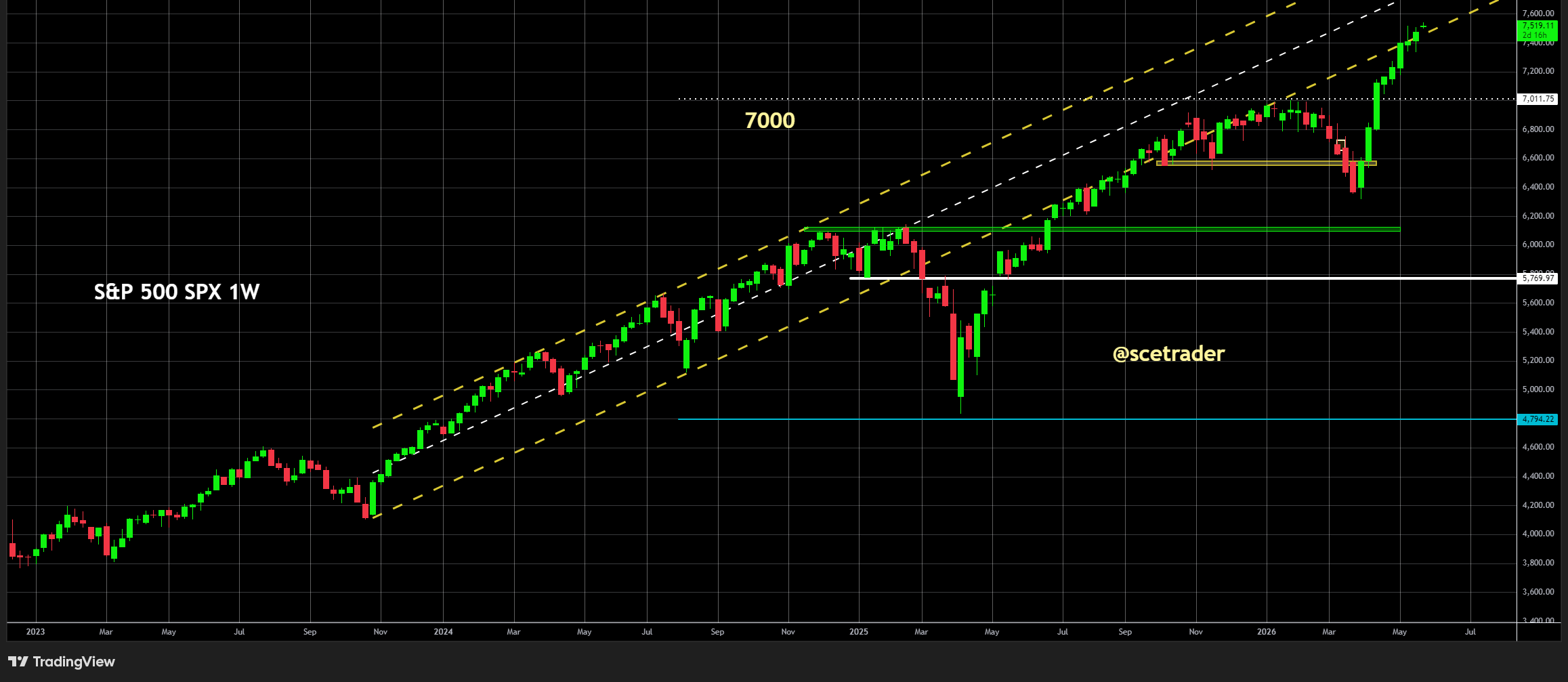
De nieuwe all-time highs in de S&P 500 en Nasdaq zijn positief voor Europa. Dit is geen markt die alleen herstelt vanaf een dieptepunt, maar een markt die opnieuw records maakt terwijl beleggers bereid blijven risico te nemen.
Voor Europese indices geeft dat steun aan meerdere kanten. De AEX profiteert via technologie, semiconductors en bredere risk appetite. De DAX kan steun krijgen via industrie, automatisering, exportgevoelige aandelen, software, auto’s en cyclische waarden. De CAC 40 kan beter liggen als luxe, technologie, industrie en consumentennamen meedoen. De Euro Stoxx krijgt een sterker beeld wanneer technologie, financials, industrie, consumentenaandelen en rentegevoelige sectoren tegelijk steun krijgen.
De opening wordt dus niet bepaald door één Amerikaanse chipnaam. De echte vraag is of de Amerikaanse recordstand zich vertaalt naar Europese marktbreedte. Als naast semiconductors ook industrie, consument, vastgoed, utilities, financials en cyclische aandelen meedoen, wordt de Europese opening gezonder.
Hogere niveaus vragen om voorzichtigheid
De positieve toon betekent niet dat de markt zonder weerstand verder omhoog kan. De S&P 500 en Nasdaq staan op records. Dat trekt kopers aan, maar zorgt ook sneller voor winstnemingen en tactische bescherming.
Rond de hogere niveaus kwam opnieuw duidelijke negatieve delta in de markt. Dat laat zien dat professionele partijen niet blind achter de rally aanlopen. Er wordt nog steeds risico afgedekt, vooral rond zones waar indices sterk zijn opgelopen.
Voor Europa betekent dit dat marktbreedte belangrijk wordt. Een gezonde stijging vraagt meer dan alleen chipkracht. Technologie moet steun krijgen van industrie, consumentenaandelen, financials, vastgoed, utilities en cyclische waarden. Zonder die bredere deelname kan de Europese markt sneller selectief worden.
AI-infrastructuur is breder dan alleen semiconductors
De Amerikaanse chiprally moet breder worden gelezen dan alleen als steun voor Nederlandse chipwaarden. De beweging rond memory, HBM en AI-servercapaciteit laat zien dat beleggers opnieuw kapitaal richten op de volledige AI-infrastructuurketen.
Aan de directe chipkant blijven ASML, ASMI, Besi, Infineon, STMicroelectronics, Aixtron en Soitec relevant. Niet omdat ze allemaal hetzelfde doen, maar omdat een sterke AI- en memorycyclus steun kan geven aan equipment, materialen, power semiconductors, packaging, wafertechnologie en bredere halfgeleiderinvesteringen.
Daarachter ligt een tweede laag die voor Europa minstens zo belangrijk is. AI-datacenters vragen stroom, koeling, automatisering, energie-efficiëntie, kabels, elektrische componenten, software, cloudcapaciteit, beveiliging, technische installaties en industriële infrastructuur. Daardoor raakt de Amerikaanse AI-rally ook Europese bedrijven in elektrificatie, industriële automatisering, datacenterbouw, energiebeheer, software en technische dienstverlening.
Sectoren die Europa kunnen trekken
De eerste steun ligt bij technologie en semiconductors. Als de Amerikaanse chipsector sterk blijft, kunnen Europese namen in equipment, materialen, packaging, power semiconductors en software opnieuw koopinteresse krijgen.
De tweede steun ligt bij industrie en automatisering. AI-infrastructuur is niet alleen een digitaal verhaal. Er moeten datacenters worden gebouwd, stroomnetten moeten zwaarder worden, koeling moet worden geregeld, fabrieken moeten worden uitgerust en energie-efficiëntie wordt belangrijker. Dat kan steun geven aan industriële technologie, elektrificatie, technische dienstverlening en automatisering.
De derde steun ligt bij consument en cyclische waarden. Olie onder 100 dollar en lagere rentes verlagen de druk op marges, koopkracht en financieringskosten. Dat helpt luchtvaart, transport, chemie, retail, luxe-aandelen en andere sectoren die gevoelig zijn voor kosten en vertrouwen.
Rentegevoelige sectoren krijgen meer ruimte
Lagere Amerikaanse rentes zijn positief voor Europa. Ze verlagen de druk op waarderingen en helpen vooral sectoren met lange kasstromen of hogere financieringsgevoeligheid.
Vastgoed, utilities, technologie, groeiaandelen en small caps kunnen hiervan profiteren. Deze sectoren hadden de afgelopen jaren vaak last van hogere rentes. Als lange rentes stabiliseren of dalen, kan kapitaal opnieuw richting deze segmenten bewegen.
Voor banken is het beeld gemengder. Rustige rentes zijn goed voor sentiment en kredietkwaliteit, maar een duidelijke daling van lange rentes kan minder gunstig zijn voor rentemargeverwachtingen. Daarom ligt de positieve rentevertaling vooral bij vastgoed, utilities, technologie, groeiaandelen en kleinere cyclische aandelen.
Olie onder 100 dollar ondersteunt marges
Crude bleef onder 100 dollar. Voor Europa is dat belangrijk, omdat bedrijven en consumenten gevoelig zijn voor energieprijzen. Olie onder controle verlaagt de druk op inflatieverwachtingen, inputkosten, transportkosten en consumentenbestedingen.
Dat helpt industrie, transport, luchtvaart, chemie, consumentenaandelen en retail. Ook voor centrale banken is olie onder controle gunstig, omdat het de inflatiedruk minder hard aanjaagt.
Voor energieaandelen is het beeld minder sterk. Olie onder 100 dollar helpt de brede markt, maar kan olie- en gasnamen relatief afremmen. Europa kan dus positief openen, terwijl energie mogelijk minder meedoet dan technologie, industrie en cyclische consumentennamen.
Aandelenflow blijft constructief
De onderliggende aandelenflow was sterker dan de indexflow. De indexflow eindigde bijna vlak rond min 1 miljard dollar, terwijl de aandelenflow positief sloot op plus 4 miljard dollar. Dat wijst erop dat beleggers vooral in individuele aandelen actief upside zoeken.
De samenstelling was constructief. Er was ongeveer 5 miljard dollar aan langere call buying, tegenover ongeveer 1 miljard dollar aan langere put buying. Dat laat zien dat koopinteresse niet alleen via de index loopt, maar vooral onderliggend in aandelen zit.
Voor Europa is dat positief, omdat het ruimte geeft voor sectorrotatie en stock picking. Europese aandelen met duidelijke blootstelling aan AI, technologie, industriële investeringen, datacenters, lagere rentes of cyclisch herstel kunnen beter liggen dan defensieve delen van de markt.
Volatility stijgt richting PCE
VIX steeg naar 17 terwijl de S&P 500 en Nasdaq nieuwe records maakten. Dat is geen klassiek negatief signaal, maar het verdient wel aandacht. De stijging lijkt vooral samen te hangen met positionering richting de PCE-data van donderdag 28 mei.
De implied volatility voor expiraties van deze week liep ongeveer 2 volpunten op. De at-the-money implied volatility voor morgen sloot op 12,2%, tegenover 1-maands realized volatility van 10,5%. Beleggers betalen dus een premie voor kortetermijnvolatility.
Voor Europa betekent dit dat de opening positief is, maar dat macrodata belangrijk blijven. De stijgende VIX is geen reden om het positieve beeld direct los te laten. Het betekent vooral dat beleggers bescherming willen rond een belangrijk inflatiemoment.
Micron bevestigt dat de AI-cyclus nog leeft
Micron was de opvallende winnaar binnen de Amerikaanse chiprally. Het aandeel steeg 19,3% en sloot op 896. De positieve deltaflow was krachtig en bereikte de sterkste bullish reading van de afgelopen 30 handelsdagen.
De beweging boven de 800-zone zorgde voor extra versnelling. Dat past bij een markt waarin call buying en dealerhedging elkaar kunnen versterken. Wanneer een aandeel boven een belangrijk optieniveau uitbreekt, kan extra hedging de beweging verder omhoog duwen.
Voor Europa is de les niet dat alleen Nederlandse chipwaarden moeten stijgen. De les is dat beleggers opnieuw bereid zijn grote bedragen in de AI-infrastructuurketen te steken. Dat raakt semiconductors, equipment, materialen, datacenters, stroombeheer, software, koeling, industriële automatisering en groeiaandelen met duidelijke blootstelling aan AI-investeringen.
Conclusie
Europa lijkt positief te kunnen openen. De S&P 500 en Nasdaq braken naar nieuwe all-time highs, SPX hield 7.500 vast, rentes daalden en olie bleef onder 100 dollar. Dat is een sterke combinatie voor Europese aandelen.
De steun ligt breder dan alleen bij Nederlandse chipwaarden. Technologie, semiconductors, industriële technologie, datacenterinfrastructuur, automatisering, software, vastgoed, utilities, groeiaandelen, small caps, cyclische consumentennamen, transport, chemie en bedrijven met lagere inputkosten kunnen profiteren.
De markt blijft wel gevoelig op hogere niveaus. De S&P 500 en Nasdaq kunnen rond records opnieuw weerstand ondervinden door winstnemingen, hedging en oplopende vraag naar bescherming richting PCE. Zolang SPX boven 7.500 blijft, aandelenflow positief blijft en rentes niet opnieuw oplopen, blijft de Europese toon constructief. Een terugval onder 7.500 zou het beeld niet meteen bearish maken, maar wel duidelijk selectiever.
🔵 English version
European indices: new Wall Street records support Europe, but higher levels require broader participation
Europe looks set for a positive open. The S&P 500 and Nasdaq both broke to new all-time highs on Tuesday, led by technology, semiconductors and strong buying interest in AI-related equities. SPX closed at 7,519 and held the important 7,500 area, keeping the technical picture strong. At higher levels, however, both the S&P 500 and Nasdaq may again face resistance, because the indices have already moved sharply higher and investors tend to protect gains more quickly around record levels. Lower U.S. rates and oil below 100 dollars make the European setup broader than technology alone. This also supports industrials, consumer stocks, real estate, utilities and other rate-sensitive sectors.
■ Europe gets support from new all-time highs in the S&P 500 and Nasdaq, because the U.S. risk-on trend remains intact.
■ SPX closed at 7,519 and held 7,500, keeping this level as the key control point.
■ At higher levels, the S&P 500 and Nasdaq may again face resistance because of profit-taking and hedging.
■ Lower U.S. rates support real estate, utilities, technology, growth stocks and small caps.
■ Oil below 100 dollars helps European industrials, transport, chemicals, consumer stocks and companies with high input costs.
■ The AI and data center trend extends beyond chip stocks and also touches automation, power distribution, cooling, software, cloud infrastructure, technical services and data center suppliers.
For Europe, the combination matters. Wall Street is making new records, rates are falling and oil remains under control. That is favorable because it supports both the valuation side and the earnings side. Lower rates help long-duration cash flows and growth stocks. Lower oil helps margins, inflation expectations and consumer confidence.
The U.S. chip rally should therefore be translated broadly. This is not only about ASML, ASMI and Besi. The move around memory, HBM, AI server capacity and data center investment touches several European sectors. In addition to semiconductors, industrial technology, electrification, automation, software, power management, cooling, data center construction, logistics, consumer stocks and rate-sensitive sectors come into focus.
■ SPX traded within a 50 basis point intraday range and closed 0.6% higher at 7,519.
■ VIX rose to 17 despite the higher equity market, pointing to positioning ahead of PCE data.
■ Index flow finished almost flat around negative 1 billion dollars, but underlying equity flow closed strongly positive at positive 4 billion dollars.
■ Equity flow was driven by roughly 5 billion dollars of longer-dated call buying, partly offset by 1 billion dollars of longer-dated put buying.
■ Semiconductors remained in the lead, with SMH up 4.5% and strong buying interest in AI and memory-related equities.
■ Micron rose 19.3% and drew attention back to memory, HBM, AI server capacity and the broader data center chain.
Europe gets support from U.S. record highs
The new all-time highs in the S&P 500 and Nasdaq are positive for Europe. This is not a market simply recovering from a low, but a market making new records again while investors remain willing to take risk.
For European indices, that supports several areas. The AEX benefits through technology, semiconductors and broader risk appetite. The DAX can receive support through industrials, automation, export-sensitive stocks, software, autos and cyclicals. The CAC 40 can trade better if luxury, technology, industrials and consumer names participate. The Euro Stoxx gets a stronger picture when technology, financials, industrials, consumer stocks and rate-sensitive sectors receive support at the same time.
The open is therefore not determined by one U.S. chip stock. The real question is whether the U.S. record move translates into European market breadth. If industrials, consumer stocks, real estate, utilities, financials and cyclicals participate alongside semiconductors, the European open becomes healthier.
Higher levels require caution
The positive tone does not mean the market can continue higher without resistance. The S&P 500 and Nasdaq are at records. That attracts buyers, but it also more quickly triggers profit-taking and tactical protection.
Around higher levels, clear negative delta again entered the market. That shows professional participants are not blindly chasing the rally. Risk is still being hedged, especially around zones where indices have already moved strongly higher.
For Europe, this means market breadth becomes important. A healthy advance requires more than chip strength alone. Technology needs support from industrials, consumer stocks, financials, real estate, utilities and cyclicals. Without that broader participation, the European market can become selective more quickly.
AI infrastructure is broader than semiconductors alone
The U.S. chip rally should be read more broadly than only as support for Dutch chip stocks. The move around memory, HBM and AI server capacity shows that investors are again directing capital toward the full AI infrastructure chain.
On the direct semiconductor side, ASML, ASMI, Besi, Infineon, STMicroelectronics, Aixtron and Soitec remain relevant. Not because they all do the same thing, but because a strong AI and memory cycle can support equipment, materials, power semiconductors, packaging, wafer technology and broader semiconductor investment.
Behind that sits a second layer that is at least as important for Europe. AI data centers require power, cooling, automation, energy efficiency, cabling, electrical components, software, cloud capacity, security, technical installations and industrial infrastructure. As a result, the U.S. AI rally also touches European companies in electrification, industrial automation, data center construction, energy management, software and technical services.
Sectors that can lead Europe
The first support sits in technology and semiconductors. If the U.S. chip sector remains strong, European names in equipment, materials, packaging, power semiconductors and software can again attract buying interest.
The second support sits in industrials and automation. AI infrastructure is not only a digital story. Data centers need to be built, power grids need to be strengthened, cooling needs to be installed, factories need to be equipped and energy efficiency becomes more important. This can support industrial technology, electrification, technical services and automation.
The third support sits in consumer and cyclicals. Oil below 100 dollars and lower rates reduce pressure on margins, purchasing power and financing costs. This helps airlines, transport, chemicals, retail, luxury and other sectors sensitive to costs and confidence.
Rate-sensitive sectors get more room
Lower U.S. rates are positive for Europe. They reduce pressure on valuations and mainly help sectors with long-duration cash flows or higher financing sensitivity.
Real estate, utilities, technology, growth stocks and small caps can benefit. These sectors have often been pressured by higher rates in recent years. If long-term yields stabilize or decline, capital can move back toward these segments.
For banks, the picture is more mixed. Calm rates are positive for sentiment and credit quality, but a clear decline in long-term yields can be less favorable for net interest margin expectations. The positive rate translation therefore mainly sits in real estate, utilities, technology, growth stocks and smaller cyclicals.
Oil below 100 dollars supports margins
Crude remained below 100 dollars. For Europe, that matters because companies and consumers are sensitive to energy prices. Oil under control reduces pressure on inflation expectations, input costs, transport costs and consumer spending.
This supports industrials, transport, airlines, chemicals, consumer stocks and retail. It is also favorable for central banks, because it does not add as much pressure to inflation.
For energy stocks, the picture is less strong. Oil below 100 dollars supports the broader market, but can slow oil and gas names on a relative basis. Europe can therefore open positively, while energy may participate less than technology, industrials and cyclical consumer names.
Equity flow remains constructive
Underlying equity flow was stronger than index flow. Index flow ended almost flat around negative 1 billion dollars, while equity flow closed positive at positive 4 billion dollars. That suggests investors are mainly seeking upside in individual equities.
The composition was constructive. There was roughly 5 billion dollars of longer-dated call buying versus about 1 billion dollars of longer-dated put buying. This shows buying interest is not only running through the index, but mainly through underlying stocks.
For Europe, that is positive because it creates room for sector rotation and stock picking. European stocks with clear exposure to AI, technology, industrial investment, data centers, lower rates or cyclical recovery can trade better than defensive parts of the market.
Volatility rises ahead of PCE
VIX rose to 17 while the S&P 500 and Nasdaq made new records. That is not a classic negative signal, but it deserves attention. The rise appears mainly linked to positioning ahead of Thursday’s PCE data on May 28.
Implied volatility for this week’s expirations increased by roughly 2 volatility points. At-the-money implied volatility for tomorrow closed at 12.2%, compared with 1-month realized volatility at 10.5%. Investors are therefore paying a premium for near-term volatility.
For Europe, this means the open is positive, but macro data remain important. The rising VIX is not a reason to immediately abandon the positive picture. It mainly means investors want protection around an important inflation event.
Micron confirms the AI cycle is still alive
Micron was the standout winner within the U.S. chip rally. The stock rose 19.3% and closed at 896. Positive delta flow was strong and reached the strongest bullish reading of the past 30 trading days.
The move above the 800 area created additional acceleration. This fits a market where call buying and dealer hedging can reinforce each other. When a stock breaks above an important options level, additional hedging can push the move further higher.
For Europe, the lesson is not that only Dutch chip stocks should rise. The lesson is that investors are again willing to commit large amounts of capital to the AI infrastructure chain. That touches semiconductors, equipment, materials, data centers, power management, software, cooling, industrial automation and growth stocks with clear exposure to AI investment.
Conclusion
Europe looks set for a positive open. The S&P 500 and Nasdaq broke to new all-time highs, SPX held 7,500, rates declined and oil stayed below 100 dollars. That is a strong combination for European equities.
Support is broader than only Dutch chip stocks. Technology, semiconductors, industrial technology, data center infrastructure, automation, software, real estate, utilities, growth stocks, small caps, cyclical consumer names, transport, chemicals and companies with lower input costs can benefit.
The market remains sensitive at higher levels. The S&P 500 and Nasdaq may again face resistance around records because of profit-taking, hedging and rising demand for protection into PCE. As long as SPX stays above 7,500, equity flow remains positive and rates do not rise again, the European tone remains constructive. A move back below 7,500 would not immediately make the picture bearish, but it would make it clearly more selective.
Disclaimer Aan de door ons opgestelde informatie kan op geen enkele wijze rechten worden ontleend. Alle door ons verstrekte informatie en analyses zijn geheel vrijblijvend. Alle consequenties van het op welke wijze dan ook toepassen van de informatie blijven volledig voor uw eigen rekening.
Wij aanvaarden geen aansprakelijkheid voor de mogelijke gevolgen of schade die zouden kunnen voortvloeien uit het gebruik van de door ons gepubliceerde informatie. U bent zelf eindverantwoordelijk voor de beslissingen die u neemt met betrekking tot uw beleggingen.


