Indices Europa na Wall Street: Hogere rente drukt op sentiment
De Amerikaanse markt sloot dinsdag opnieuw lager. Daarmee was sprake van de derde verliesdag op rij. De belangrijkste druk kwam uit de obligatiemarkt, waar zwakke bonds de rentes naar meerjarige toppen duwden. Olie bleef boven 100 dollar en metalen stonden verder onder druk. Voor Europa wijst dit op een voorzichtige start, vooral bij technologie, groeiaandelen en rentegevoelige sectoren.
■ Europa lijkt voorzichtig lager tot gemengd te openen door hogere Amerikaanse rentes, zwakker Wall Street-momentum en olie boven 100 dollar.
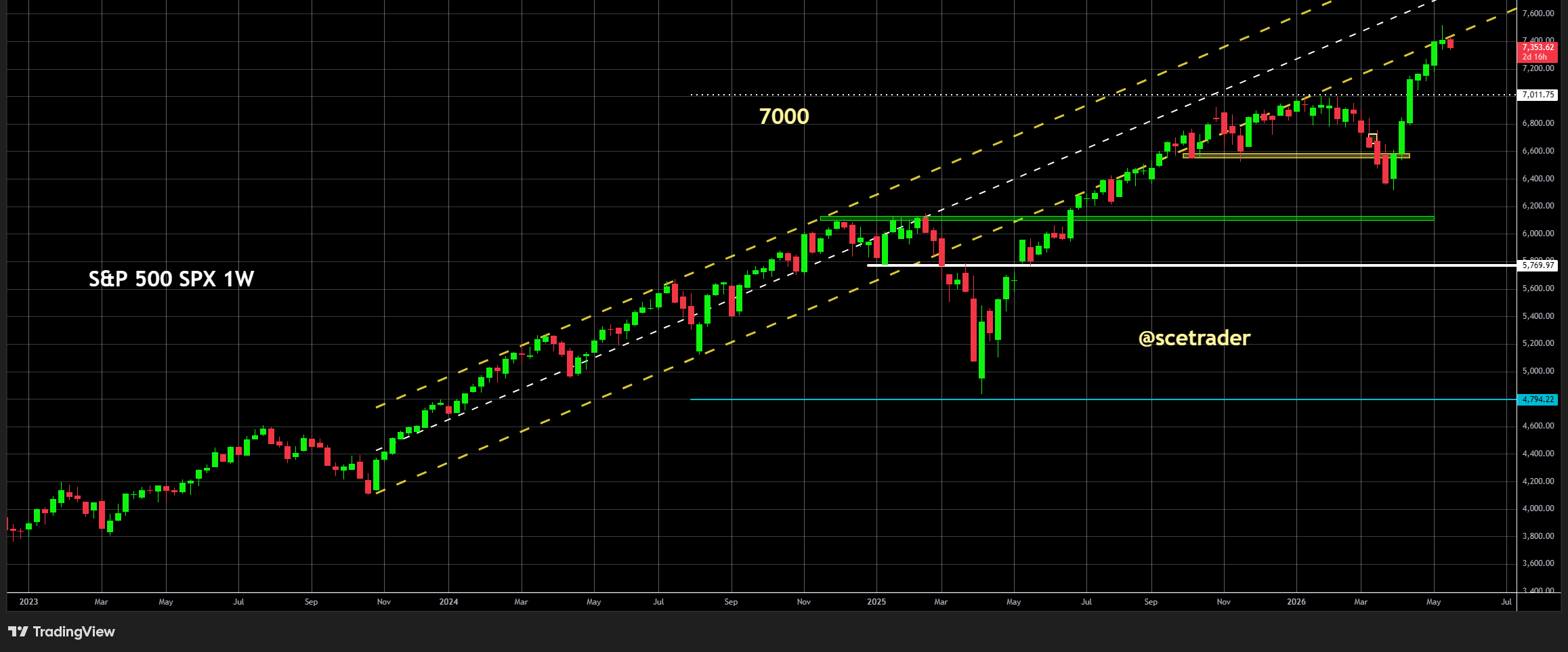
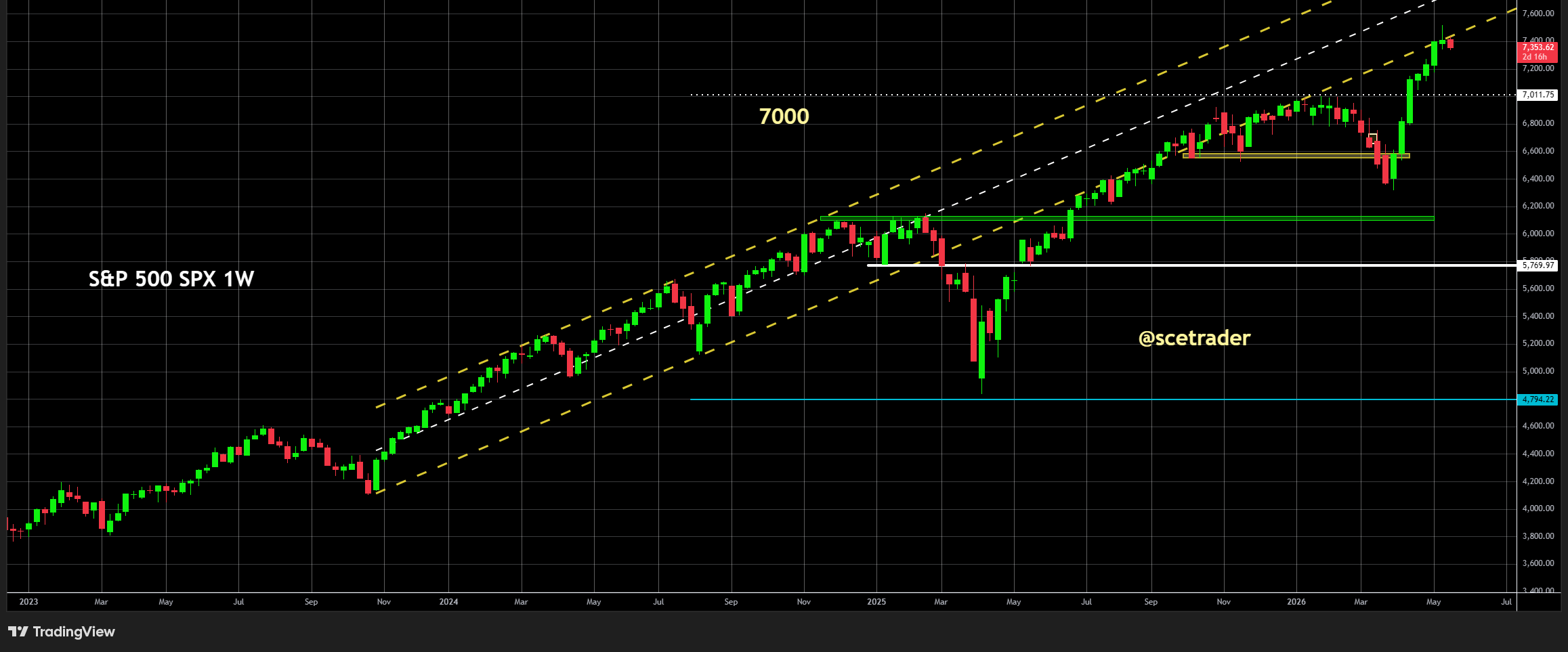
■ SPX sloot op 7.354 en bleef onder 7.390, waardoor de Amerikaanse markt nog geen herstelbevestiging geeft.
■ De steun rond 7.325 tot 7.330 hield stand, maar 7.400 blijft de eerste belangrijke weerstand.
■ Voor Europa wordt de chipreactie bepalend: zolang SMH zwak blijft, blijven ASML, ASMI en Besi kwetsbaar, maar de kracht in memory houdt het beeld voorlopig selectiever dan breed negatief.
■ De hogere rente raakt meer dan alleen technologie: vastgoed, utilities en rentegevoelige groeiaandelen blijven kwetsbaar, terwijl banken relatief steun kunnen vinden zolang de rentebeweging gecontroleerd blijft.
SPX bewoog binnen een intraday range van 83 basispunten en sloot 0,67% lager. De zone 7.325 tot 7.330 hield goed als steun, mede door kortlopende optieposities en de put wall. Aan de bovenkant bleef 7.400 weerstand. Zolang SPX niet terug boven 7.390 tot 7.400 komt, blijft het technische beeld voorzichtig.
Voor Europese beleggers betekent dit dat de markt waarschijnlijk selectief blijft. Hogere rentes drukken op groeiaandelen en technologie. Olie boven 100 dollar kan energieaandelen ondersteunen, maar is voor de brede markt geen zuiver positief signaal. De belangrijkste vraag is daarom of de Amerikaanse chipsector stabiliseert richting NVIDIA-cijfers.
■ De onderliggende optieflow draaide richting het slot opnieuw negatief door putvraag en callafbouw.
■ VIX steeg naar 18 en VVIX naar 95, maar vaste-strike implied volatility daalde juist met ongeveer 0,5 volpunt.
■ Dat wijst op voorzichtigheid, maar niet op paniek of agressieve vraag naar bescherming.
■ DRAM steeg 0,91% en Micron won 2,52%, terwijl SMH 0,40% daalde.
■ Europa blijft daardoor kwetsbaar aan de groeikant, maar niet volledig zonder steun binnen de chipketen.
Europa krijgt vooral druk via rente en technologie
De hogere Amerikaanse rente is voor Europa het belangrijkste signaal. Die raakt vooral lange-duration aandelen, technologie, semiconductors, vastgoed, utilities en rentegevoelige groeiaandelen. Daardoor kunnen ASML, ASMI, Besi en andere groeigevoelige namen kwetsbaar openen als Amerikaanse futures zwak blijven.
De rentebeweging raakt Europa breder dan alleen technologie. Vastgoed en utilities blijven gevoelig omdat hogere rentes de waardering en financieringskosten onder druk zetten. Banken kunnen relatief beter blijven liggen zolang de rentestijging gecontroleerd blijft en niet omslaat in bredere stress. Dat maakt de Europese markt waarschijnlijk selectiever dan één richting omhoog of omlaag.
SPX moet 7.390 tot 7.400 heroveren
SPX sloot onder 7.390 en daarmee blijft de Amerikaanse markt technisch kwetsbaar. De steun rond 7.325 tot 7.330 hield stand, maar dat is nog geen sterk herstel. Eerst moet de index terug boven 7.390 en daarna boven 7.400.
Voor Europa is dat belangrijk omdat een herstel boven die zone risk appetite kan terugbrengen. Blijft SPX eronder, dan blijft de kans groter dat Europese indices voorzichtig handelen en dat beleggers vooral defensief naar groeiaandelen kijken.
Geen paniek in volatility
De volatility-markt geeft geen extreem stresssignaal. VIX en VVIX liepen wel op, maar vaste-strike implied volatility daalde juist. Dat betekent dat de markt voorzichtiger is geworden, maar dat beleggers nog niet massaal bescherming najagen.
Dat maakt het beeld genuanceerd. Wall Street ligt zwakker, maar er is nog geen duidelijke paniek. Voor Europa betekent dit dat een zwakke opening mogelijk is, maar dat de markt niet automatisch hard hoeft door te zakken zolang SPX 7.325 tot 7.330 blijft houden.
Memory valt positief op
Binnen semiconductors was memory de positieve uitzondering. DRAM steeg, terwijl SMH licht lager sloot. Micron veerde op vanaf de 650 Put Wall, brak door de 700 Key Gamma Strike en sloot 2,52% hoger op 699.
Voor Europa is dit relevant omdat het laat zien dat de chipsector niet volledig wordt verkocht. Als memory kracht houdt richting NVIDIA-cijfers, kan dat steun geven aan het sentiment rond de Europese chipketen. Als SMH en memory allebei gaan verzwakken, wordt het beeld duidelijk defensiever.
Conclusie
Voor Europa is de start voorzichtig. Wall Street sloot lager, SPX bleef onder 7.390 en hogere Amerikaanse rentes drukken op groeiaandelen. De Europese chipsector blijft daardoor kwetsbaar, vooral ASML, ASMI en Besi, terwijl Infineon en STMicroelectronics gevoelig blijven voor het bredere cyclische chipbeeld.
Toch is het beeld niet volledig negatief. De steun rond SPX 7.325 tot 7.330 hield stand, volatility loopt niet hard op en memory liet relatieve kracht zien. De komende sessie draait vooral om drie signalen: herovering van SPX 7.390 tot 7.400, stabilisatie in SMH en de reactie van memory richting NVIDIA-cijfers. Tot die bevestiging komt, blijft Europa waarschijnlijk voorzichtig en selectief.
🔵 English version
European indices: higher rates pressure sentiment, chip sector remains key
The U.S. market closed lower again on Tuesday. That marked the third consecutive losing session. The main pressure came from the bond market, where weak bonds pushed yields to multi-year highs. Oil stayed above $100 and metals remained under pressure. For Europe, this points to a cautious open, especially in technology, growth stocks and rate-sensitive sectors.
■ Europe looks set for a cautiously lower to mixed open because of higher U.S. rates, weaker Wall Street momentum and oil above $100.
■ SPX closed at 7,354 and remained below 7,390, meaning the U.S. market has not yet confirmed a recovery.
■ Support around 7,325 to 7,330 held, but 7,400 remains the first important resistance level.
■ For Europe, the chip reaction becomes decisive: as long as SMH remains weak, ASML, ASMI and Besi stay vulnerable, but strength in memory keeps the picture more selective than broadly negative.
■ Higher rates affect more than technology: real estate, utilities and rate-sensitive growth stocks remain vulnerable, while banks can find relative support as long as the rate move stays controlled.
SPX traded within an 83 basis point intraday range and closed 0.67% lower. The 7,325 to 7,330 area held as support, helped by short-dated options positioning and the put wall. On the upside, 7,400 remained resistance. As long as SPX does not move back above 7,390 to 7,400, the technical picture stays cautious.
For European investors, this means the market is likely to remain selective. Higher rates pressure growth stocks and technology. Oil above $100 can support energy shares, but it is not a clean positive for the broader market. The key question is therefore whether the U.S. chip sector can stabilize ahead of NVIDIA earnings.
■ Underlying options flow turned negative again into the close because of put demand and call exposure being reduced.
■ VIX rose to 18 and VVIX to 95, but fixed-strike implied volatility declined by roughly 0.5 vol points.
■ That points to caution, but not panic or aggressive demand for protection.
■ DRAM rose 0.91% and Micron gained 2.52%, while SMH declined 0.40%.
■ Europe therefore remains vulnerable on the growth side, but not without support inside the chip chain.
Europe mainly feels pressure through rates and technology
Higher U.S. rates are the most important signal for Europe. They pressure long-duration stocks, technology, semiconductors, real estate, utilities and rate-sensitive growth names. That means ASML, ASMI, Besi and other growth-sensitive names can open more vulnerable if U.S. futures remain weak.
The rate move affects Europe more broadly than technology alone. Real estate and utilities remain sensitive because higher rates pressure valuations and financing costs. Banks can hold up relatively better as long as the rate rise remains controlled and does not turn into broader stress. That makes the European market likely to stay more selective than one-directional.
SPX needs to reclaim 7,390 to 7,400
SPX closed below 7,390 and that keeps the U.S. market technically vulnerable. Support around 7,325 to 7,330 held, but that is not yet a strong recovery. The index first needs to move back above 7,390 and then above 7,400.
For Europe, that matters because a recovery above that area can bring back risk appetite. If SPX remains below it, European indices are more likely to trade cautiously and investors may stay defensive toward growth stocks.
No panic in volatility
The volatility market is not sending an extreme stress signal. VIX and VVIX moved higher, but fixed-strike implied volatility declined. That means the market has become more cautious, but investors are not aggressively chasing protection.
This keeps the picture nuanced. Wall Street is weaker, but there is no clear panic. For Europe, this means a weaker open is possible, but the market does not automatically have to sell off sharply as long as SPX 7,325 to 7,330 continues to hold.
Memory stands out positively
Within semiconductors, memory was the positive exception. DRAM rose, while SMH closed slightly lower. Micron bounced from the 650 Put Wall, moved through the 700 Key Gamma Strike and closed 2.52% higher at 699.
For Europe, this matters because it shows the chip sector is not being sold across the board. If memory holds strength into NVIDIA earnings, it can support sentiment around the European chip chain. If both SMH and memory weaken, the picture becomes more defensive.
Conclusion
For Europe, the setup is cautious. Wall Street closed lower, SPX stayed below 7,390 and higher U.S. rates pressure growth stocks. The European chip sector therefore remains vulnerable, especially ASML, ASMI and Besi, while Infineon and STMicroelectronics remain sensitive to the broader cyclical chip picture.
Still, the picture is not fully negative. SPX support around 7,325 to 7,330 held, volatility is not accelerating sharply and memory showed relative strength. The next session mainly revolves around three signals: a reclaim of SPX 7,390 to 7,400, stabilization in SMH and the reaction in memory ahead of NVIDIA earnings. Until that confirmation arrives, Europe likely remains cautious and selective.
Disclaimer Aan de door ons opgestelde informatie kan op geen enkele wijze rechten worden ontleend. Alle door ons verstrekte informatie en analyses zijn geheel vrijblijvend. Alle consequenties van het op welke wijze dan ook toepassen van de informatie blijven volledig voor uw eigen rekening.
Wij aanvaarden geen aansprakelijkheid voor de mogelijke gevolgen of schade die zouden kunnen voortvloeien uit het gebruik van de door ons gepubliceerde informatie. U bent zelf eindverantwoordelijk voor de beslissingen die u neemt met betrekking tot uw beleggingen.


