Caterpillar zet volgende stap in Physical AI en blijft zichzelf opnieuw uitvinden
Geen tijd om het volledige artikel te lezen? Gebruik dan de vijf onderstaande bullets voor de belangrijkste punten.
■ Caterpillar werkt samen met FieldAI om Physical AI, autonome robots en intelligentere industriële processen verder uit te rollen, met ondersteuning van NVIDIA-technologie.
■ De eerste toepassingen liggen bij autonome inspecties, realtime digital twins, risicodetectie en optimalisatie van machines, fabrieken en complete werklocaties.
■ Wij zien deze ontwikkeling als bullish voor Caterpillar, omdat het bedrijf opnieuw laat zien dat het zich technologisch blijft aanpassen en steeds meer waarde toevoegt bovenop de traditionele machineverkoop.
■ Caterpillars grootste voordeel is de combinatie van een enorme installed base, operationele data uit zware industriële omgevingen en een wereldwijd dealer- en servicenetwerk.
■ Physical AI hoeft niet direct een nieuwe miljardenmarkt op zichzelf te worden. De belangrijkste waarde zit in hogere productiviteit, meer uptime, meer service-inkomsten en sterkere klantbinding rond de bestaande machinebasis.
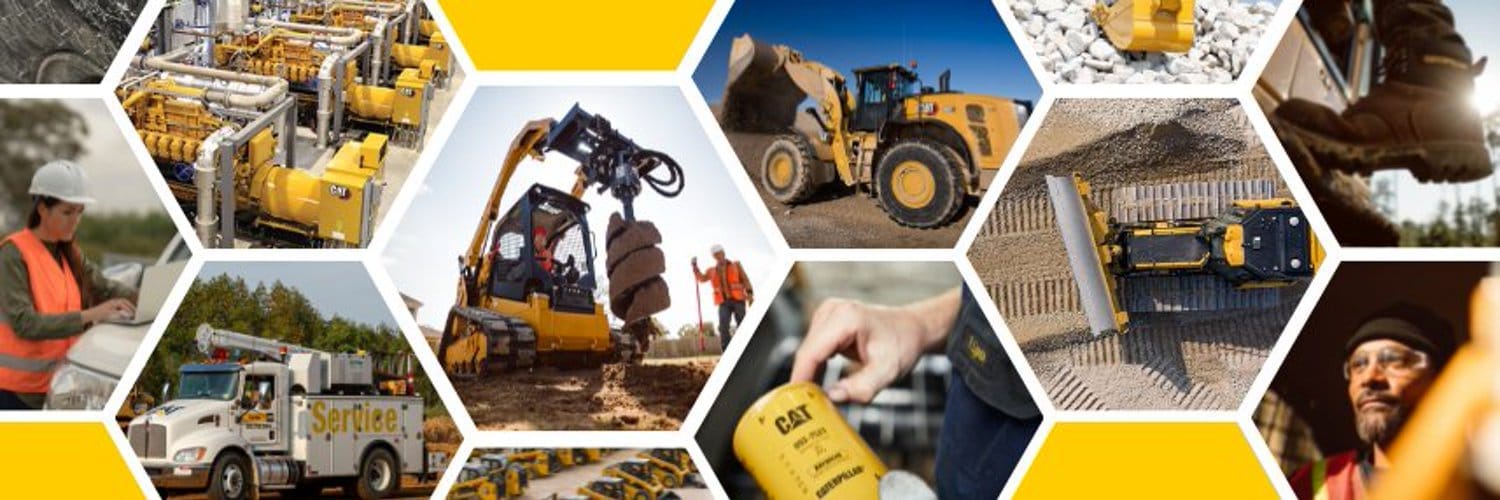
Caterpillar wordt nog vaak gezien als fabrikant van bulldozers, graafmachines, mijnbouwtrucks en motoren. Dat beeld is inmiddels te beperkt. Het bedrijf bouwt al jaren software, autonomie, telematics en voorspellend onderhoud uit en zet nu met FieldAI een volgende stap richting Physical AI.
Daarbij worden operationele data van Caterpillar gecombineerd met de robotmodellen van FieldAI en technologie van NVIDIA. Het doel is niet om Caterpillar in een softwarebedrijf te veranderen, maar om machines, fabrieken en complete werklocaties slimmer, veiliger en productiever te maken.
Wil je alle artikelen kunnen lezen en elke podcast beluisteren? Neem dan een abonnement en krijg toegang tot alle artikelen en de database met duizenden berichten.
Investment view
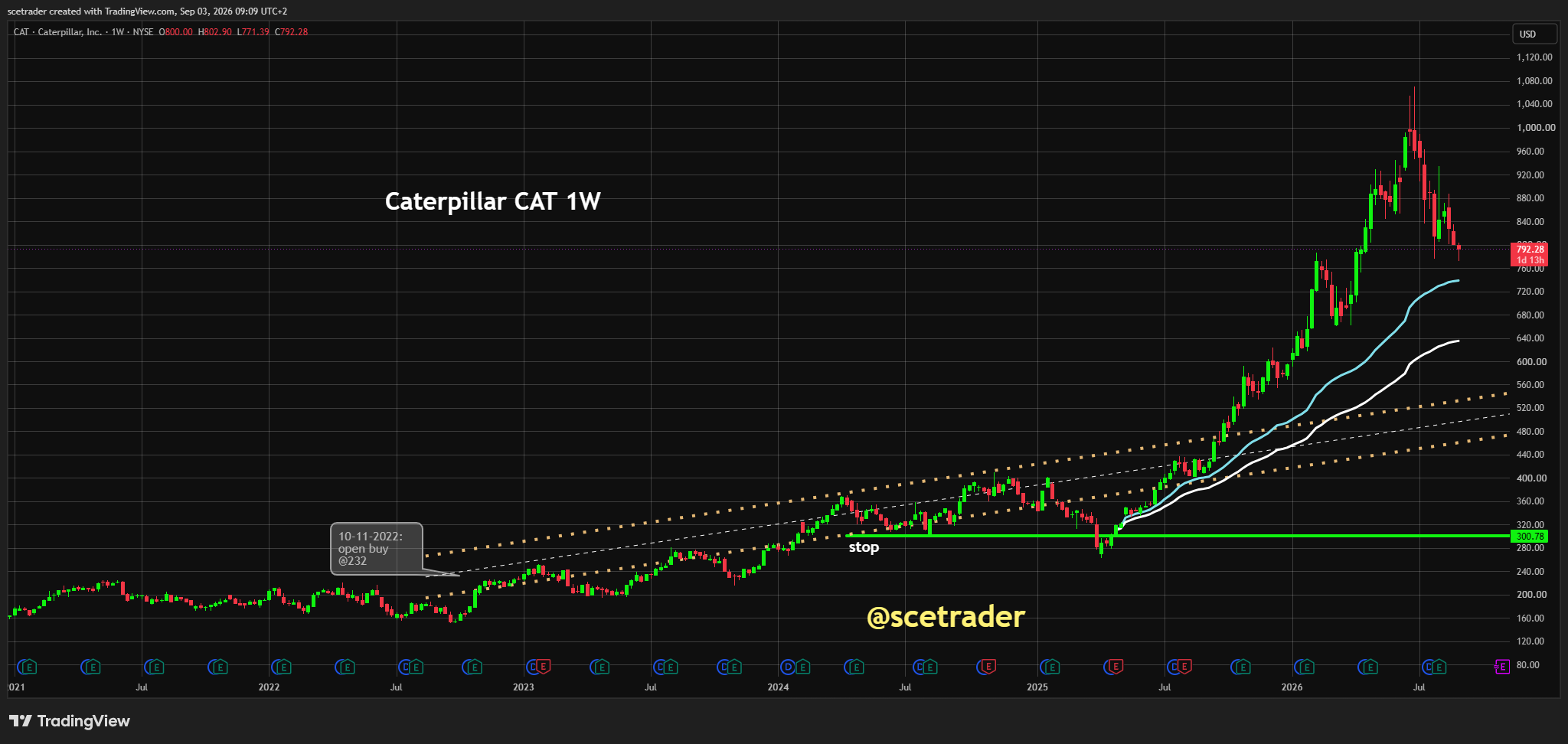
Wij zien deze ontwikkeling als bullish voor Caterpillar. Niet omdat de samenwerking met FieldAI onmiddellijk een grote nieuwe omzetstroom oplevert, maar omdat zij opnieuw bevestigt dat Caterpillar zich steeds weet aan te passen aan technologische veranderingen.
Dat is belangrijk voor de kwaliteit van de onderneming. Caterpillar verkoopt niet langer alleen fysieke machines, maar steeds meer een combinatie van hardware, software, autonomie, data en service. Daardoor kan het bedrijf per klant meer waarde leveren en tegelijkertijd de relatie met die klant verdiepen.
De belangrijkste kracht zit daarbij in wat Caterpillar al bezit. Het bedrijf heeft miljoenen machines in het veld, enorme hoeveelheden operationele data en een wereldwijd distributie- en servicenetwerk. Dat maakt Physical AI voor Caterpillar potentieel veel waardevoller dan voor een losstaand technologiebedrijf zonder toegang tot echte industriële workflows.
Wij zien dit daarom niet als een hypeverhaal, maar als een verdere verdieping van een strategie die Caterpillar al jaren volgt. Het bedrijf blijft zichzelf technologisch aanpassen zonder zijn bestaande kernactiviteiten los te laten.
Waarom deze samenwerking bullish is voor Caterpillar
De economische waarde van Physical AI zit vooral in hogere productiviteit, minder stilstand en betere veiligheid. Juist daar heeft Caterpillar een sterke positie.
Een mijnbouwbedrijf of aannemer koopt geen AI omdat het technologisch interessant klinkt. Het koopt AI wanneer machines meer uren kunnen draaien, minder vaak stilvallen en werkzaamheden efficiënter kunnen worden uitgevoerd.
Wanneer Caterpillar die prestaties kan verbeteren via autonomie, monitoring en AI, stijgt de economische waarde van dezelfde machinebasis.
Dat kan uiteindelijk leiden tot sterkere klantbinding, meer service-inkomsten en een hogere waarde per machine gedurende de volledige levensduur.
Wat FieldAI en NVIDIA concreet toevoegen
FieldAI richt zich op robot intelligence voor complexe en onvoorspelbare omgevingen. De software moet robots in staat stellen om zelfstandig waar te nemen, risico's in te schatten en acties uit te voeren zonder voor iedere situatie volledig opnieuw geprogrammeerd te worden.
Voor Caterpillar opent dat praktische toepassingen. Denk aan robots die autonoom inspecties uitvoeren, afwijkingen herkennen, industriële omgevingen in kaart brengen en gevaarlijke zones controleren.
NVIDIA levert daarbij de reken- en simulatie-infrastructuur. Via AI-compute en digitale simulatie kunnen robots en autonome systemen eerst virtueel worden getest voordat ze in echte fabrieken, mijnen of bouwplaatsen worden ingezet.
De combinatie is logisch. Caterpillar levert kennis van machines en industriële processen, FieldAI levert robot intelligence en NVIDIA levert de computing- en simulationlaag.
Van machinebouwer naar intelligent industrieel platform
Caterpillar is al langer bezig met deze verschuiving. Machines werden eerst elektronisch aangestuurd, daarna kwamen GPS, telematics, remote monitoring en predictive maintenance. Vervolgens werd autonomie steeds belangrijker, vooral in mijnbouw.
Physical AI bouwt daarop voort.
Het bedrijf hoeft dus niet vanaf nul te leren hoe autonome systemen in zware industriële omgevingen functioneren. Caterpillar heeft al ervaring met machines die onder stof, trillingen, hitte en wisselende omstandigheden betrouwbaar moeten blijven werken.
Juist dat is een belangrijk voordeel. Een AI-model dat goed werkt in een gecontroleerde laboratoriumomgeving heeft nog weinig waarde wanneer het niet bestand is tegen de omstandigheden waarin Caterpillar-klanten dagelijks opereren.
Caterpillar beschikt over die praktijkkennis al.
Waar Physical AI als eerste geld kan opleveren
De eerste toepassingen zijn waarschijnlijk niet volledig autonome bouwplaatsen, maar relatief concrete functies met een duidelijke economische waarde.
Autonome inspecties zijn daar een goed voorbeeld van. Robots kunnen machines, leidingen en installaties controleren op slijtage, lekkages, oververhitting of andere afwijkingen. Dat kan onderhoud eerder signaleren en gevaarlijk inspectiewerk verminderen.
Digital twins vormen een tweede interessante toepassing. Door data van machines, sensoren en robots continu samen te brengen, ontstaat een digitale weergave van een volledige fabriek, mijn of werklocatie.
AI kan vervolgens analyseren waar knelpunten ontstaan, welke machines inefficiënt worden gebruikt en waar onderhoud nodig is.
Daarmee verschuift Caterpillar van het leveren van een machine naar het optimaliseren van een complete operatie.
Caterpillars grootste voordeel: machines, data en distributie
Het grootste concurrentievoordeel van Caterpillar zit waarschijnlijk niet in één specifiek AI-model. Het zit in de combinatie van fysieke assets, data en distributie.
Machines van Caterpillar genereren voortdurend informatie over belasting, brandstofverbruik, onderhoud, locatie, slijtage en productiviteit. Die data komt uit echte industriële omgevingen en is daardoor bijzonder waardevol voor AI-toepassingen.
Daarbovenop beschikt Caterpillar over een wereldwijd dealernetwerk dat klanten ondersteunt bij onderhoud, onderdelen en vervanging.
Dat is moeilijk te repliceren. Een technologiebedrijf kan uitstekende software ontwikkelen, maar mist vaak toegang tot machines, operationele data en lokale service.
Caterpillar heeft die infrastructuur al.
Een sterker verdienmodel rond dezelfde installed base
Physical AI kan vooral interessant worden wanneer Caterpillar meer omzet weet te halen uit dezelfde bestaande machinebasis.
Een klant die al Cat-machines gebruikt, kan relatief eenvoudig ook gebruikmaken van extra monitoring, autonome functies, fleet optimization of voorspellend onderhoud.
Daardoor hoeft groei niet alleen uit meer verkochte machines te komen.
Zelfs wanneer AI niet als apart softwareabonnement wordt verkocht, kan de technologie economisch waarde creëren. Hogere uptime kan leiden tot meer onderdelenverbruik, intensiever servicegebruik en sterkere klantloyaliteit.
Dat kan het bestaande verdienmodel kwalitatief verbeteren.
Wat nog bewezen moet worden
De commerciële impact moet wel nog worden aangetoond. Veel toepassingen van Physical AI bevinden zich nog in een vroege fase en industriële klanten implementeren nieuwe technologie voorzichtig.
Veiligheid, betrouwbaarheid en rendement moeten overtuigend zijn voordat toepassingen op grote schaal worden uitgerold.
Daarnaast blijven zware industriële omgevingen technisch moeilijk. Een robot die goed werkt in een nette fabriekshal moet ook betrouwbaar kunnen functioneren op een modderige bouwplaats of afgelegen mijn.
De technologie is daarom interessant, maar de omzetimpact zal waarschijnlijk geleidelijk ontstaan.
Belangrijkste risico's
■ De adoptie van Physical AI kan langzamer verlopen dan de technologische ontwikkeling.
■ Industriële klanten eisen zeer hoge betrouwbaarheid en veiligheid voordat systemen op grote schaal worden ingezet.
■ Concurrenten kunnen eveneens AI en autonomie toevoegen aan hun machines.
■ Investeringen in software en AI moeten uiteindelijk aantoonbare productiviteitswinst opleveren.
■ De traditionele activiteiten van Caterpillar blijven cyclisch en afhankelijk van bouw, mijnbouw en kapitaaluitgaven.
Conclusie
Wij zien de samenwerking met FieldAI als bullish voor Caterpillar. Het belangrijkste signaal is opnieuw dat het bedrijf zich blijft aanpassen en technologie gebruikt om zijn bestaande machinebasis waardevoller te maken.
De combinatie van machines, operationele data, autonomie en distributie geeft Caterpillar een sterke uitgangspositie om mee te profiteren van Physical AI.
🔵 English version
Caterpillar takes another step into Physical AI and keeps reinventing itself
No time to read the full article? Use the five bullets below for the key points.
■ Caterpillar is working with FieldAI to expand Physical AI, autonomous robots and smarter industrial processes, supported by NVIDIA technology.
■ Initial applications include autonomous inspections, real-time digital twins, risk detection and optimization of machines, factories and entire worksites.
■ We view this development as bullish for Caterpillar because the company once again shows that it continues to adapt technologically and adds more value beyond traditional equipment sales.
■ Caterpillar's biggest advantage is the combination of a massive installed base, operational data from harsh industrial environments and a global dealer and service network.
■ Physical AI does not need to become a standalone multibillion-dollar market immediately. The bigger opportunity lies in higher productivity, more uptime, more service revenue and stronger customer retention around the existing machine base.
Caterpillar is still often viewed as a manufacturer of bulldozers, excavators, mining trucks and engines. That description has become too narrow. The company has been expanding software, autonomy, telematics and predictive maintenance for years and is now taking another step toward Physical AI through FieldAI.
The partnership combines Caterpillar's operational data with FieldAI's robot models and NVIDIA technology. The goal is not to transform Caterpillar into a software company, but to make machines, factories and entire worksites smarter, safer and more productive.
Investment view
We view this development as bullish for Caterpillar. Not because the FieldAI partnership will immediately create a major new revenue stream, but because it once again confirms that Caterpillar continues to adapt to technological change.
That matters for the quality of the business. Caterpillar no longer sells only physical machines but increasingly combines hardware, software, autonomy, data and service. This allows the company to create more value per customer while deepening that customer relationship.
The main strength lies in what Caterpillar already owns. The company has millions of machines in the field, enormous amounts of operational data and a global distribution and service network. That makes Physical AI potentially far more valuable for Caterpillar than for a standalone technology company without access to real industrial workflows.
We therefore do not view this as an AI hype story, but as a continuation of a strategy Caterpillar has been following for years. The company continues to reinvent itself technologically without abandoning its core business.
Why this partnership is bullish for Caterpillar
The economic value of Physical AI mainly lies in higher productivity, less downtime and better safety. These are exactly the areas where Caterpillar already has a strong position.
A mining company or contractor does not buy AI because the technology sounds interesting. It buys AI if equipment can run longer, fail less often and complete work more efficiently.
If Caterpillar can improve those outcomes through autonomy, monitoring and AI, the economic value of the same installed equipment rises.
That can ultimately lead to stronger customer retention, more service revenue and greater value per machine across its entire lifecycle.
What FieldAI and NVIDIA add
FieldAI focuses on robot intelligence for complex and unpredictable environments. Its software is designed to allow robots to perceive their surroundings, assess risk and act without being fully reprogrammed for every situation.
For Caterpillar, that creates practical use cases such as autonomous inspections, anomaly detection, mapping of industrial environments and monitoring of hazardous areas.
NVIDIA provides the computing and simulation infrastructure. AI systems and autonomous machines can be tested virtually before being deployed in real factories, mines or construction sites.
The combination is logical. Caterpillar provides knowledge of machines and industrial processes, FieldAI adds robot intelligence and NVIDIA supplies the computing and simulation layer.
From equipment manufacturer to intelligent industrial platform
Caterpillar has been moving in this direction for years. Machines first became electronically controlled, followed by GPS, telematics, remote monitoring and predictive maintenance. Autonomy then became increasingly important, especially in mining.
Physical AI builds on that foundation.
The company therefore does not need to learn from scratch how autonomous systems behave in demanding industrial environments. Caterpillar already has experience with equipment that must operate reliably under dust, vibration, heat and changing conditions.
That real-world experience matters. An AI model that performs well in a controlled environment has limited value if it cannot withstand the operating conditions Caterpillar customers face every day.
Caterpillar already has that practical knowledge.
Where Physical AI could generate value first
The first commercial applications are unlikely to be completely autonomous construction sites. More practical functions with clear economic value are more likely.
Autonomous inspections are a good example. Robots can monitor equipment, pipes and installations for wear, leaks, overheating and other abnormalities. This can identify maintenance needs earlier and reduce dangerous inspection work.
Digital twins are another attractive application. By continuously combining data from equipment, sensors and robots, companies can create a digital representation of an entire factory, mine or worksite.
AI can then identify bottlenecks, inefficient equipment usage and maintenance requirements.
That shifts Caterpillar from simply supplying equipment toward helping optimize entire operations.
Caterpillar's biggest advantage: machines, data and distribution
Caterpillar's biggest competitive advantage is probably not one specific AI model. It is the combination of physical assets, data and distribution.
Caterpillar equipment continuously generates information on loads, fuel consumption, maintenance, location, wear and productivity. This data comes from real industrial environments and is therefore highly valuable for AI applications.
On top of that, Caterpillar has a global dealer network supporting customers with maintenance, parts and replacement equipment.
That is difficult to replicate. A technology company can develop excellent software but often lacks access to machines, operating data and local service.
Caterpillar already has that infrastructure.
A stronger business model around the same installed base
Physical AI becomes particularly interesting if Caterpillar can generate more revenue from the same existing installed base.
A customer already operating Cat equipment can relatively easily adopt additional monitoring, autonomous features, fleet optimization or predictive maintenance.
Growth therefore does not have to depend only on selling more machines.
Even when AI is not sold as a separate software subscription, it can still create economic value. Higher uptime can drive more parts usage, more service activity and stronger customer loyalty.
That can improve the quality of the existing business model.
What still needs to be proven
The commercial impact still needs to be demonstrated. Many Physical AI applications remain relatively early and industrial customers adopt new technology cautiously.
Safety, reliability and return on investment must be convincing before applications are deployed at scale.
Heavy industrial environments also remain technically challenging. A robot that works well in a clean factory must also function reliably on a muddy construction site or remote mine.
The technology is therefore attractive, but the revenue impact is likely to emerge gradually.
Key risks
■ Physical AI adoption may develop more slowly than the technology itself.
■ Industrial customers require very high levels of safety and reliability before deploying systems at scale.
■ Competitors can also add AI and autonomy to their equipment.
■ Investment in software and AI must ultimately produce measurable productivity gains.
■ Caterpillar's traditional businesses remain cyclical and exposed to construction, mining and capital spending.
Conclusion
We view the FieldAI partnership as bullish for Caterpillar. The main signal is that the company once again continues to adapt and uses technology to make its existing equipment base more valuable.
The combination of machines, operational data, autonomy and distribution gives Caterpillar a strong position to benefit from Physical AI.
Disclaimer Aan de door ons opgestelde informatie kan op geen enkele wijze rechten worden ontleend. Alle door ons verstrekte informatie en analyses zijn geheel vrijblijvend. Alle consequenties van het op welke wijze dan ook toepassen van de informatie blijven volledig voor uw eigen rekening.
Wij aanvaarden geen aansprakelijkheid voor de mogelijke gevolgen of schade die zouden kunnen voortvloeien uit het gebruik van de door ons gepubliceerde informatie. U bent zelf eindverantwoordelijk voor de beslissingen die u neemt met betrekking tot uw beleggingen.


