Fugro - SIF - DEME: North Sea Wind Pact is nieuwe impuls offshore wind
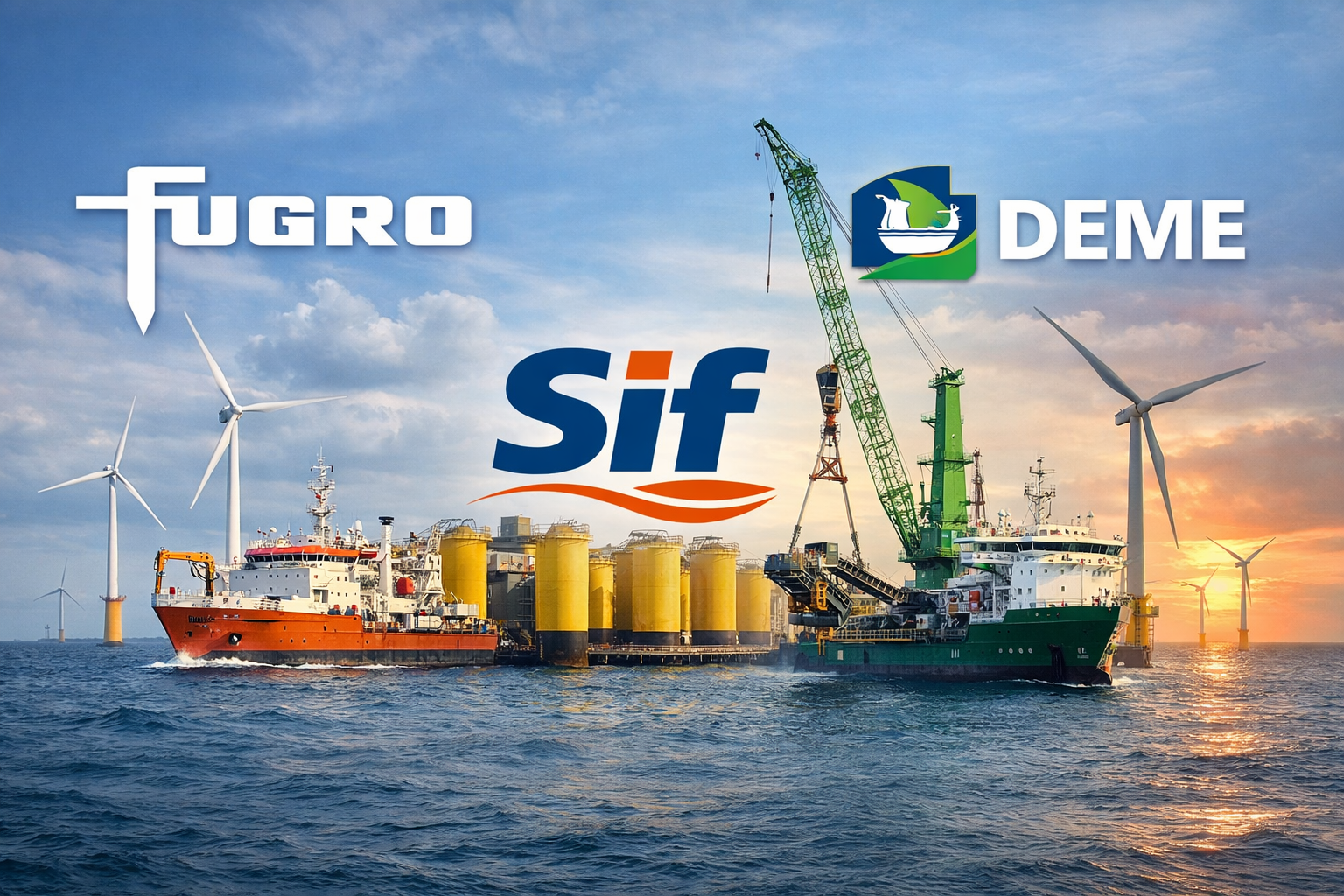
Europese landen hebben een breed gedragen akkoord gesloten over de gezamenlijke ontwikkeling van offshore wind in de Noordzee. Het North Sea Wind Pact vormt het kader voor grootschalige investeringen in windparken, offshore elektriciteitsnetten en subsea infrastructuur, met als doel de energietransitie te versnellen en de leveringszekerheid binnen Europa te vergroten.
Wil je alle artikelen kunnen lezen en elke podcast beluisteren? Neem dan een abonnement en krijg toegang tot alle artikelen en de database met duizenden berichten.
- Het akkoord richt zich op circa 100 gigawatt aan gezamenlijke offshore windprojecten binnen een bredere langetermijndoelstelling richting 2050.
- Naast windparken omvat het plan ook offshore netwerken en grensoverschrijdende subsea verbindingen.
- De Noordzee wordt nadrukkelijk gepositioneerd als strategisch energieknooppunt voor Europa.
Het pact, ondertekend door onder meer Duitsland, Frankrijk, Denemarken, België, Nederland, het Verenigd Koninkrijk en Noorwegen, is gericht op schaalvergroting en betere coördinatie. Door gezamenlijke planning, standaardisatie en afstemming tussen landen moet de investeringszekerheid toenemen en moeten systeemkosten op termijn dalen. Daarmee bevestigt het akkoord een trend die al langer zichtbaar is binnen de offshore energiesector.
Investment view
Fugro
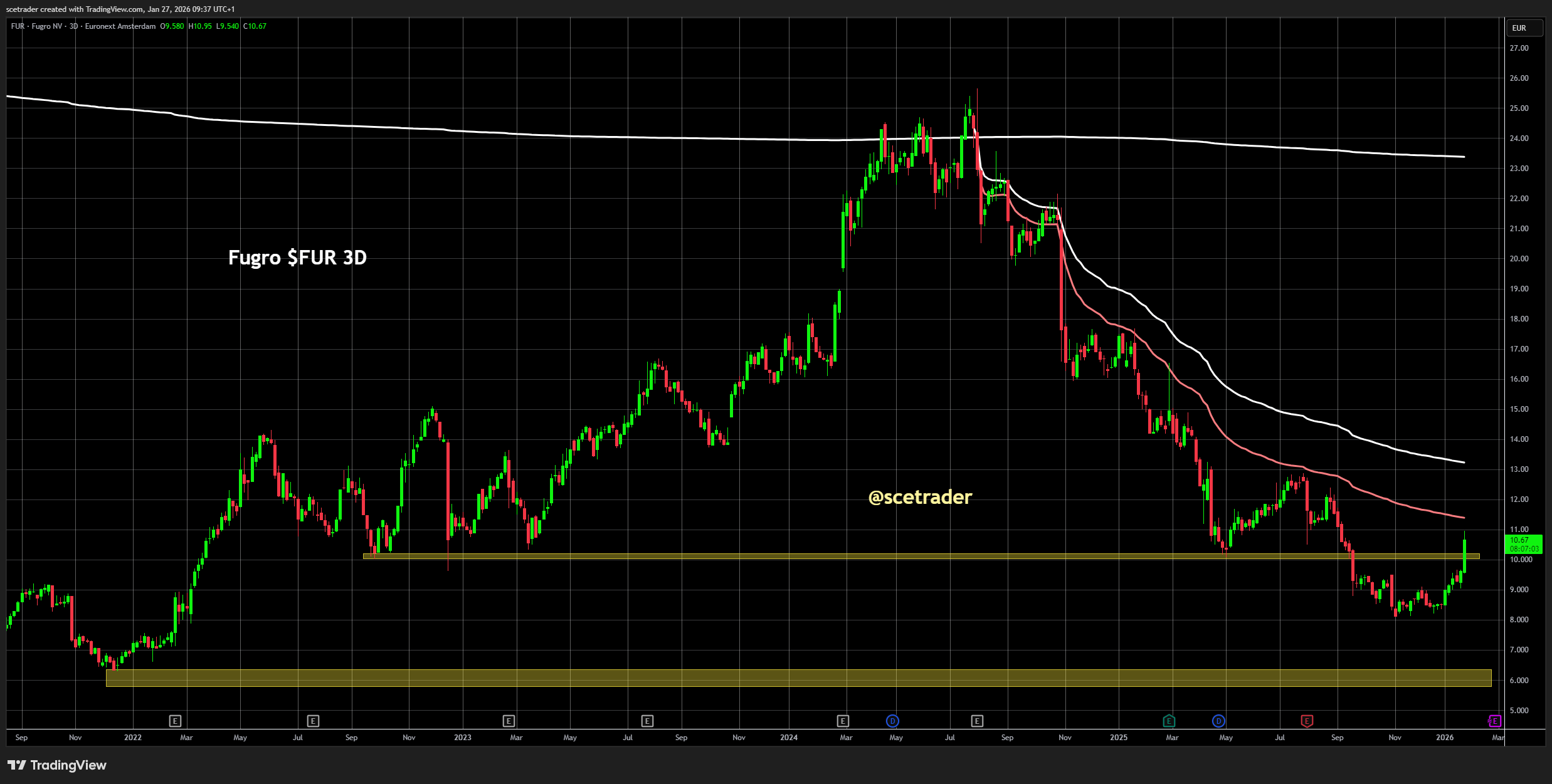
Voor Fugro is het North Sea Wind Pact indirect maar duidelijk ondersteunend. De geplande uitbreiding van offshore windparken en bijbehorende infrastructuur vergroot structureel de vraag naar bodemonderzoek, geodata, inspectie en monitoring. Dit raakt rechtstreeks aan de kernactiviteiten van het bedrijf.
Wij zijn niet langer puur afwachtend en zien dat de bull case zich geleidelijk begint op te bouwen. De combinatie van structurele vraag naar offshore infrastructuur, verbeterde operationele discipline en de hefboom in het verdienmodel creëert een aantrekkelijk asymmetrisch profiel.
Het is daarbij niet uitgesloten dat het aandeel Fugro in de komende jaren meer dan kan verdubbelen, mits de projectcyclus verder normaliseert en de zichtbaarheid op winstgevendheid toeneemt. Het tempo waarin opdrachten worden omgezet in stabiele marges blijft daarbij bepalend voor het risicoprofiel.
Sif
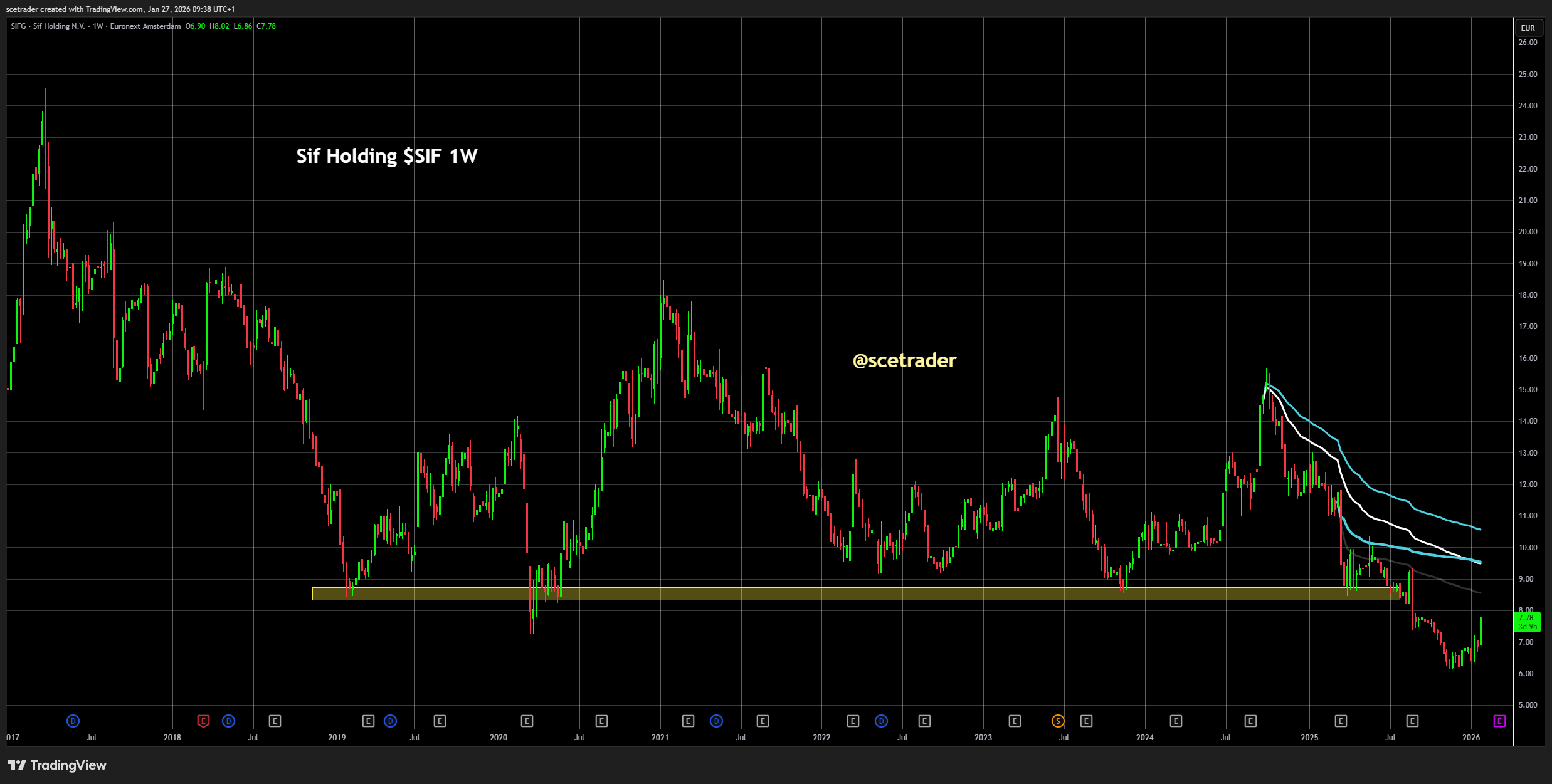
Voor Sif blijft het beeld genuanceerd. De structurele vraag naar fundaties en monopiles voor offshore windparken is intact en het North Sea Wind Pact bevestigt dat grootschalige projecten ook op lange termijn doorgang blijven vinden. In dat licht kan het aandeel, ondanks eerdere koersstijgingen, verder oplopen.
Tegelijkertijd kent Sif een uitgesproken projectmatig en cyclisch karakter. De winstontwikkeling is sterk afhankelijk van ordertiming, bezettingsgraad, staalprijzen en uitvoeringsrisico’s. Kleine verstoringen kunnen een relatief grote impact hebben op de marges. Het opwaartse potentieel gaat daarmee gepaard met een verhoogd risicoprofiel.
DEME
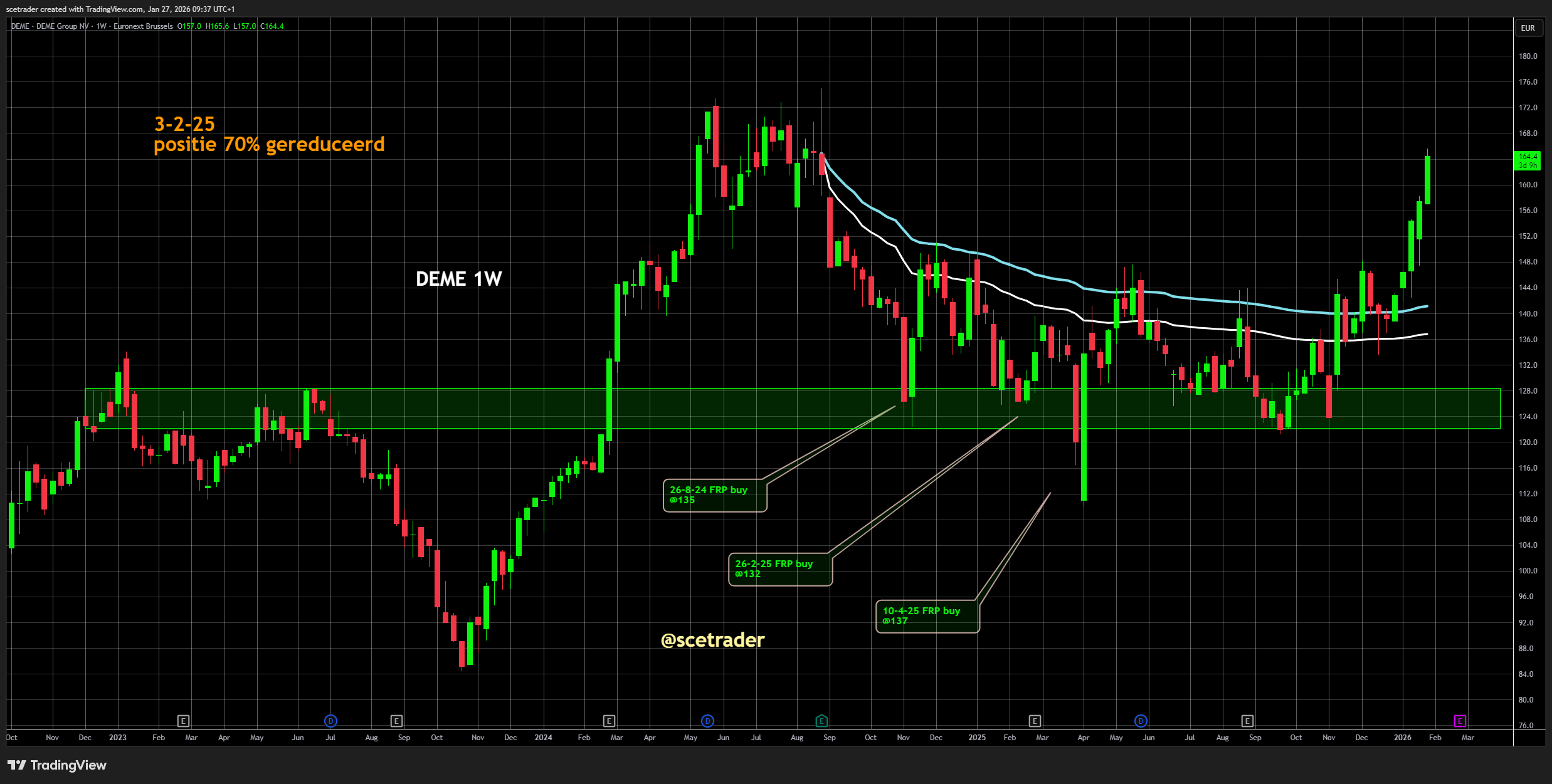
Voor DEME is het akkoord direct relevant. DEME is actief in offshore installatie, baggerwerken, fundaties, kabellegging en maritieme infrastructuur. Juist de combinatie van windparken, offshore netten en subsea verbindingen speelt in het voordeel van de brede exposure van het bedrijf binnen offshore energie-infrastructuur.
DEME profiteert van schaal, technische complexiteit en integrale projectuitvoering. Het vermogen om meerdere onderdelen van de waardeketen te combineren vergroot de zichtbaarheid van de orderportefeuille en ondersteunt de marges.
Wij zitten op een stijging van het aandeel, gedragen door de aanhoudende vraag naar offshore infrastructuur en de strategische positionering van het bedrijf binnen deze markt.
Outlook en cijfers
De betrokken regeringen spreken expliciet over meer investeringszekerheid, gezamenlijke planning en standaardisatie. Dit moet leiden tot een versnelling van projecten in de komende jaren en tot lagere systeemkosten op langere termijn. Ontwikkelaars en turbinebouwers profiteren doorgaans eerder in de cyclus, terwijl dienstverleners en infrastructuurspelers later volgen.
Voor bedrijven binnen de offshore keten betekent dit dat de vraag aanwezig is, maar dat timing en uitvoering bepalend blijven voor de financiële prestaties. Politieke besluitvorming, renteontwikkelingen en beschikbaarheid binnen de supply chain blijven belangrijke variabelen.
Achtergrond en context: de Noordzee als energieknooppunt
De Noordzee ontwikkelt zich steeds nadrukkelijker tot een strategisch energieknooppunt voor Europa. Gunstige windcondities, bestaande energie-infrastructuur en de nabijheid van grote industriële clusters maken grootschalige elektrificatie mogelijk.
- Offshore wind is één van de weinige schaalbare energiebronnen binnen Europa.
- Internationale samenwerking verlaagt kosten en vermindert netcongestie.
- Geopolitieke ontwikkelingen versnellen de wens naar energie-onafhankelijkheid.
Tegelijkertijd blijft de uitvoering complex. Vergunningverlening, netcapaciteit en financiering vormen structurele knelpunten. Hierdoor beweegt de sector in cycli, waarbij investeringsbeslissingen en kasstromen niet altijd synchroon lopen.
Conclusie
Het North Sea Wind Pact bevestigt dat de structurele vraag naar offshore wind en bijbehorende infrastructuur in Europa verder toeneemt. De Noordzee blijft een centrale pijler binnen de energietransitie, met langdurige vraag naar windparken, fundaties, offshore netten en subsea infrastructuur. Voor bedrijven actief binnen deze keten is dit een duidelijke bevestiging dat de marktvraag aanwezig is, met uiteenlopende risico- en timingprofielen per segment.
🔵 English version
North Sea Wind Pact: structural tailwind for offshore wind and infrastructure
European countries have reached a comprehensive agreement to jointly accelerate offshore wind development in the North Sea. The North Sea Wind Pact provides a framework for large-scale investments in wind farms, offshore power grids and subsea infrastructure, aimed at strengthening Europe’s energy transition and supply security.
- The agreement targets around 100 gigawatts of joint offshore wind projects within a broader long-term ambition.
- It covers not only wind farms but also offshore grids and cross-border subsea connections.
- The North Sea is positioned as a strategic energy hub for Europe.
Signed by countries including Germany, France, Denmark, Belgium, the Netherlands, the United Kingdom and Norway, the pact focuses on scale, coordination and standardization. The objective is to improve investment visibility and reduce system costs over time, reinforcing an existing sector trend.
Investment view
Fugro
For Fugro, the pact is indirectly supportive. The expansion of offshore wind and related infrastructure structurally increases demand for seabed surveys, geodata, inspection and monitoring, which sit at the core of the company’s business model.
We are no longer purely in a wait-and-see mode and observe that the bull case is gradually taking shape. Structural demand for offshore infrastructure, improved operational discipline and meaningful operating leverage create an attractive asymmetric setup. Under these conditions, it is not inconceivable that Fugro’s share price could more than double over the coming years, assuming further normalization of the project cycle and improved earnings visibility. Execution remains the key variable shaping the risk profile.
Sif
For Sif, the picture is more nuanced. Structural demand for offshore foundations remains intact, and the North Sea Wind Pact confirms long-term project continuity. This suggests that the share price could still move higher despite prior gains.
At the same time, Sif operates with a pronounced project-driven and cyclical profile. Earnings are highly sensitive to order timing, capacity utilization, steel prices and execution risk. Minor disruptions can have an outsized impact on margins, resulting in an elevated risk profile alongside upside potential.
DEME
For DEME, the agreement is directly relevant. DEME operates across offshore installation, dredging, foundations, cable laying and maritime infrastructure. The combination of wind farms, offshore grids and subsea connections aligns well with its broad exposure to offshore energy infrastructure.
DEME benefits from scale, technical complexity and integrated project execution. Its ability to combine multiple segments of the value chain enhances order book visibility and supports margins. We are positioned for a continued upward trend in the share price, supported by sustained demand for offshore infrastructure.
Outlook and financials
Governments emphasize improved investment certainty, joint planning and standardization. These measures are intended to accelerate project execution over the coming years and reduce system costs over the longer term. Developers and turbine manufacturers typically benefit earlier in the cycle, while infrastructure and service providers follow later.
Demand across the offshore value chain is clearly present, but timing and execution remain key drivers of financial performance. Political decisions, interest rates and supply chain capacity continue to influence outcomes.
Background and context: the North Sea as an energy hub
The North Sea is increasingly becoming a strategic energy hub for Europe. Strong wind conditions, existing infrastructure and proximity to industrial centers support large-scale electrification.
Offshore wind is one of the few scalable renewable technologies available at a continental level. Cross-border cooperation reduces costs and mitigates grid congestion, while geopolitical considerations accelerate the push toward energy independence.
Execution risks remain. Permitting, grid capacity and financing constraints continue to shape investment cycles, causing sentiment and cash flows to move at different speeds.
Conclusion
The North Sea Wind Pact confirms that structural demand for offshore wind and related infrastructure in Europe continues to build. The agreement reinforces the North Sea’s central role in the energy transition and supports sustained demand for wind farms, foundations, offshore grids and subsea infrastructure. For companies across the value chain, demand is clearly present, with differing risk and timing characteristics across segments.
Disclaimer Aan de door ons opgestelde informatie kan op geen enkele wijze rechten worden ontleend. Alle door ons verstrekte informatie en analyses zijn geheel vrijblijvend. Alle consequenties van het op welke wijze dan ook toepassen van de informatie blijven volledig voor uw eigen rekening.
Wij aanvaarden geen aansprakelijkheid voor de mogelijke gevolgen of schade die zouden kunnen voortvloeien uit het gebruik van de door ons gepubliceerde informatie. U bent zelf eindverantwoordelijk voor de beslissingen die u neemt met betrekking tot uw beleggingen.

