Crypto: Clarity Act krijgt steun van oud-veiligheids functionarissen
Wil je alle artikelen kunnen lezen en elke podcast beluisteren? Neem dan een abonnement en krijg toegang tot alle artikelen en de database met duizenden berichten.
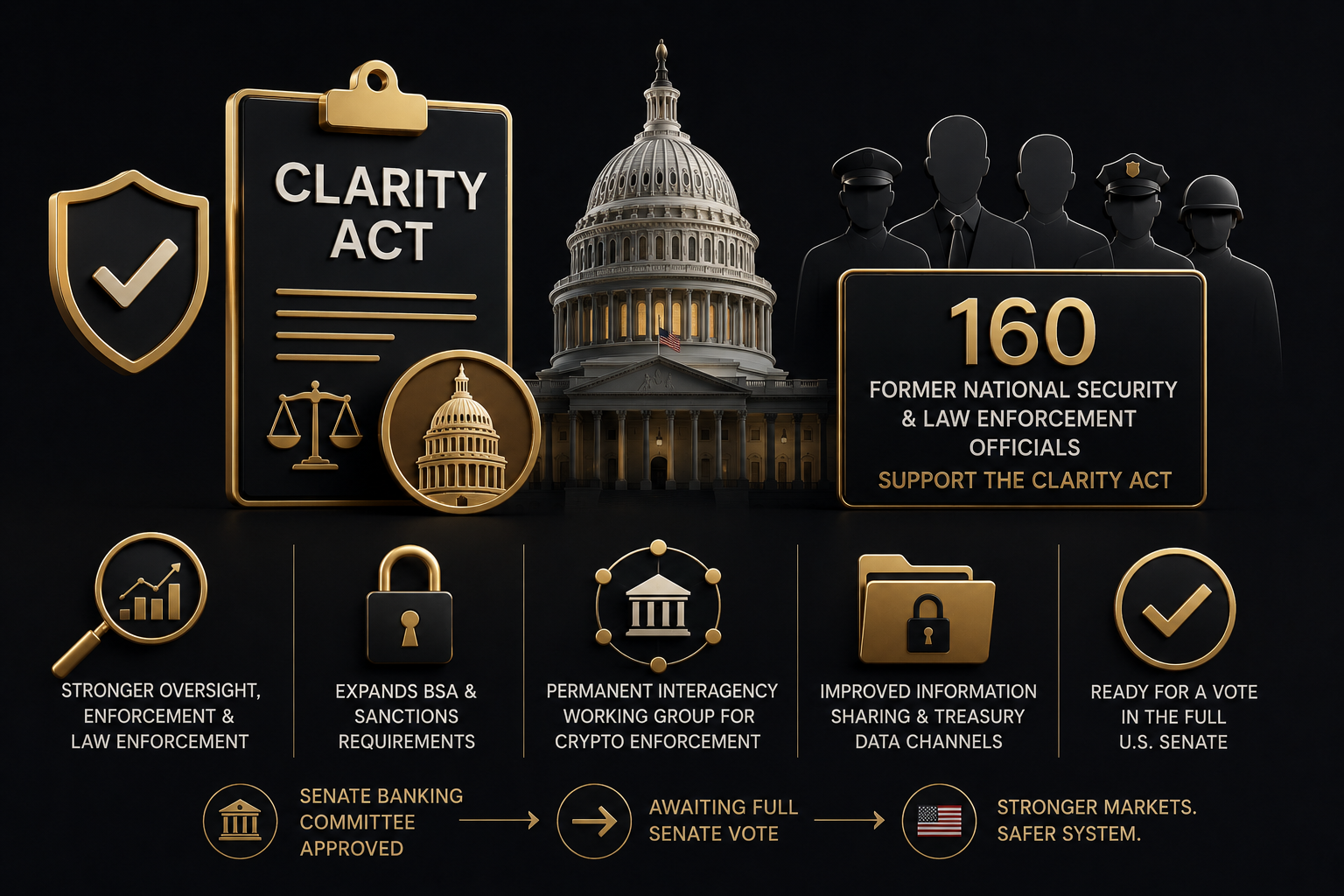
De druk op de Amerikaanse Senaat om de Clarity Act goed te keuren neemt toe. De Blockchain Association dringt aan op snelle behandeling van de wet en krijgt daarbij steun van een brief die is ondertekend door 160 voormalige national security- en law enforcement-functionarissen.
■ De Blockchain Association wil dat de Senaat de Clarity Act goedkeurt.
■ 160 voormalige veiligheids- en opsporingsfunctionarissen ondersteunen die oproep.
■ De wet moet toezicht, opsporing en handhaving binnen digitale assetmarkten versterken.
■ De Clarity Act zou verplichtingen rond de Bank Secrecy Act en sancties uitbreiden.
■ De wet ligt klaar voor stemming in de volledige Senaat na goedkeuring door de Senate Banking Committee.
De kern van de boodschap is dat duidelijke cryptoregels niet alleen goed zijn voor de sector, maar ook voor veiligheid en handhaving. De voormalige functionarissen stellen dat de Clarity Act opsporingsdiensten juist meer mogelijkheden kan geven om illegale financiering, sanctieontwijking en misbruik van digitale assets aan te pakken.
Waarom dit belangrijk is
De discussie rond crypto wordt vaak neergezet als een strijd tussen innovatie en toezicht. De Clarity Act probeert juist die twee dichter bij elkaar te brengen. De wet moet duidelijkere regels geven voor digitale assetmarkten, maar tegelijk ook de positie van opsporingsdiensten versterken.
Dat is belangrijk voor institutionele adoptie. Banken, brokers, betaalbedrijven en grote beleggers willen geen grijze zone. Zij willen weten welke regels gelden, welke verplichtingen zij hebben en hoe toezicht wordt georganiseerd.
Zonder duidelijke regels blijven veel partijen voorzichtig. Met een duidelijker wettelijk kader kan crypto-infrastructuur verder richting de reguliere financiële wereld schuiven.
Meer verplichtingen rond toezicht en sancties
Volgens de brief zou de Clarity Act verplichtingen rond de Bank Secrecy Act en sancties uitbreiden. Dat betekent dat digitale assetpartijen sterker in het bestaande compliancekader kunnen worden getrokken.
Dat is een belangrijk punt. Crypto wordt vaak bekritiseerd vanwege risico’s rond witwassen, illegale financiering en sanctieontwijking. Door meer verplichtingen op te leggen en informatie-uitwisseling te verbeteren, probeert de wet die risico’s beter beheersbaar te maken.
De wet zou ook nieuwe Treasury-geleide informatiekanalen creëren. Daarmee kunnen overheid, toezichthouders en marktpartijen sneller informatie delen over verdachte activiteiten en risico’s binnen digitale assetmarkten.
Permanente werkgroep voor crypto-handhaving
Een ander belangrijk onderdeel is de oprichting van een permanente interagency working group rond crypto-gerelateerde illegale financiering en handhaving.
Dat klinkt technisch, maar is belangrijk. Crypto raakt meerdere toezichthouders en overheidsdiensten tegelijk. Zonder vaste coördinatie kan toezicht versnipperd raken. Een permanente werkgroep kan zorgen voor betere samenwerking tussen instanties.
Voor de markt betekent dit dat crypto steeds meer wordt behandeld als een volwassen financieel segment. Niet als iets buiten het systeem, maar als een markt die binnen bestaande regels, toezicht en opsporing moet functioneren.
Politieke lobby wordt opgevoerd
De Blockchain Association voert de druk op. De organisatie plant gesprekken met 18 Senaatskantoren en organiseert een virtuele town hall met senator Cynthia Lummis, afgevaardigde Tom Emmer en White House crypto-adviseur Patrick Witt.
Dat laat zien dat de sector de Clarity Act ziet als een belangrijk wetgevend moment. De wet is al door de Senate Banking Committee gekomen en wacht nu op een stemming in de volledige Senaat.
Er blijft discussie over mogelijke crypto-ethiekbepalingen. Toch is duidelijk dat de lobby rond de wet intensiever wordt. De sector wil voorkomen dat de stemming vertraagt of dat de wet wordt afgezwakt.
Betekenis voor de cryptomarkt
Voor de cryptomarkt is de Clarity Act belangrijk omdat het een stap kan zijn richting meer juridische duidelijkheid. Dat is vooral relevant voor partijen die digitale assets willen gebruiken binnen gereguleerde financiële producten, betalingsinfrastructuur, stablecoins, custody en trading.
Duidelijkheid betekent niet dat alle risico’s verdwijnen. Strengere regels kunnen ook hogere kosten veroorzaken voor kleinere spelers. Compliance, rapportage en toezicht worden zwaarder.
Toch kan de wet per saldo gunstig zijn voor grotere, gereguleerde partijen. Bedrijven die al investeren in compliance en institutionele infrastructuur kunnen sterker uit zo’n omgeving komen dan kleinere projecten zonder duidelijke governance.
Conclusie
De Clarity Act wordt steeds belangrijker in het Amerikaanse cryptodebat. De steun van 160 voormalige national security- en law enforcement-functionarissen geeft de wet extra gewicht, omdat het argument verschuift van alleen innovatie naar veiligheid, toezicht en handhaving.
Voor de sector kan dit een stap zijn richting meer institutionele acceptatie, maar ook richting strengere verplichtingen. De grootste winnaars zijn waarschijnlijk partijen die crypto niet als los experiment benaderen, maar als gereguleerde financiële infrastructuur.
🔵 English version
Clarity Act gains support from former security officials in new crypto lobbying push
Pressure on the U.S. Senate to pass the Clarity Act is increasing. The Blockchain Association is urging the Senate to move forward with the bill, supported by a letter signed by 160 former national security and law enforcement officials.
■ The Blockchain Association wants the Senate to pass the Clarity Act.
■ 160 former security and law enforcement officials support that push.
■ The bill is designed to strengthen oversight, enforcement and law enforcement capabilities in digital asset markets.
■ The Clarity Act would expand obligations under the Bank Secrecy Act and sanctions rules.
■ The bill cleared the Senate Banking Committee and is now awaiting a full Senate vote.
The key message is that clear crypto rules are not only good for the industry, but also for security and enforcement. The former officials argue that the Clarity Act could give law enforcement stronger tools to combat illicit finance, sanctions evasion and abuse of digital assets.
Why this matters
The crypto debate is often framed as a conflict between innovation and regulation. The Clarity Act attempts to bring those two closer together. The bill aims to create clearer rules for digital asset markets while also strengthening the position of law enforcement agencies.
That matters for institutional adoption. Banks, brokers, payment companies and large investors do not want a grey zone. They want to know which rules apply, what obligations they have and how oversight is organized.
Without clear rules, many institutions remain cautious. With a clearer legal framework, crypto infrastructure can move further toward the regulated financial system.
More obligations around oversight and sanctions
According to the letter, the Clarity Act would expand obligations under the Bank Secrecy Act and sanctions rules. That means digital asset firms could be brought more clearly into the existing compliance framework.
This is an important point. Crypto is often criticized for risks around money laundering, illicit finance and sanctions evasion. By imposing more obligations and improving information sharing, the bill attempts to make those risks more manageable.
The bill would also create new Treasury-led information-sharing channels. That could allow government agencies, regulators and market participants to share information faster about suspicious activity and risks in digital asset markets.
Permanent working group for crypto enforcement
Another important element is the creation of a permanent interagency working group focused on crypto-related illicit finance and enforcement coordination.
That may sound technical, but it matters. Crypto touches several regulators and government agencies at the same time. Without permanent coordination, oversight can become fragmented. A standing working group could improve cooperation between agencies.
For the market, this means crypto is increasingly being treated as a mature financial segment. Not as something outside the system, but as a market that must function within existing rules, oversight and enforcement.
Political lobbying is intensifying
The Blockchain Association is increasing pressure. The organization is planning meetings across 18 Senate offices and a virtual town hall featuring Senator Cynthia Lummis, Representative Tom Emmer and White House crypto adviser Patrick Witt.
That shows the sector sees the Clarity Act as an important legislative moment. The bill has already cleared the Senate Banking Committee and is now waiting for a full Senate vote.
Debate remains around potential crypto ethics provisions. Still, it is clear that lobbying around the bill is becoming more intense. The industry wants to avoid delays or a weakened version of the legislation.
What it means for the crypto market
For the crypto market, the Clarity Act matters because it could become a step toward greater legal clarity. That is especially relevant for companies using digital assets in regulated financial products, payment infrastructure, stablecoins, custody and trading.
Clarity does not mean all risks disappear. Stricter rules can also create higher costs for smaller players. Compliance, reporting and oversight become more demanding.
Still, the bill may ultimately benefit larger, regulated players. Companies that already invest in compliance and institutional infrastructure could come out stronger than smaller projects without clear governance.
Conclusion
The Clarity Act is becoming increasingly important in the U.S. crypto debate. Support from 160 former national security and law enforcement officials gives the bill additional weight because the argument shifts from innovation alone to security, oversight and enforcement. For the sector, this could be a step toward greater institutional acceptance, but also toward stricter obligations. The likely winners are companies that do not treat crypto as a standalone experiment, but as regulated financial infrastructure.
Disclaimer Aan de door ons opgestelde informatie kan op geen enkele wijze rechten worden ontleend. Alle door ons verstrekte informatie en analyses zijn geheel vrijblijvend. Alle consequenties van het op welke wijze dan ook toepassen van de informatie blijven volledig voor uw eigen rekening.
Wij aanvaarden geen aansprakelijkheid voor de mogelijke gevolgen of schade die zouden kunnen voortvloeien uit het gebruik van de door ons gepubliceerde informatie. U bent zelf eindverantwoordelijk voor de beslissingen die u neemt met betrekking tot uw beleggingen.


