Iran-oorlog: Zelfs zonder energieschok zal de AI-bubbel barsten -Financial Times
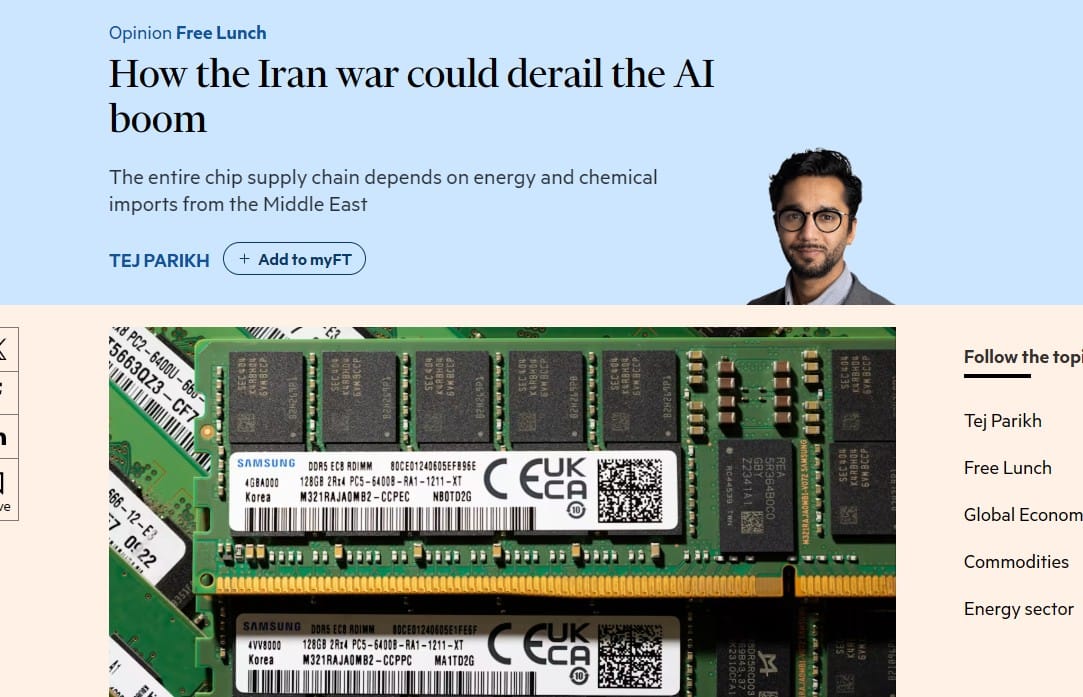
In een artikel in de Financial Times staat dat zelfs zonder de energieschokken, een grote kans bestaat dat de sluiting van Hormuz de AI-bubbel zal doen barsten en tot een beurscrash zal leiden.
- AI-keten draait op energie en grondstoffen uit het Midden-Oosten
- Straat van Hormuz is een kritieke choke point voor olie en LNG
- Helium uit Qatar essentieel voor chipproductie
- Aziatische chipmakers extreem afhankelijk van import
- Verstoring betekent hogere kosten, lagere output en druk op waarderingen
De kern is eenvoudig: de volledige AI-keten, van chips tot datacenters, leunt zwaar op energie en grondstoffen uit het Midden-Oosten. Zodra daar verstoringen ontstaan, begint het hele systeem te kraken.
Aziatische chipproducenten zoals Samsung Electronics, SK Hynix en TSMC zijn extreem afhankelijk van import van LNG, olie en kritieke materialen via de Straat van Hormuz. Tegelijkertijd komt ongeveer een derde van de wereldwijde heliumproductie uit Qatar, essentieel voor het koelen van chips.
Daarnaast zijn ook andere chemische inputs kwetsbaar. Zwavel en broom, nodig voor chipproductie, lopen via dezelfde regio of komen uit landen die direct betrokken zijn bij het conflict.
Een extra probleem zit in logistiek en transport. Lucht- en zeevracht raken verstoord, met hubs zoals Dubai die minder toegankelijk worden. Dit zorgt voor vertragingen in chipleveringen, terwijl juist snelheid cruciaal is in de AI-keten.
De impact gaat verder dan alleen productie. Energieprijzen lopen op, wat direct de kosten van datacenters verhoogt. In de VS draait een groot deel van de AI-infrastructuur op aardgas. Als LNG wordt omgeleid naar Europa en Azië, stijgen de binnenlandse energieprijzen, wat direct de winstgevendheid van datacenters raakt.
Daarbovenop komt de financiële laag. Hogere inflatie en rentes drukken waarderingen van technologiebedrijven, terwijl enorme schulden zijn opgebouwd rond AI-investeringen. Als de keten stokt, komt niet alleen groei onder druk, maar ook de financiering erachter.
Op korte termijn is er nog enige buffer door voorraden, maar die zijn beperkt. Als de verstoringen aanhouden, zullen chipprijzen stijgen, productie afnemen en kan de hele AI-keten vastlopen.
Zelfs bij een snelle de-escalatie blijft de schade merkbaar. Herstel van LNG- en heliumproductie kan maanden duren, en strategisch blijft het risico bestaan dat de Straat van Hormuz opnieuw wordt ingezet als drukmiddel.
De conclusie van The Financial Times is helder: beleggers onderschatten nog steeds hoe kwetsbaar de AI-boom is voor geopolitieke schokken.
Iran war threatens AI boom and global chip supply chain
In an article by the Financial Times, the risks to the global AI boom from the Iran conflict are laid out clearly. The FT now reporting that, even without the energy shocks, there's a pretty good chance that the closure of Hormuz will pop the AI bubble and lead to a stock market crash.
- AI supply chain depends heavily on Middle East energy and materials
- Strait of Hormuz is a critical bottleneck for oil and LNG flows
- Qatar helium supply is essential for semiconductor cooling
- Asian chipmakers are structurally dependent on imports
- Disruptions lead to higher costs, lower output and valuation pressure
The entire AI ecosystem depends heavily on energy and critical materials from the Middle East. Disruptions in this region expose how fragile the system really is.
Key semiconductor players such as Samsung Electronics, SK Hynix and TSMC rely on imported energy, especially LNG and oil flowing through the Strait of Hormuz. At the same time, roughly one-third of global helium supply comes from Qatar.
Critical chemicals such as sulphur and bromine are also tied to the region, adding another layer of supply chain vulnerability.
Another key pressure point is logistics. Air and shipping routes are disrupted, with major hubs such as Dubai becoming less accessible, leading to delays in chip deliveries across the supply chain.
The impact extends beyond production. Rising energy prices increase data center costs, particularly in the US where AI infrastructure heavily depends on natural gas. If LNG flows shift toward Europe and Asia, domestic US energy prices will rise, squeezing margins.
On top of that, financial risks are building. Higher inflation and interest rates pressure tech valuations, while large amounts of debt tied to AI investments become more vulnerable if growth slows.
Short-term stockpiles offer some buffer, but they are limited. If disruptions persist, chip prices will rise, production could stall, and the broader AI ecosystem may face serious constraints.
Even in a quick resolution scenario, recovery will take time. LNG and helium production could take months to normalize, while the strategic risk of the Strait of Hormuz remains.
The bottom line: markets are still underpricing how exposed the AI boom is to geopolitical shocks.
Disclaimer Aan de door ons opgestelde informatie kan op geen enkele wijze rechten worden ontleend. Alle door ons verstrekte informatie en analyses zijn geheel vrijblijvend. Alle consequenties van het op welke wijze dan ook toepassen van de informatie blijven volledig voor uw eigen rekening.
Wij aanvaarden geen aansprakelijkheid voor de mogelijke gevolgen of schade die zouden kunnen voortvloeien uit het gebruik van de door ons gepubliceerde informatie. U bent zelf eindverantwoordelijk voor de beslissingen die u neemt met betrekking tot uw beleggingen.


